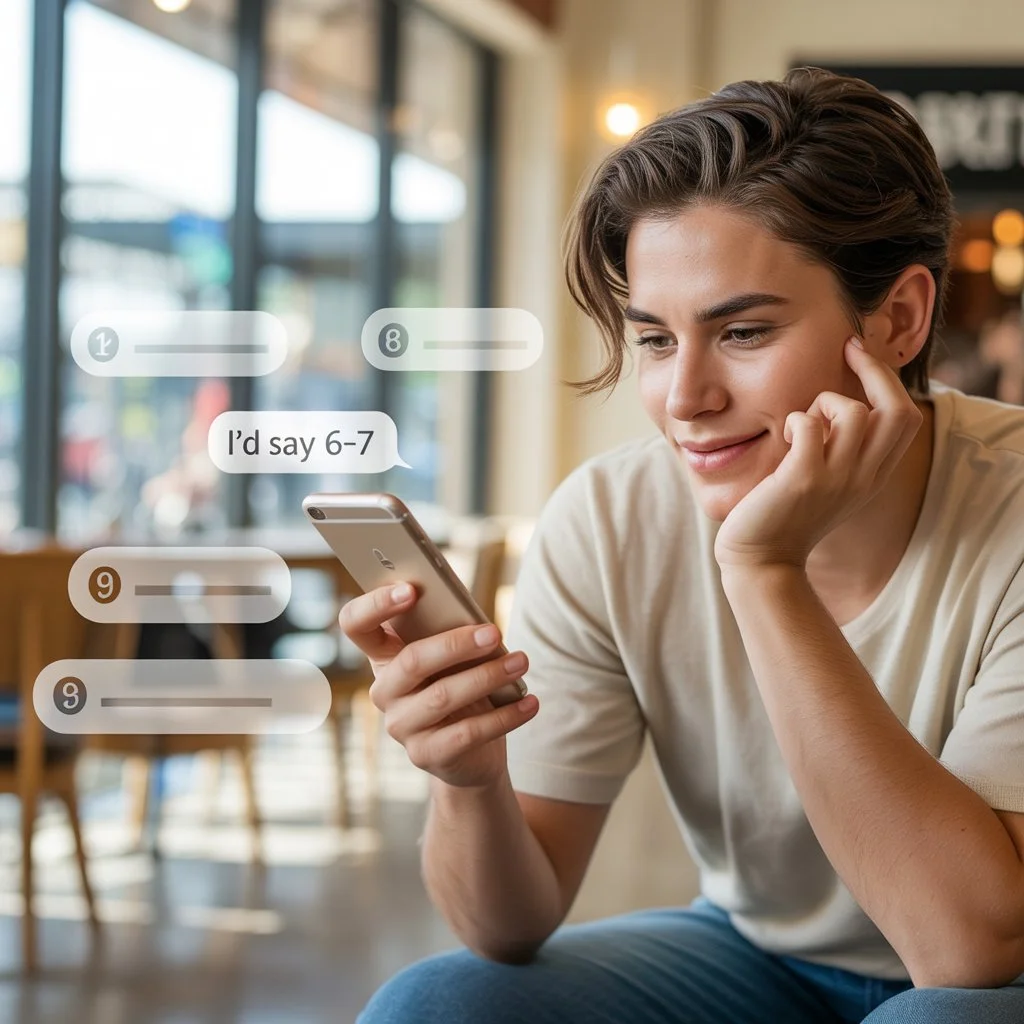

You’ve probably seen someone type “6-7” in a comment, caption, or text and paused for a second.
Is it a rating? A height? A code?
That small combination of numbers — what does 6-7 mean in slang? — can feel confusing because it doesn’t have just one fixed meaning. Like many internet expressions, it depends heavily on context, tone, and platform.
Some people use it literally. Others use it sarcastically. And in certain circles, it carries a completely symbolic meaning.
Let’s unpack it clearly, using real-life examples and everyday language so you know exactly what’s going on the next time you see it.
What Does 6-7 Mean in Slang – Quick Meaning
In modern slang, “6-7” most commonly refers to one of three things:
- A height reference (6 feet 7 inches)
- A rating between 6 and 7 out of 10
- A symbolic way of saying “above average but not elite”
Simple Definition
In slang, 6-7 usually means either someone is 6’7” tall or that something is rated around 6 to 7 out of 10 — slightly above average.
Quick Examples
- “He’s like 6-7.” (Could mean tall.)
- “I’d give it a 6-7.” (A rating.)
- “He’s a solid 6-7.” (Attractiveness score.)
The dash matters. It often signals a range rather than a single number.
Origin & Background
Unlike some slang terms that emerge from specific subcultures, “6-7” evolved more casually from everyday numeric language.
1. Rating Culture
Social media normalized rating people, outfits, and experiences out of 10.
Instead of saying “6.5,” people casually type “6-7” to suggest a range.
It feels informal and conversational.
2. Dating App Influence
Height became a highly discussed topic in online dating culture.
Men frequently list height in bios. “6’7” stands out because it’s unusually tall.
Eventually, shorthand like “6-7” appeared in comments and jokes about height standards.
3. Internet Minimalism
Modern slang favors short, quick expressions.
Numbers travel fast across platforms because they’re universal. You don’t need translation to understand a rating scale.
That’s part of why 6-7 became common online.
Real-Life Conversations (How It’s Actually Used)
Here’s how people naturally use “6-7” in real conversations.
1️⃣ WhatsApp Chat
Person A:
How was the movie?
Person B:
Eh… 6-7. Not bad, not amazing.
This shows the rating meaning.
2️⃣ Instagram DMs
Person A:
Be honest. What would you rate him?
Person B:
Maybe 6-7 on a good day.
This implies above average but not top tier.
3️⃣ TikTok Comments
User 1:
Is he tall?
User 2:
Yeah, like 6-7 or something.
Here, it refers to height.
4️⃣ Text Between Friends
Friend 1:
How confident do you feel about the interview?
Friend 2:
Like a 6-7. Could’ve prepared more.
Now it reflects self-assessment.
The meaning shifts smoothly depending on context.
Emotional & Psychological Meaning
Why does “6-7” resonate?
Because it sits in the middle.
It represents:
- Decent, but not elite
- Good enough
- Slightly above average
- Room for improvement
1. Comfort with Imperfection
Saying something is “6-7” acknowledges it’s not perfect.
That honesty feels real.
2. Avoiding Extremes
Online culture swings between “trash” and “10/10.”
6-7 feels balanced. Mature. Grounded.
3. Social Softening
Instead of saying “It wasn’t that good,” someone might say “6-7.”
It softens criticism.
Usage in Different Contexts
1. Social Media
Common uses:
- Rating attractiveness
- Reviewing food
- Evaluating movies
- Assessing fashion
Tone: Casual and subjective.
2. Friends & Relationships
Used playfully:
“You’re a 6-7 but your personality boosts you.”
Often teasing, sometimes flirtatious.
3. Work or Professional Settings
Not ideal in formal communication.
Instead of saying “The presentation was a 6-7,” it’s better to say “It met expectations but could improve.”
4. Casual vs Serious Tone
| Tone | Meaning |
|---|---|
| Casual | Mid-range rating |
| Honest | Balanced assessment |
| Sarcastic | Underwhelming |
| Literal | Height reference |
Tone changes everything.
Common Misunderstandings
❌ It always means height
Not necessarily. Often it’s a rating.
❌ It’s insulting
Not usually. It’s often neutral.
❌ It means “average”
Not exactly. Average is closer to 5. 6-7 suggests slightly above average.
❌ It’s gender-specific
It applies to anyone and anything.
Comparison Table
| Term | Meaning | Similarity | Difference |
|---|---|---|---|
| 6-7 | Above average | Mid-range rating | Range-based |
| 6/10 | Slightly above average | Numeric rating | More precise |
| Mid | Average | Rating culture | Slightly lower |
| 10/10 | Perfect | Scale-based | Extreme high |
| Solid | Respectable | Positive tone | No number |
| 5-6 | Slightly average | Range rating | Lower score |
Key Insight:
“6-7” reflects balance. It communicates measured approval without exaggeration.
Variations & Types (8+)
- Solid 6-7
Clearly above average. - Like a 6-7
Uncertain estimate. - High 6-7
Almost an 8. - Low 6-7
Closer to a 6. - 6-7 energy
Decent confidence. - 6-7 at best
Mild criticism. - About 6-7 range
General approximation. - 6-7 vibe
Moderately attractive presence. - Between 6-7
Balanced evaluation.
How to Respond When Someone Uses It
Casual Replies
- “Fair enough.”
- “I’ll take that.”
Funny Replies
- “I’m working toward an 8.”
- “That’s a passing grade.”
Mature / Confident Replies
- “Appreciate the honesty.”
- “There’s always room to improve.”
Private / Respectful Replies
- “What could make it better?”
- “Why that rating?”
If someone rates you personally, confidence matters more than numbers.
Regional & Cultural Usage
Western Culture
Rating culture is common, especially in dating and social media.
“6-7” often refers to attractiveness or performance.
Asian Culture
More indirect communication styles may avoid numeric ratings in person.
Online communities still use it casually.
Middle Eastern Culture
Public rating of people can be considered impolite offline.
However, online youth culture mirrors global trends.
Global Internet Usage
Numbers cross language barriers.
“6-7” is easy to type and universally understood within rating culture.
It spreads quickly through memes and comment sections.
FAQs
1. What does 6-7 mean in slang for a person?
It usually means slightly above average in attractiveness or overall appeal.
2. Does 6-7 always refer to height?
No. It often refers to a rating between six and seven out of ten.
3. Is 6-7 an insult?
Not typically. It’s generally neutral or mildly positive.
4. Is 6-7 better than mid?
Yes. Mid usually suggests average (around 5). 6-7 is slightly above.
5. Why do people use ranges instead of exact numbers?
Ranges feel less harsh and more conversational.
6. Can 6-7 describe performance?
Yes. People use it for movies, food, interviews, and more.
7. Is it okay to rate someone 6-7?
Only if the context allows it. Public ratings can hurt feelings.
Conclusion
So, what does 6-7 mean in slang?
At its core, it signals something slightly above average — whether that’s height, attractiveness, performance, or quality.
It’s balanced. Measured. Not extreme.
In a world that often swings between “terrible” and “perfect,” 6-7 feels grounded.
Understanding it isn’t just about numbers.
It’s about recognizing tone, intention, and context.
Because in real life, no one is just a number — and slang works best when we remember the human behind it.