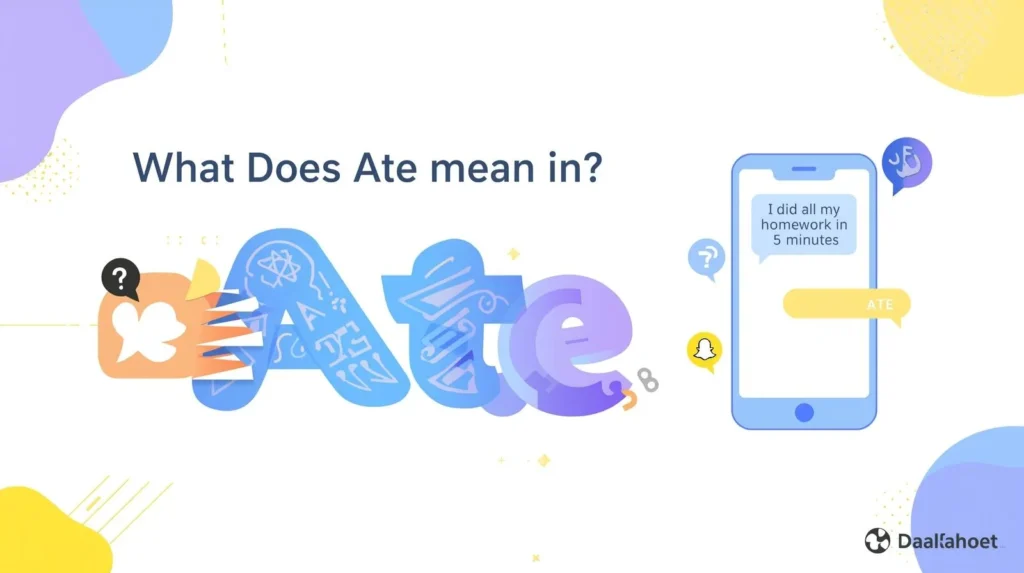

In slang, “ate” means someone did something extremely well, looked amazing, or performed perfectly. In texting or social media, saying someone “ate” is a compliment that means they succeeded, impressed others, or dominated a moment.
It’s commonly used in Gen Z internet slang on platforms like TikTok, Instagram, Snapchat, and in casual chats.
Ate Meaning in Text
The “ate” slang meaning in text usually describes someone doing something flawlessly or impressively.
It’s similar to saying:
- “You nailed it”
- “You did amazing”
- “That was perfect”
Example:
A: Did you see her presentation?
B: Yeah, she ate that. Everyone was impressed.
In this context, “ate” highlights confidence, talent, or style.
Ate Slang Meaning
In modern internet slang, “ate” is a complimentary expression used to praise someone’s performance, outfit, speech, or action.
You may also see the extended phrase:
“Ate and left no crumbs.”
This exaggerates the praise, meaning the person did something so well that nothing could be improved.
Example:
- “That outfit? You ate.”
- “His speech? He ate and left no crumbs.”
What Does Ate Mean in Chat?
In chat conversations, “ate” usually means:
Someone did something extremely well or confidently.
It can refer to:
- Fashion
- Performances
- Comebacks
- Speeches
- Dance videos
- Arguments
Example chat:
A: I finally confronted my boss about the schedule.
B: And??
A: He agreed with me.
B: Wow, you ate.
Here it means handled the situation perfectly.
Ate Meaning on Snapchat
On Snapchat, “ate” often appears in:
- Story replies
- Reactions to selfies
- Outfit compliments
Examples:
- “You ate that look 🔥”
- “Best birthday post ever. You ate.”
Because Snapchat is visual-heavy, the term often relates to appearance or style.
Ate Meaning on Instagram, TikTok, and WhatsApp
On Instagram, “ate” is used mostly in comments:
- “She ate this photoshoot.”
- “You ate that look.”
It praises fashion, photography, or confidence.
TikTok
TikTok is where the phrase became extremely popular.
Users comment:
- “You ate.”
- “ATE 🔥”
- “She ate and left no crumbs.”
These comments usually respond to:
- Dance videos
- Makeup transformations
- Confident speeches
- Funny roasts
On WhatsApp, the slang appears more casually:
Friend 1: I finally passed my driving test.
Friend 2: You ate!
Here it means you succeeded or did great.
Is “Ate” an Acronym, Short Form, or Something Else?
The slang “ate” is not an acronym.
It is actually a metaphorical slang expression.
Here’s how it fits linguistically:
| Type | Is “Ate” This? | Explanation |
|---|---|---|
| Acronym | ❌ No | It doesn’t stand for words |
| Short form | ❌ No | Not shortened |
| Phonetic spelling | ❌ No | Not based on sound change |
| Metaphorical slang | ✅ Yes | “Eating” symbolizes dominating or excelling |
The idea comes from “devouring a performance” or owning the moment.
Tone & Context Variations
Like most internet slang terms, the meaning can change depending on tone.
Funny Tone
Sometimes “ate” is used jokingly.
Example:
A: I tried cooking pasta for the first time.
B: And?
A: I burned it.
B: Wow… you really ate that recipe.
Here it’s playfully sarcastic.
Sarcastic Tone
In sarcasm, “ate” can mean the opposite.
Example:
A: I tripped walking on stage today.
B: Yeah… you definitely ate that performance.
This implies embarrassment rather than success.
Romantic Tone
Sometimes it appears in flirty compliments.
Example:
A: Sending you my outfit for tonight.
B: Wow, you ate. I can’t wait to see you.
Here it means:
You look amazing.
Angry Tone
Rarely, it appears in arguments.
Example:
A: I told him exactly how I felt.
B: Good. You ate him up.
Meaning:
You dominated the argument.
Playful Tone
Friends often use it casually.
Example:
A: I finished the entire pizza alone.
B: Wow, you literally ate.
Here the joke blends literal and slang meaning.
Real Chat Examples (Natural Conversations)
Below are realistic modern texting examples.
Example 1
A: I just posted my graduation photos.
B: I saw them. You ate that photoshoot.
A: Stoppp thank you 😭
Example 2
A: Did you hear her debate speech?
B: Yes! She ate.
A: The audience loved it.
Example 3
A: I finally stood up for myself today.
B: As you should. You ate.
Example 4
A: I tried a new makeup look.
B: Wait send pics.
A: sends photo
B: Oh you ATE.
Example 5
A: I just roasted Jake in the group chat.
B: I read it 😭 you ate him up.
Example 6
A: I danced at the party last night.
B: Yeah the videos are everywhere. You ate.
Example 7
A: I wore that dress you recommended.
B: I saw your story. You ate and left no crumbs.
Example 8
A: I passed my exam finally.
B: Congrats! You ate that test.
Example 9
A: My boss complimented my presentation.
B: Obviously. You ate.
Example 10
A: I cooked dinner for everyone tonight.
B: Was it good?
A: They loved it.
B: Chef behavior. You ate.
Example 11
A: I did my first stand-up comedy show.
B: How was it?
A: People laughed a lot.
B: You ate!
Example 12
A: I dyed my hair purple.
B: Wait WHAT
A: Sending a pic.
B: You ate that color.
Grammar & Language Role
Understanding the grammar role of “ate” slang helps use it naturally.
Part of Speech
In slang use, “ate” acts like a verb phrase.
Examples:
- “You ate.”
- “She ate that performance.”
Sentence Position
It usually appears:
At the end of a sentence
Example:
- “You ate.”
Or after the action
Example:
- “You ate that speech.”
Can It Replace a Full Sentence?
Yes.
Example:
A: How was my presentation?
B: You ate.
That single phrase communicates strong praise.
Tone Impact
Using “ate” adds:
- Enthusiasm
- Youthful tone
- Casual energy
Without it, the same sentence might sound flat.
Example:
Formal:
“You performed very well.”
Slang:
“You ate.”
Formal vs Informal Use
“Ate” is highly informal.
Avoid using it in:
- Work emails
- Academic writing
- Professional reports
It works best in casual digital communication.
How to Reply When Someone Says “You Ate”
When someone compliments you with this slang, you can respond in different ways.
Funny Reply
- “I try my best 😂”
- “Chef behavior.”
- “Left no crumbs.”
Example:
A: You ate that speech.
B: I try to serve excellence.
Serious Reply
- “Thank you, that means a lot.”
- “I worked really hard on it.”
Example:
A: You ate that presentation.
B: Thanks! I practiced all week.
Flirty Reply
- “Only because you’re watching 😉”
- “Glad you noticed.”
Example:
A: You ate that outfit.
B: I dressed up for you.
Neutral Reply
- “Thanks!”
- “Appreciate it.”
Example:
A: You ate that performance.
B: Thank you!
Comparison Table With Similar Slang
| Term | Meaning | Formal/Informal | Tone | Popularity | Risk of Misunderstanding |
|---|---|---|---|---|---|
| Ate | Did something extremely well | Informal | Praise | High (Gen Z) | Medium |
| IDK | I don’t know | Informal | Neutral | Very high | Low |
| ION | I don’t | Informal | Casual | Medium | High |
| Dunno | Don’t know | Semi-informal | Relaxed | Medium | Low |
| IDC | I don’t care | Informal | Dismissive | High | Medium |
“Ate” differs because it expresses admiration, not uncertainty.
Who Uses This Term?
Age Groups
“Ate” is mostly used by:
- Gen Z
- Teenagers
- Young adults
Millennials may understand it but use it less often.
Regional Use
The slang started mostly in:
- United States online communities
But now appears globally thanks to social media.
People in:
- UK
- Canada
- Australia
- South Asia
often use it in internet conversations.
Platforms Where It’s Most Common
You’ll see it frequently on:
- TikTok
- Instagram comments
- Snapchat replies
- Twitter/X
- Discord chats
TikTok especially helped popularize the phrase worldwide.
Origin & Internet Culture Insight
The slang “ate” likely evolved from Black internet culture and ballroom slang, where phrases like:
- “She ate.”
- “Ate it up.”
meant someone performed exceptionally well.
Over time, TikTok and meme culture helped spread it widely.
Several factors contributed to its popularity:
TikTok Influence
Short videos encouraged quick reactions, so phrases like:
- “ATE”
- “She ate”
became common comment responses.
Meme Culture
Memes exaggerated the phrase into:
“Ate and left no crumbs.”
This made it more humorous and dramatic.
Fast Typing Culture
Internet slang evolves partly because people prefer short, expressive phrases.
“Ate” is perfect because it’s:
- Short
- Emotional
- Easy to type
Is “Ate” Rude or Inappropriate?
Is It a Bad Word?
No.
“Ate” is not offensive or vulgar.
It’s simply internet slang praise.
Can It Be Misinterpreted?
Sometimes.
Older users may think it refers to actual eating, so context matters.
Should You Use It in School or Work?
Better to avoid it in:
- Academic essays
- Business emails
- Formal presentations
Instead say:
- “You did very well.”
- “Great job.”
Experience-Based Insight
From observing real social media conversations, “ate” is most often used as quick praise in comment sections. For example, when someone posts a confident dance, outfit, or speech clip, dozens of comments simply say “ATE” or “you ate that.”
It works almost like a digital applause—short, enthusiastic, and supportive.
People also often type it in all caps to show excitement.
Frequently Asked Questions (FAQ)
What does “ate” mean in text?
In texting slang, “ate” means someone did something extremely well or impressed others. It’s a compliment often used to praise performances, outfits, or confident actions.
Is “ate” rude?
No. The slang “ate” is positive and complimentary. It’s used to celebrate someone’s success or talent.
What does “ate” mean on Snapchat?
On Snapchat, “ate” usually means someone looked great or did something impressive, especially in story replies to selfies or videos.
Is “ate” the same as IDK?
No.
- Ate = praise or admiration
- IDK = “I don’t know”
They serve completely different purposes in conversation.
Can adults use the slang “ate”?
Yes, but it’s mostly part of Gen Z vocabulary. Adults can use it casually online, though it might sound overly trendy in professional settings.
How do you respond to “you ate”?
You can reply with:
- “Thanks!”
- “Glad you liked it.”
- “I tried my best.”
The response depends on whether you want to sound funny, casual, or appreciative.
What does “ate and left no crumbs” mean?
It means someone did something perfectly with nothing to improve. It’s an exaggerated version of the slang “ate.”
Final Summary
The slang “ate” is a popular internet phrase used to praise someone for doing something extremely well. It appears frequently in texting, social media comments, and casual digital communication.
People use it to compliment:
- Outfits
- Performances
- Speeches
- Comebacks
- Creative content
Because it’s part of modern Gen Z internet slang, it works best in informal conversations online.
Usage Tips
✔ Use it when praising someone casually
✔ Works well in social media comments
✔ Good for enthusiastic reactions
Common Mistakes
❌ Using it in professional emails
❌ Confusing it with the literal meaning of eating
❌ Using it with people unfamiliar with internet slang
When to Use vs Avoid
Use it in:
- Text messages
- TikTok comments
- Snapchat replies
- Friendly chats
Avoid it in:
- Work communication
- School assignments
- Formal writing