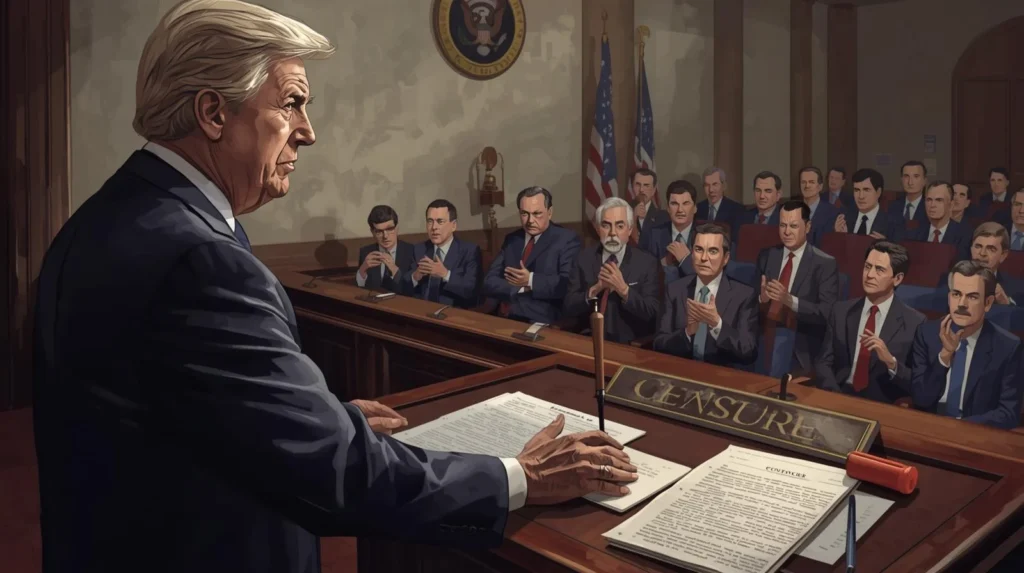

If you’ve recently seen headlines or social media debates asking “what does censure of Al Green mean?”, you’re not alone. The phrase sounds formal, political, and confusing—especially if you don’t closely follow government proceedings.
People usually search this term after hearing it on the news, seeing it trend online, or encountering heated discussions about accountability, free speech, or political protest. The confusion often comes from not knowing what “censure” actually means and how it applies to a real person like Al Green.
This article breaks it down clearly, calmly, and with real-life context—no legal jargon overload, no assumptions—just a practical explanation you can actually use.
What Does Censure of Al Green Mean – Quick Meaning
In simple terms, the censure of Al Green means that a governing body formally expressed official disapproval of his actions, without removing him from office.
Think of it as a serious public reprimand, not a punishment like expulsion or suspension.
Key points:
- Censure is a formal statement of disapproval
- It does not remove Al Green from office
- It becomes part of the official public record
Simple examples:
- “He wasn’t removed, but the censure made it clear his actions crossed a line.”
- “The House voted to censure Al Green for conduct they considered inappropriate.”
- “Censure is more than criticism—it’s official.”
Origin & Background
What Does “Censure” Mean Historically?
The word censure comes from Latin censere, meaning to judge or assess. Historically, it referred to moral or official judgment by an authority.
Over time, especially in political systems like the U.S. Congress, censure became a formal disciplinary tool—stronger than criticism, weaker than removal.
How It Applies to Al Green
Al Green is a public official, and when discussions of censure arise around him, they usually relate to actions taken during official proceedings, speeches, or protests viewed as violating established rules or decorum.
The term gained wider public attention due to:
- News coverage
- Viral clips or quotes
- Political polarization on social platforms
In short, the phrase entered mainstream conversation because people wanted clarity—not legal textbooks.
Real-Life Conversations (MANDATORY)
WhatsApp Chat
Person A:
Did you see they censured Al Green?
Person B:
Yeah, but that doesn’t mean he lost his job. It’s more like an official warning.
Instagram DMs
Person A:
So is censure like getting fired?
Person B:
Nope. It’s more like being publicly called out by the system.
TikTok Comments
User 1:
Why are people mad about the censure?
User 2:
Because some see it as accountability, others see it as political targeting.
Emotional & Psychological Meaning
The phrase “censure of Al Green” carries more than a technical meaning—it triggers emotional reactions.
Why People React Strongly
- Supporters may feel the censure is unfair or silencing
- Critics may see it as overdue accountability
- Neutral observers often feel confused by the process
Psychologically, censure hits a sensitive nerve because it blends:
- Authority
- Morality
- Public shame
- Power dynamics
It reflects how modern audiences interpret leadership—not just by rules, but by values.
Usage in Different Contexts
Social Media
On platforms like X or TikTok, “censure” is often used emotionally:
- As proof of wrongdoing
- As evidence of political bias
Context is usually simplified, sometimes oversimplified.
Friends & Casual Conversation
Among friends, it’s often explained casually:
- “He got officially called out.”
- “They didn’t kick him out, just made a statement.”
Work or Professional Settings
In professional or academic settings, the term is used precisely:
- “Censure is a formal reprimand.”
- “It carries symbolic but not legal penalties.”
Casual vs Serious Tone
- Casual: “They basically scolded him publicly.”
- Serious: “The body issued a formal censure.”
Common Misunderstandings
What People Get Wrong
- ❌ Thinking censure means removal from office
- ❌ Assuming it carries legal penalties
- ❌ Believing it’s just social media outrage
When the Meaning Changes
The meaning shifts depending on:
- The authority issuing the censure
- The rules of that institution
When It Should NOT Be Used
- To describe criminal punishment
- As a synonym for impeachment
- In casual insults without authority
Comparison Table
| Term | Meaning | How It Differs |
| Censure | Formal disapproval | No removal or legal penalty |
| Reprimand | Mild official warning | Less public |
| Expulsion | Forced removal | Strongest consequence |
| Criticism | Opinion-based | No official power |
| Impeachment | Formal charges | Legal process involved |
Key Insight:
Censure sits in the middle—it’s symbolic, serious, and public, but not career-ending.
Variations / Types of Censure (10)
- Congressional censure – Formal disapproval by Congress
- Legislative censure – Issued by state or local bodies
- Professional censure – Used in ethics boards
- Judicial censure – Applied to judges
- Party-based censure – Issued within political parties
- Symbolic censure – Mostly public messaging
- Procedural censure – For rule violations
- Behavioral censure – For conduct-related actions
- Ethical censure – Based on moral standards
- Public-record censure – Entered permanently into records
How to Respond When Someone Uses It
Casual Replies
- “It’s basically an official warning.”
- “He wasn’t removed—just formally criticized.”
Funny Replies
- “Political timeout, not fired.”
- “Scolded, not suspended.”
Mature / Confident Replies
- “Censure is symbolic accountability, not a legal penalty.”
Private or Respectful Replies
- “It’s a serious action, but it doesn’t end someone’s role.”
Regional & Cultural Usage
Western Culture
Seen as part of democratic accountability and transparency.
Asian Culture
Often misunderstood, as public reprimand by authority carries heavier social weight.
Middle Eastern Culture
The concept exists, but public censure may be viewed as reputational damage rather than procedure.
Global Internet Usage
Online, the term is frequently simplified or emotionally charged.
FAQs
What does censure mean in politics?
A formal statement of disapproval issued by an official body.
Does censure remove someone from office?
No, it does not.
Is censure a punishment?
It’s symbolic, not legal or criminal.
Why was Al Green censured?
For actions deemed inappropriate under official rules.
Is censure permanent?
It becomes part of the public record.
Is censure rare?
It’s uncommon but not unprecedented.
Conclusion
So, what does censure of Al Green mean in real terms? It means a powerful institution formally expressed disapproval of his actions—publicly and officially—without removing him from office or imposing legal penalties.
Understanding censure helps separate emotion from process. It reminds us that accountability can exist without erasure, and criticism doesn’t always equal punishment.
In a world full of headlines and hot takes, clarity matters. And now, you have it.