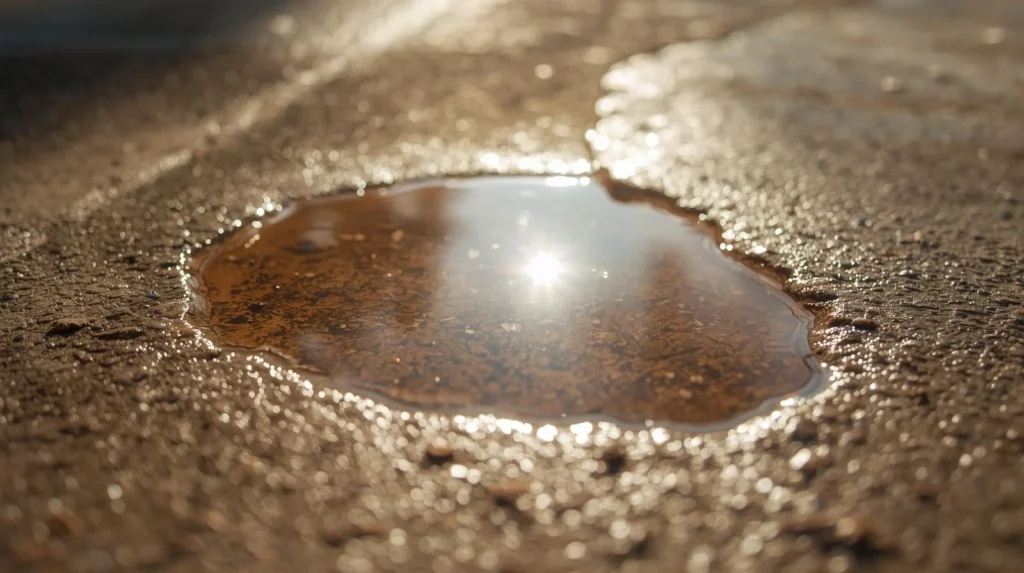

You’ve probably noticed water disappearing from a puddle after rain or clothes drying on a sunny day. That everyday change is called evaporation. It’s one of those words people hear in school, weather reports, or science videos—but still wonder what it truly means in real life.
Many people search for what does evaporation mean because the idea feels invisible. The water doesn’t spill or drain—it just seems to vanish. This article clears up that confusion with plain language, real situations, and relatable examples you’ll recognize instantly.
By the end, evaporation won’t feel like a textbook term. It’ll feel like something you see and experience every day.
What Does Evaporation Mean – Quick Meaning
Evaporation is the process where a liquid slowly turns into a gas, usually when it’s warmed, without boiling.
In simple terms:
- Liquid particles gain energy
- They escape into the air
- The liquid level slowly goes down
Everyday examples:
- “The water in my glass evaporated overnight.”
- “Sweat evaporates from your skin and cools you down.”
- “The puddle evaporated after the sun came out.”
Evaporation happens all around us, often without us noticing it.
Origin & Background
The word evaporation comes from the Latin word evaporare, meaning “to disperse as vapor.” Early scientists used it to describe how liquids slowly disappear into the air.
Long before modern science, people observed evaporation:
- Farmers noticed soil drying after rain
- Sailors saw seawater dry on decks
- Ancient cultures used evaporation to make salt
Over time, evaporation became a key idea in understanding weather, climate, cooking, and even how our bodies stay cool. While it’s not slang, the term has become part of everyday language because it explains such a common experience.
Real-Life Conversations (Mandatory)
WhatsApp Chat
Person A:
Why does my water bottle feel lighter after sitting all day?
Person B:
Some of the water evaporates, especially if it’s warm. Totally normal.
Instagram DM
Person A:
My coffee went cold and there’s less of it now 😭
Person B:
That’s evaporation doing its thing. Heat makes liquid escape into the air.
Text Message
Person A:
How do wet clothes dry indoors?
Person B:
Evaporation. The water turns into vapor even without sunlight.
Emotional & Psychological Meaning
Evaporation connects to how people understand change. It’s slow, quiet, and easy to miss—much like small changes in life. People often use it metaphorically to describe things fading away over time.
Emotionally, evaporation represents:
- Gradual loss
- Natural transitions
- Letting go without force
Psychologically, it reflects patience. Nothing dramatic happens. No sudden moment. Just steady movement from one state to another. That’s why people relate evaporation to emotions, time, and even relationships.
Usage in Different Contexts
Social Media
People use evaporation casually:
- “My motivation evaporated by Friday.”
- “All my energy evaporated after work.”
It’s often used humorously or metaphorically.
Friends & Relationships
In conversations, evaporation explains everyday events:
- Drying clothes
- Cooling skin
- Disappearing liquids
The tone is casual and familiar.
Work or Professional Settings
Evaporation appears in:
- Science classes
- Engineering
- Environmental discussions
Here, the tone is more precise and technical.
Casual vs Serious Tone
- Casual: “The water just evaporated.”
- Serious: “Evaporation increased due to higher surface temperature.”
Common Misunderstandings
Many people misunderstand evaporation. Here are the most common mistakes:
- Thinking evaporation only happens when it’s hot
It happens at any temperature, just faster when warm. - Confusing evaporation with boiling
Boiling is rapid and visible. Evaporation is slow and invisible. - Believing the liquid disappears forever
It turns into vapor and stays in the air. - Using evaporation for solids
Evaporation applies only to liquids.
Knowing these differences helps you use the term correctly.
Comparison Table
| Term | Meaning | How It’s Different |
|---|---|---|
| Evaporation | Liquid to gas slowly | Happens at surface, any temperature |
| Boiling | Liquid to gas rapidly | Happens throughout liquid at boiling point |
| Condensation | Gas to liquid | Opposite of evaporation |
| Melting | Solid to liquid | Different state change |
| Sublimation | Solid to gas | Skips liquid stage |
Key Insight:
Evaporation is unique because it’s slow, surface-based, and often invisible—making it easy to overlook but essential to life.
Variations / Types of Evaporation
- Natural Evaporation – Happens in nature, like lakes drying.
- Surface Evaporation – Occurs only at the liquid’s surface.
- Rapid Evaporation – Speeds up with heat or wind.
- Slow Evaporation – Happens in cool or still air.
- Sweat Evaporation – Cools the human body.
- Soil Evaporation – Water leaving the ground.
- Ocean Evaporation – Drives the water cycle.
- Indoor Evaporation – Clothes drying inside homes.
- Industrial Evaporation – Used in manufacturing and food processing.
Each type follows the same basic rule but occurs in different settings.
How to Respond When Someone Uses It
Casual Replies
- “Yeah, that happens when it’s warm.”
- “Totally normal—just evaporation.”
Funny Replies
- “The water didn’t leave, it evolved.”
- “Evaporation stole it.”
Mature / Confident Replies
- “It’s evaporation caused by heat and airflow.”
- “That’s how liquids naturally change into vapor.”
Private or Respectful Replies
- “It’s a natural process—nothing to worry about.”
- “Evaporation happens quietly over time.”
Regional & Cultural Usage
Western Culture
Evaporation is commonly taught early in school and referenced in weather and daily life.
Asian Culture
It’s closely tied to agriculture, monsoons, and rice farming where water management matters.
Middle Eastern Culture
Evaporation is often discussed in relation to heat, deserts, and water conservation.
Global Internet Usage
Online, evaporation is used both scientifically and metaphorically, especially in memes and casual explanations.
FAQs
What does evaporation mean in simple words?
It means a liquid slowly turns into gas and mixes with the air.
Does evaporation need heat?
No, but heat makes it happen faster.
Is evaporation the same as boiling?
No. Boiling is fast and visible; evaporation is slow and quiet.
Why does sweat cool your body?
Because evaporation removes heat from your skin.
Can evaporation happen indoors?
Yes, even without sunlight.
Is evaporation part of the water cycle?
Absolutely. It’s a key step.
Does evaporation stop at night?
No, it just slows down.
Conclusion
Evaporation is one of those quiet processes that shape everyday life. From drying clothes to cooling your skin, it’s always working in the background. Understanding what evaporation means helps you see the world a little more clearly—and appreciate how simple changes can have powerful effects.
Once you notice it, you’ll see evaporation everywhere. And that’s the beauty of learning something familiar, deeply, and naturally.