
If you’ve spent time on TikTok, Instagram, or even YouTube comments, you’ve probably seen the word “mewing” pop up—and not in the way you’d expect. At first glance, it sounds like something related to cats. But in modern slang, it carries a completely different meaning.
People search “what does mewing mean slang” because the term shows up in videos about appearance, confidence, and self-improvement—but rarely gets explained clearly.
This article clears up that confusion. You’ll understand what “mewing” really means, where it came from, how people use it online, and why it has become such a trending concept—especially among younger audiences.
What Does Mewing Mean Slang – Quick Meaning
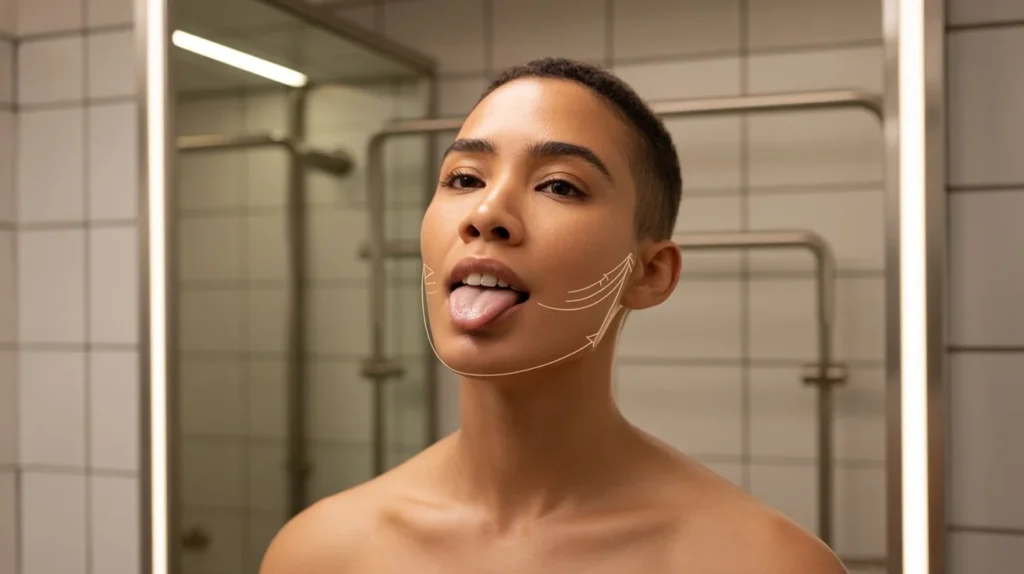
In slang, mewing refers to a technique or trend focused on improving jawline appearance by positioning the tongue against the roof of the mouth.
Simple breakdown:
- A facial posture technique
- Often associated with jawline definition
- Popular in self-improvement and looks-based content
Quick examples:
- “He’s been mewing for months and his jawline looks sharper.”
- “Try mewing—it might help your posture too.”
- “Everyone on TikTok is talking about mewing now.”
At its core, slang use of “mewing” blends appearance, discipline, and internet culture.
Origin & Background
The term “mewing” actually comes from Dr. John Mew, a British orthodontist, and his son Mike Mew. They promoted the idea that proper tongue posture can influence facial structure over time.
Originally, this wasn’t slang at all—it was a technical concept in orthodontics.
But things changed when:
- Fitness influencers picked it up
- TikTok creators turned it into a trend
- Online communities linked it to “glow-ups” and attractiveness
Over time, “mewing” evolved from a niche health idea into a viral slang term associated with self-improvement, confidence, and looksmax culture.
Today, it’s less about dentistry and more about how people present themselves online.
Real-Life Conversations
WhatsApp Chat
Person A:
Bro, what’s this mewing thing everyone keeps talking about?
Person B:
It’s basically keeping your tongue on the roof of your mouth to improve your jawline.
Person A:
Wait, that actually works?
Person B:
People say it does—but consistency matters.
Instagram DMs
Person A:
Your face looks different lately, not gonna lie.
Person B:
Haha yeah, I’ve been trying mewing and fixing my posture.
Person A:
That’s wild… I thought it was just a trend.
TikTok Comments
User1:
Mewing changed my profile so much.
User2:
Or maybe you just grew up 😭
User3:
Still trying it though, no harm in improving posture.
These conversations show how casual, curious, and slightly skeptical people are about the term.
Emotional & Psychological Meaning
Mewing isn’t just about jawlines—it taps into something deeper.
Why people connect with it:
- Desire to look more confident
- Interest in self-improvement without expensive treatments
- Control over personal image
It reflects a mindset of:
- “I can improve myself naturally”
- “Small habits lead to big changes”
- “Discipline equals attractiveness”
For many, mewing becomes less about appearance and more about feeling in control of how they present themselves.
It’s part of a broader cultural shift toward:
- Self-awareness
- Personal growth
- Quiet confidence
Usage in Different Contexts
Social Media
On platforms like TikTok:
- Often shown in before/after transformations
- Paired with terms like “glow up” or “looksmax”
Example:
“Day 60 of mewing—results are subtle but real.”
Friends & Relationships
Among friends:
- Used jokingly or seriously
- Often tied to appearance improvements
Example:
“Start mewing, trust me.”
Work or Professional Settings
In professional contexts:
- Rarely used
- Might sound informal or out of place
Better avoided in formal communication.
Casual vs Serious Tone
- Casual: “Try mewing bro”
- Serious: “Proper tongue posture can support facial structure”
The tone depends on the audience and context.
Common Misunderstandings
1. “Mewing gives instant results”
It doesn’t. Any visible changes take time—if they happen at all.
2. “It’s scientifically guaranteed”
There’s debate around its effectiveness. Not all experts fully agree.
3. “It replaces medical treatment”
It doesn’t. It’s not a substitute for orthodontic care.
4. “It’s only about looks”
While often framed that way, it also relates to posture and breathing.
When NOT to use it:
- In serious medical discussions without context
- When giving professional health advice
- As a guaranteed solution for facial changes
Comparison Table
| Term | Meaning | Context | Tone |
|---|---|---|---|
| Mewing | Tongue posture for jawline improvement | Self-improvement trends | Neutral |
| Glow Up | Overall appearance improvement | Social media | Positive |
| Looksmaxing | Maximizing physical attractiveness | Online forums | Intense |
| Natural Posture | Proper body alignment | Health & wellness | Professional |
| Surgery | Medical alteration | Clinical | Serious |
Key Insight:
“Mewing” sits between casual self-improvement and appearance-focused trends, making it accessible but often misunderstood.
Variations / Types of Mewing (Slang Usage)
- Hard Mewing
Applying strong tongue pressure
→ Often exaggerated online - Soft Mewing
Gentle, natural tongue placement
→ More realistic approach - Passive Mewing
Maintaining posture without effort
→ Long-term habit - Active Mewing
Consciously holding tongue position
→ Beginner stage - Mewing Challenge
Tracking progress over time
→ Popular on TikTok - Silent Mewing
Practicing without talking about it
→ Personal improvement mindset - Mewing Glow-Up
Linking it to transformation
→ Visual results focus - Posture Mewing Combo
Combining posture + mewing
→ Holistic improvement - Mewing Routine
Daily habit tracking
→ Discipline-based - Trend Mewing
Following it just because it’s viral
→ Less serious intent
How to Respond When Someone Uses It
Casual Replies
- “Yeah, I’ve heard about that.”
- “Thinking of trying it too.”
Funny Replies
- “So I just sit there with my tongue up all day? 😂”
- “Next level self-improvement unlocked.”
Mature / Confident Replies
- “It’s interesting, but I focus more on overall health.”
- “Good habits matter more than quick trends.”
Private / Respectful Replies
- “If it helps your confidence, go for it.”
- “Just make sure it’s safe and realistic.”
Regional & Cultural Usage
Western Culture
- Strong presence on TikTok and YouTube
- Linked with self-improvement trends
Asian Culture
- More focus on facial aesthetics and structure
- Sometimes tied to beauty standards
Middle Eastern Culture
- Less mainstream but growing
- Often discussed in fitness or grooming circles
Global Internet Usage
- Widely recognized slang
- Spread through short-form video content
Across regions, the meaning stays similar—but the importance placed on it varies.
FAQs
1. What does mewing mean in slang?
It refers to a technique of placing the tongue on the roof of the mouth to improve jawline appearance.
2. Is mewing scientifically proven?
There is debate. Some benefits relate to posture, but major facial changes are not guaranteed.
3. Why is mewing trending?
Social media platforms popularized it through transformation videos and self-improvement content.
4. Can anyone try mewing?
Yes, but it should be done naturally without force or unrealistic expectations.
5. Is mewing only about looks?
No, it’s also linked to posture, breathing, and general awareness.
6. How long does it take to see results?
If any changes occur, they take time—often months or longer.
7. Is mewing safe?
Generally yes, if done gently. Avoid extreme pressure or unrealistic practices.
Conclusion
“Mewing” started as a technical idea but quickly became something bigger—a symbol of modern self-improvement culture.
People aren’t just talking about tongue posture. They’re talking about:
- Confidence
- Appearance
- Discipline
- Personal growth
That’s why the term resonates so strongly today.
Whether you believe in its effectiveness or not, understanding what “mewing” means in slang helps you stay connected to how people think, communicate, and present themselves in the digital world.
And sometimes, that understanding matters just as much as the trend itself.