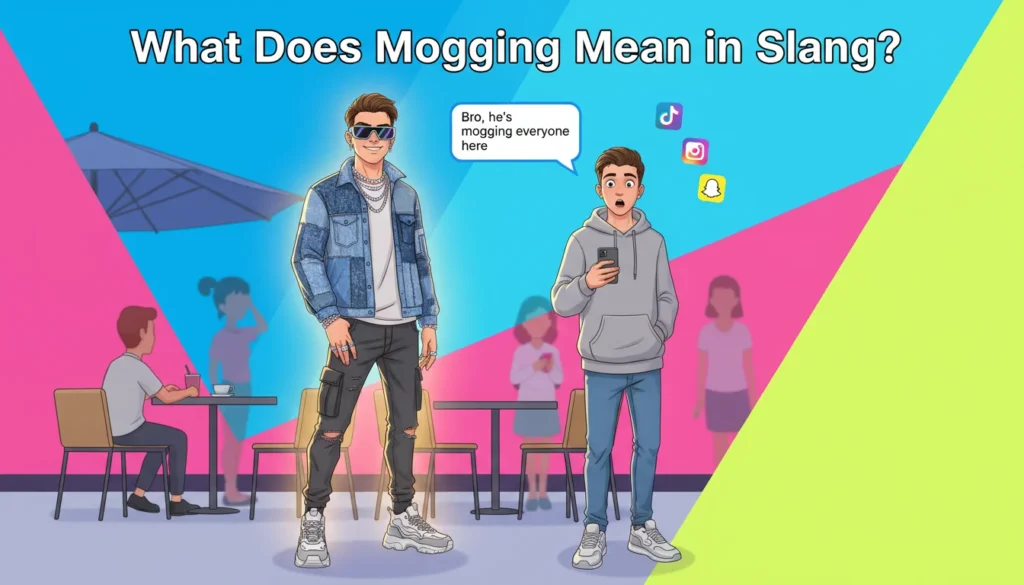

Mogging in slang means outshining or dominating someone, usually in looks, confidence, or social presence. In texting and online chats, people use it when someone clearly looks better or seems more impressive than another person.
You might see this term in TikTok comments, Snapchat messages, Instagram captions, or meme posts. It’s become popular in online culture where people compare style, appearance, or charisma.
Many users search for the phrase after seeing it in memes or social media discussions. The meaning isn’t always obvious if you’re new to internet slang.
This guide explains the real meaning of mogging, how people use it in chats, and how to respond when you see it online.
Mogging Meaning & Explanation
What Does Mogging Mean in Text?
In texting slang, mogging means outperforming or overshadowing someone, often in appearance or confidence.
Example:
“Bro was mogging everyone at the party.”
This means the person looked more impressive than everyone else.
Mogging Slang Meaning
As an internet slang term, mogging refers to someone dominating another person in attractiveness, style, or social energy.
It often appears in conversations involving:
- fashion comparisons
- attractiveness
- confidence
- social presence
For example:
“His outfit was mogging everyone’s.”
Here the speaker means the outfit looked much better than everyone else’s.
What Does Mogging Mean in Chat?
In casual chats, the slang appears when someone is clearly standing out.
Example conversation:
A: Did you see Alex at the event?
B: Yeah, he was mogging everyone there.
In this case, the word means Alex looked better or more confident than the others.
Mogging Meaning on Snapchat
On Snapchat, people use the slang when reacting to photos or stories.
Example:
“Bro you’re mogging in that selfie.”
This means the person looks very good or impressive.
Mogging Meaning on Instagram, TikTok & WhatsApp
You’ll see mogging used on multiple social media platforms.
Comments like:
“You’re mogging everyone in this pic.”
TikTok
TikTok creators often use it in captions when comparing appearance or style.
Example:
“POV: your friend is mogging everyone at the gym.”
In group chats, people might say:
“Jake was mogging the whole group tonight.”
Is Mogging an Acronym?
No. Mogging is not an acronym or abbreviation.
Instead, it’s a slang verb derived from internet culture. The word comes from online communities where people compare attractiveness and social dominance.
It’s not a typo or phonetic spelling. It’s simply a modern slang expression.
Tone & Context Variations
Like many slang terms, mogging can have different tones depending on the situation.
Funny Tone
Sometimes people use it jokingly.
Example conversation:
A: I wore sunglasses indoors today.
B: Relax, you’re not mogging anyone.
Here the word is used humorously.
Sarcastic Tone
It can also be sarcastic.
A: I bought a new jacket.
B: Wow, you’re really mogging everyone now.
The tone suggests playful teasing.
Romantic Tone
In romantic contexts, mogging may describe attractiveness.
Example:
A: Did you see Sarah tonight?
B: Yeah she was mogging everyone.
This suggests she looked stunning.
Angry Tone
Occasionally the slang appears during competitive conversations.
Example:
A: You always try to show off.
B: I’m not mogging anyone.
Playful Tone
Friends often use it lightheartedly.
Example:
A: That haircut looks great.
B: Am I mogging today?
Real Chat Examples (Natural & Relatable)
Here are 15 realistic chat conversations showing how people use mogging.
Example 1
A: Did you see John’s new haircut?
B: Yeah he’s mogging right now.
Example 2
A: That outfit looks amazing.
B: Thanks, trying to mog a little.
Example 3
A: Everyone was staring at you.
B: Was I mogging?
Example 4
A: Bro your gym progress is crazy.
B: I’m trying to mog this year.
Example 5
A: Jake looked confident today.
B: He was mogging everyone.
Example 6
A: That photo looks professional.
B: Guess I’m mogging now.
Example 7
A: Why is everyone complimenting you?
B: Because I’m mogging.
Example 8
A: Your outfit looks expensive.
B: Maybe I’m mogging a bit.
Example 9
A: Everyone noticed your style today.
B: That’s mogging energy.
Example 10
A: Did you see Mark at the party?
B: Yeah he was mogging hard.
Example 11
A: That new hairstyle suits you.
B: Appreciate it.
Example 12
A: You look confident today.
B: Trying to mog.
Example 13
A: The gym transformation is real.
B: Mogging season.
Example 14
A: Everyone likes your new look.
B: Guess it’s mogging time.
Example 15
A: That picture is perfect.
B: Pure mogging moment.
Grammar & Language Role
Part of Speech
Mogging usually functions as a verb in slang.
Example:
“He’s mogging everyone.”
Sentence Position
It can appear:
At the end of a sentence
“That outfit is mogging.”
In the middle
“He’s mogging everyone here.”
Does It Replace a Full Sentence?
Sometimes.
Instead of writing:
“You look better than everyone.”
People may say:
“Mogging.”
Tone Impact
The tone can be:
- humorous
- competitive
- admiring
- sarcastic
Formal vs Informal Use
Mogging is purely informal slang.
It should only appear in:
- social media posts
- text messages
- casual chats
Avoid using it in professional or academic writing.
How to Reply When Someone Says Mogging
If someone says you’re mogging, they’re usually complimenting your appearance or confidence.
Funny Reply
- “Let me enjoy the moment.”
- “Mogging mode activated.”
- “It’s my time.”
Serious Reply
- “Thanks, I appreciate it.”
- “That means a lot.”
Flirty Reply
- “Only trying to impress you.”
- “Maybe I’m mogging for you.”
Neutral Reply
- “Haha thanks.”
- “Appreciate it.”
Comparison Table
| Slang Term | Meaning | Usage Context | Tone | Popularity | Confusion Risk |
|---|---|---|---|---|---|
| Mogging | Outshining or dominating someone in looks or confidence | Social media, appearance comparisons | Playful / competitive | Medium | Medium |
| Flexing | Showing off success or style | Social media bragging | Confident | High | Low |
| Slaying | Looking amazing or performing extremely well | Fashion, performance | Positive | High | Low |
| Getting Mogged | Being outshined by someone | Competitive situations | Negative | Medium | Medium |
| Mid | Average or unimpressive | Casual opinions | Critical | High | Low |
Who Uses This Term?
Age Group
The slang is most common among:
- teenagers
- young adults
- online communities
Gen Z vs Millennials
Gen Z uses mogging more frequently because it spreads through social media trends.
Millennials may understand the term but use it less often.
Regions
You’ll mostly see the slang in:
- United States
- United Kingdom
- online global communities
Platforms Where It’s Most Common
Mogging frequently appears on:
- TikTok
- Snapchat
- Discord
Origin & Internet Culture Insight
The term mogging comes from internet communities discussing attractiveness and confidence.
Originally it appeared in forums where people compared physical appearance.
Meme Culture Influence
Memes helped spread the word because it humorously describes someone clearly standing out.
Example meme caption:
“POV: Your friend is mogging everyone at the party.”
TikTok Influence
TikTok greatly accelerated the spread of the slang.
Creators often use the term in:
- gym transformation videos
- fashion clips
- confidence-related content
Fast Typing Culture
Like many internet slang terms, mogging became popular because it’s short, expressive, and easy to type.
Why People Say Mogging on TikTok
Users often say mogging because it quickly describes someone dominating visually or socially in a group setting.
It’s catchy, simple, and fits meme culture perfectly.
Safety & Appropriateness
Is Mogging Rude?
No, mogging isn’t considered a bad word.
However, it can sometimes sound competitive depending on the tone.
Is It Offensive?
Usually not.
But saying someone is “mogging others” might imply comparisons that could make someone uncomfortable.
Should You Use It in School or Office?
It’s better to avoid slang like mogging in:
- professional emails
- workplace conversations
- academic writing
Experience-Based Insight
In everyday online conversations, people typically use mogging in a playful or admiring way. Friends often comment on photos or gym transformations by saying someone is mogging. Most of the time it’s meant as a compliment rather than criticism.
Frequently Asked Questions
What does mogging mean in text?
Mogging means outshining or dominating someone in appearance, confidence, or style.
Is mogging rude?
Usually no. It’s often used as a compliment or playful comparison.
What does mogging mean on Snapchat?
On Snapchat, mogging usually refers to someone looking impressive or better than others in a photo or story.
Is mogging the same as IDK?
No.
IDK means I Don’t Know, while mogging refers to outshining someone socially or visually.
Can adults use mogging?
Yes, but it’s more common among younger internet users.
How do you respond to mogging?
You can respond with humor or appreciation, such as:
“Thanks!” or “Just doing my best.”
Why is mogging popular on TikTok?
TikTok trends about fashion, gym progress, and confidence helped spread the slang widely.
Does mogging always involve appearance?
Not always. It can also describe confidence or social dominance.
Conclusion
Mogging is a modern internet slang term used to describe someone outshining or dominating others in appearance, style, or confidence.
It appears frequently in TikTok videos, Instagram comments, Snapchat chats, and casual texting conversations.
Although the term can sound competitive, it’s usually meant as a playful compliment or humorous observation.
If you understand the context, it becomes easier to recognize when someone is praising someone else’s confidence, style, or presence.
Usage Tips
- Use mogging only in casual chats.
- Avoid it in professional communication.
- Understand the tone before using it.
Common Mistakes
- Assuming it always means showing off
- Using it in formal writing
- Misunderstanding it as an insult
When to Use
Use mogging when describing someone standing out or dominating socially.
When to Avoid
Avoid it in professional, academic, or serious conversations.