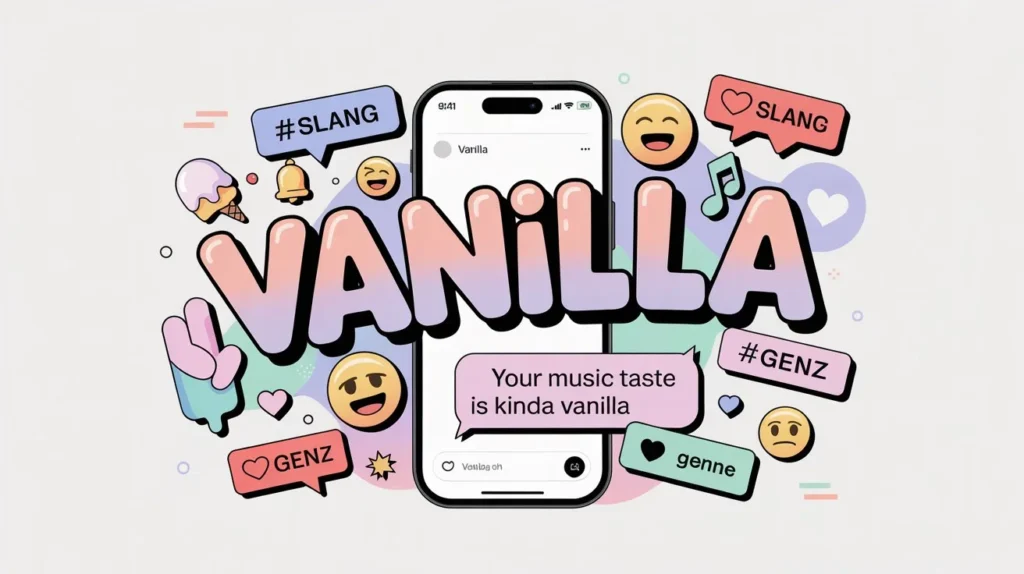

In slang, “vanilla” means something basic, ordinary, or conventional. In texting and online conversations, calling something “vanilla” usually implies it’s simple, predictable, or not very exciting compared to other options.
The term appears often in casual internet conversations, memes, and modern digital communication.
Vanilla Meaning in Text, Chat, and Social Media
Vanilla Meaning in Text
The “vanilla meaning in text” usually refers to something plain, traditional, or lacking variety.
People might use it when describing:
- Personality
- Fashion
- Entertainment
- Choices or preferences
Example:
A: What kind of movies do you like?
B: Honestly, pretty vanilla stuff like romantic comedies.
Here, “vanilla” means simple or mainstream.
Vanilla Slang Meaning
The vanilla slang meaning can vary slightly depending on the conversation, but the core idea remains the same.
Common meanings include:
- Basic or ordinary
- Conventional or traditional
- Not experimental or adventurous
- Safe and predictable
Example:
- “His music taste is kind of vanilla.”
- “She plays it vanilla when choosing outfits.”
In most cases, the word isn’t meant to be offensive—it’s simply descriptive.
What Does Vanilla Mean in Chat?
In casual chat, “vanilla” usually describes something simple or standard compared to more creative options.
Example conversation:
A: Did you customize your phone theme?
B: No, I kept the vanilla settings.
Here it means default or basic settings.
Vanilla Meaning on Snapchat
On Snapchat, the word appears mainly in conversations between friends.
Examples:
- “Your playlist is kinda vanilla.”
- “That outfit is nice but a bit vanilla.”
The tone is often lighthearted or teasing.
Vanilla Meaning on Instagram, TikTok, and WhatsApp
On Instagram, “vanilla” appears in comments describing something safe or mainstream.
Example:
- “Your style is clean but a little vanilla.”
TikTok
TikTok creators sometimes use the term when comparing trends.
Example:
- “If your skincare routine is just cleanser and moisturizer, that’s pretty vanilla.”
Here it means simple compared to complicated routines.
On WhatsApp, the slang appears casually between friends.
Example:
Friend 1: What flavor cake should we get?
Friend 2: Just vanilla, keep it simple.
In some contexts, the meaning overlaps with the literal flavor, so context matters.
Is “Vanilla” an Acronym, Short Form, or Something Else?
The slang “vanilla” is not an acronym or abbreviation.
Instead, it is a metaphorical slang expression derived from the common flavor.
| Type | Is “Vanilla” This? | Explanation |
|---|---|---|
| Acronym | ❌ No | Not made from initials |
| Short form | ❌ No | Not shortened from another phrase |
| Phonetic spelling | ❌ No | Pronounced normally |
| Metaphorical slang | ✅ Yes | Based on the idea of plain vanilla flavor |
Because vanilla ice cream is considered a basic flavor, the term evolved into slang for something simple or conventional.
Tone & Context Variations
The meaning of “vanilla” can change depending on tone.
Funny Tone
Sometimes it’s used jokingly.
Example:
A: I ordered the same burger again.
B: Of course you did. You’re so vanilla.
Here it’s playful teasing.
Sarcastic Tone
Sarcasm can make the word more critical.
Example:
A: I planned a surprise party with balloons and cake.
B: Wow, groundbreaking. Very vanilla.
This suggests the idea isn’t very creative.
Romantic Tone
In romantic contexts, the word may describe traditional relationships or preferences.
Example:
A: What kind of date do you like?
B: Honestly, I’m pretty vanilla—dinner and a movie works for me.
Here it means simple and classic.
Angry Tone
In arguments, it can sound dismissive.
Example:
A: I thought my idea was good.
B: It’s just too vanilla.
Here the speaker implies the idea lacks originality.
Playful Tone
Friends often use it casually.
Example:
A: You always order plain pizza.
B: What’s wrong with vanilla choices?
Real Chat Examples (Natural Conversations)
Below are realistic texting examples showing how “vanilla” appears in modern chat.
Example 1
A: What ice cream should we buy?
B: Let’s get something different.
A: You always choose vanilla though.
Example 2
A: I finally redecorated my room.
B: Is it colorful?
A: Not really, it’s kind of vanilla.
Example 3
A: What music are you listening to lately?
B: Mostly pop.
A: That’s pretty vanilla, but still good.
Example 4
A: I ordered the same coffee again.
B: Let me guess—vanilla latte?
Example 5
A: My phone wallpaper is still the default.
B: You’re living the vanilla life.
Example 6
A: I only play classic games.
B: Nothing wrong with being vanilla.
Example 7
A: What kind of fashion do you like?
B: Honestly, pretty vanilla styles.
Example 8
A: I tried a new hairstyle.
B: Is it bold?
A: No, still vanilla.
Example 9
A: I ordered plain pasta again.
B: Your taste is so vanilla.
Example 10
A: I watch mostly sitcoms.
B: That’s pretty vanilla entertainment.
Example 11
A: My playlist is just mainstream songs.
B: Nothing wrong with vanilla music.
Example 12
A: I kept my laptop settings default.
B: The vanilla setup.
Grammar & Language Role
Understanding the grammar of “vanilla” helps you use it naturally.
Part of Speech
In slang usage, “vanilla” functions mainly as an adjective.
Examples:
- “A vanilla outfit”
- “A vanilla idea”
Sentence Position
It typically appears before a noun.
Example:
- “That’s a vanilla design.”
Sometimes it appears after linking verbs.
Example:
- “Your style is vanilla.”
Can It Replace a Full Sentence?
Usually no.
However, in casual chat it might appear as a short reaction.
Example:
A: I chose plain white shoes.
B: Vanilla.
Tone Impact
Using “vanilla” adds a tone of:
- Casual commentary
- Mild criticism
- Playful teasing
Formal vs Informal Use
The slang meaning is mostly informal.
In formal writing, it’s better to use:
- “Conventional”
- “Standard”
- “Traditional”
How to Reply When Someone Says “Vanilla”
If someone calls something “vanilla,” your reply depends on tone.
Funny Reply
- “Classic never goes out of style.”
- “Vanilla is underrated.”
Example:
A: Your playlist is vanilla.
B: That means it’s timeless.
Serious Reply
- “I just prefer simple things.”
- “It works for me.”
Example:
A: Your design is vanilla.
B: I wanted it to stay clean and simple.
Flirty Reply
- “Maybe you can add some flavor.”
- “Teach me your style.”
Example:
A: Your date ideas are vanilla.
B: Then you should plan the next one.
Neutral Reply
- “That’s fair.”
- “I like simple things.”
Example:
A: That outfit is vanilla.
B: I’m okay with that.
Comparison Table With Similar Chat Terms
| Term | Meaning | Formal/Informal | Tone | Popularity | Risk of Misunderstanding |
|---|---|---|---|---|---|
| Vanilla | Basic or conventional | Informal | Neutral/Teasing | Medium | Medium |
| IDK | I don’t know | Informal | Neutral | Very High | Low |
| ION | I don’t | Informal | Casual | Medium | High |
| Dunno | Don’t know | Semi-informal | Relaxed | Medium | Low |
| IDC | I don’t care | Informal | Dismissive | High | Medium |
“Vanilla” differs because it describes something basic, not a response to a question.
Who Uses This Term?
Age Groups
The slang “vanilla” is used by:
- Teenagers
- Young adults
- Millennials
It’s understood by most age groups.
Gen Z vs Millennials
- Gen Z: Uses it casually in memes and chats
- Millennials: Often use it in everyday conversation
Regional Usage
The slang appears in:
- United States
- United Kingdom
- Canada
- Australia
- Online communities worldwide
Platforms Where It’s Most Common
You may see it on:
- TikTok
- Snapchat
- Discord
It often appears in internet slang discussions and meme culture.
Origin & Internet Culture Insight
The slang meaning of “vanilla” comes from food culture.
Vanilla ice cream became known as the most common and simple flavor, so people began using the term metaphorically.
Over time it evolved to mean:
- Basic
- Traditional
- Not adventurous
TikTok Influence
TikTok has popularized phrases like:
- “Vanilla aesthetic”
- “Vanilla lifestyle”
These phrases usually describe minimalist or simple trends.
Meme Culture
Memes often compare:
- “Vanilla choices”
- “Wild choices”
This contrast helps the slang stay relevant.
Fast Typing Culture
Internet slang favors short descriptive words, which is why “vanilla” works well in texting.
Is “Vanilla” Rude or Inappropriate?
Is It a Bad Word?
No.
“Vanilla” is not offensive or vulgar.
Can It Sound Insulting?
Sometimes.
If used harshly, it may imply someone is boring or uncreative.
Should You Use It in School or Work?
In casual discussions it’s fine.
But in professional settings it’s better to use words like:
- Conventional
- Standard
- Simple
Experience-Based Insight
In real online conversations, “vanilla” is often used to describe safe or predictable choices, such as music taste, fashion, or routines. Most of the time it’s meant as light teasing rather than a serious criticism, especially between friends.
Frequently Asked Questions
What does “vanilla” mean in text?
In texting slang, “vanilla” means something basic, simple, or conventional.
Is “vanilla” rude?
Not usually. It’s often playful or descriptive, though it can sound slightly critical depending on tone.
What does “vanilla” mean on Snapchat?
On Snapchat, the word usually describes something simple or predictable, such as music taste or outfit choices.
Is “vanilla” the same as IDK?
No.
- Vanilla = basic or ordinary
- IDK = “I don’t know”
Can adults use the slang “vanilla”?
Yes. The term is widely understood by both younger and older internet users.
How do you respond to someone calling something vanilla?
You can respond with:
- “I like simple things.”
- “Classic choices are the best.”
- “Nothing wrong with vanilla.”
Does “vanilla” always mean boring?
Not necessarily. It often simply means simple or traditional, not boring.
Final Summary
The slang “vanilla” usually refers to something basic, conventional, or simple in casual conversations and internet slang.
People use it to describe:
- Style
- Music taste
- Ideas
- Routines
- Preferences
While the term can sometimes imply something is boring, it often simply means traditional or straightforward.
Usage Tips
Use “vanilla” when:
- Describing something simple or classic
- Talking casually with friends
- Commenting on choices or preferences
Common Mistakes
Avoid:
- Using it as a harsh insult
- Using it in professional writing
- Assuming everyone understands slang context
When to Use vs When to Avoid
Use it in:
- Text messages
- Social media conversations
- Casual discussions
Avoid it in:
- Formal communication
- Academic writing
- Professional settings