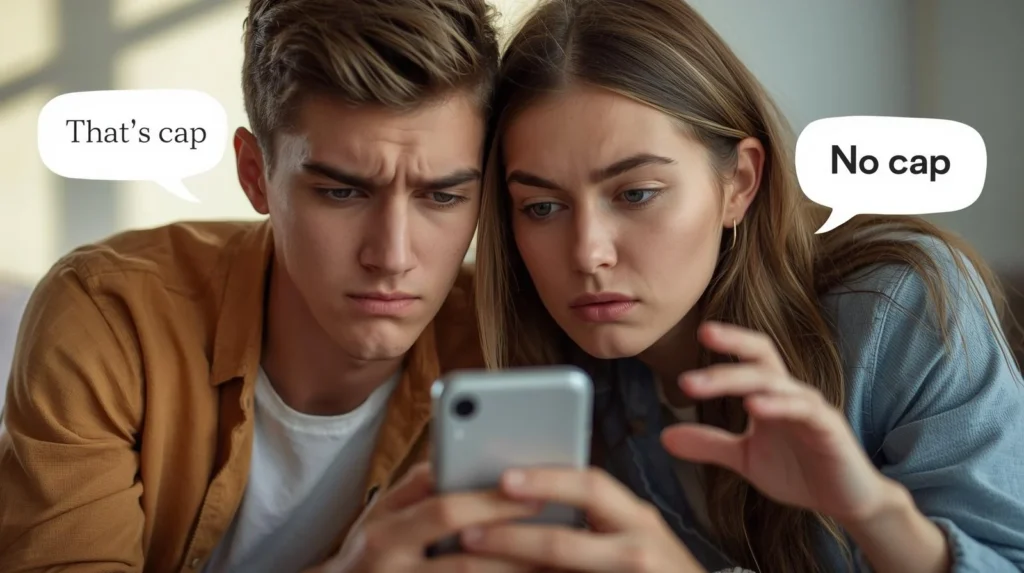

If you’ve spent any time on TikTok, Instagram, or even casual chats with friends, you’ve probably seen someone say “that’s cap” or “no cap.”
At first, it sounds confusing. What does a “cap” have to do with anything? Is it about hats? Lies? Something else entirely?
This article clears that confusion completely. You’ll understand exactly what “cap” means in slang, how people actually use it in real conversations, and when you should (or shouldn’t) say it yourself.
What Does Cap Mean in Slang – Quick Meaning
In modern slang, “cap” means a lie or something that isn’t true.
- “That’s cap” = That’s a lie
- “No cap” = I’m telling the truth
- “Stop capping” = Stop lying
Simple Examples:
- “You got a 100 on that test? That’s cap.”
- “I’m serious, no cap.”
- “Bro, stop capping.”
It’s short, punchy, and widely used—especially among younger people online.
Origin & Background
The slang term “cap” didn’t just appear overnight. It actually has roots in African American Vernacular English (AAVE), where “capping” has been used for decades to describe exaggerating or lying.
Over time, the term evolved:
- Early usage: “Capping” meant bragging or joking in a teasing way
- 2010s: Hip-hop culture and social media pushed it into mainstream language
- Today: It’s one of the most common slang terms across TikTok, memes, and everyday texting
The phrase “no cap” became especially popular through music and viral content, where artists used it to emphasize honesty or seriousness.
Real-Life Conversations
Here’s how people actually use “cap” in everyday chats.
1. WhatsApp Chat
Person A: I finished the whole assignment in one hour.
Person B: Nahhh that’s cap 😂
Person A: I swear, no cap!
2. Instagram DMs
Person A: That movie was the best I’ve ever seen.
Person B: Best ever?? You capping hard right now
Person A: Okay maybe top 5 😅
3. Text Message
Person A: I woke up at 5am and went for a run
Person B: Stop capping, you never wake up early
Person A: This time I did, no cap
These examples show how natural and playful the term feels in real conversations.
Emotional & Psychological Meaning
“Cap” isn’t just about calling someone a liar—it reflects something deeper about modern communication.
When people say “that’s cap,” they’re often expressing:
- Skepticism – “I don’t believe you”
- Playful teasing – Not always serious, often joking
- Social awareness – Calling out exaggeration in a light way
On the flip side, saying “no cap” shows:
- A desire to be believed
- Emphasis on honesty
- A need to sound real and authentic
In today’s fast, meme-driven culture, people value authenticity. Saying “no cap” is like saying, “I’m being real with you.”
Usage in Different Contexts
Social Media
This is where “cap” thrives.
- Used in comments, captions, and memes
- Often paired with emojis like 😂 or 😭
- Example: “You think that’s better than mine? Cap.”
Friends & Relationships
Among friends, it’s casual and fun.
- Used to tease or challenge
- Not usually taken seriously
- Example: “You said you’d be on time… that’s cap.”
Work or Professional Settings
Be careful here.
- Slang like “cap” is not appropriate in formal environments
- Avoid using it in emails, meetings, or professional conversations
Casual vs Serious Tone
- Casual: “That’s cap bro”
- Semi-serious: “Be honest, are you capping?”
- Serious: Rarely used seriously—it’s mostly informal
Common Misunderstandings
1. Thinking It Means a Hat
Some people assume it refers to an actual cap (hat). In slang, it has nothing to do with clothing.
2. Assuming It’s Always Rude
Calling something “cap” can sound harsh, but it’s often playful depending on tone and context.
3. Confusing It With “No Cap”
- “Cap” = Lie
- “No cap” = Truth
Mixing these up can completely change your message.
4. Using It in Formal Situations
Using slang like this in professional communication can come off as unprofessional or unclear.
Comparison Table
| Term | Meaning | Usage Style |
|---|---|---|
| Cap | Lie or false statement | Casual slang |
| No cap | Truth or honesty | Emphasis |
| Fake | Not real | Neutral |
| Lying | Saying something untrue | Formal/informal |
| Facts | Truth | Slang + serious |
| Real talk | Honest statement | Casual |
Key Insight:
“Cap” is more playful and cultural than simply saying “lie.” It carries tone, attitude, and personality.
Variations / Types
Here are common variations you’ll see:
- No cap – I’m telling the truth
- Stop capping – Stop lying
- Big cap – A huge lie
- That’s cap – That’s not true
- You capping – You’re lying
- Low cap – Slight exaggeration
- Full cap – Completely false
- Cap alert – Calling out a lie
- Cap check – Asking if something is true
- Zero cap – Absolute honesty
Each variation adds a slightly different tone or intensity.
How to Respond When Someone Uses It
Casual Replies
- “No cap, I’m serious”
- “Believe it or not, it’s true”
- “Okay okay, maybe a little cap 😅”
Funny Replies
- “Certified no cap moment”
- “Cap detector says otherwise”
- “I plead the fifth 😂”
Mature / Confident Replies
- “I understand why you’d think that, but it’s actually true”
- “I’m being honest here”
- “Let me explain it properly”
Private or Respectful Replies
- “Hey, I’m not exaggerating—I mean it”
- “I’d rather be honest with you”
- “Trust me on this one”
Regional & Cultural Usage
Western Culture
In the US and UK, “cap” is extremely popular, especially among Gen Z. It’s used casually in both online and offline conversations.
Asian Culture
In many Asian countries, the slang is understood mainly through social media. It’s used more online than in real-life conversations.
Middle Eastern Culture
Usage exists but is limited to younger, internet-savvy audiences. It’s often mixed with local slang.
Global Internet Usage
Globally, “cap” has become part of internet language:
- Widely used on TikTok and memes
- Understood even by non-native English speakers
- Often used humorously rather than seriously
FAQs
1. What does “cap” mean in slang?
“Cap” means a lie or something that is not true.
2. What does “no cap” mean?
“No cap” means you are telling the truth or being completely honest.
3. Is “cap” rude?
Not necessarily. It depends on tone. Among friends, it’s usually playful.
4. Can I use “cap” in formal settings?
No. It’s informal slang and not suitable for professional communication.
5. Where did “cap” slang come from?
It originated from African American Vernacular English and gained popularity through music and social media.
6. Is “cap” still popular?
Yes, it’s still widely used, especially among younger audiences and online communities.
7. What’s the opposite of “cap”?
“No cap” or simply saying “facts” or “truth.”
Conclusion
“Cap” might seem like just another internet word, but it actually reflects how language evolves with culture.
At its core, it’s simple:
- Cap = a lie
- No cap = the truth
What makes it powerful is how naturally it fits into real conversations—whether you’re joking with friends, reacting to a bold claim, or emphasizing honesty.
The key is knowing your audience. Use it casually, keep it light, and understand the tone behind it.
Because in real life, communication isn’t just about words—it’s about how they feel.
And when used right, “no cap”… it just hits differently.