
“Cap” in slang means a lie or something that isn’t true. In texting or online chats, people say “cap” when they think someone is exaggerating, joking falsely, or making a claim they don’t believe.
Cap Meaning in Text
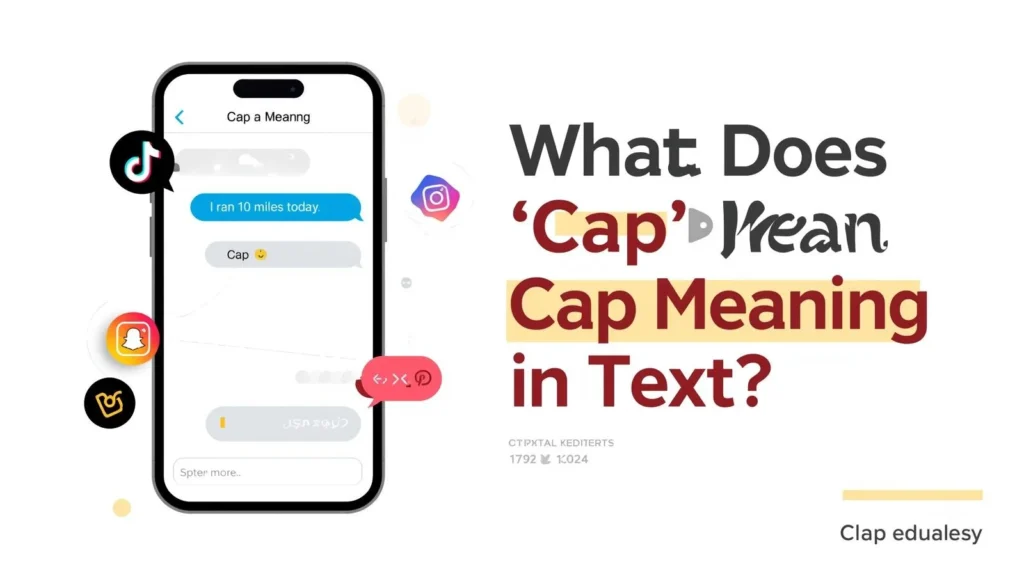
In texting, cap means a lie or false statement. When someone says something unbelievable, another person might respond with “cap” to show they think it’s not true.
Example:
A: I ran 10 miles before breakfast today.
B: Cap.
In this conversation, the second person is basically saying “I don’t believe you.”
Cap Slang Meaning
The cap slang meaning refers to exaggerating, lying, or making unrealistic claims in conversation.
Two very common forms include:
- Cap → a lie or exaggeration
- No cap → not lying / telling the truth
Example:
A: That burger was the best food I’ve ever eaten.
B: No cap?
Here, the second person is asking if the statement is actually true.
What Does Cap Mean in Chat?
In chat conversations, cap is a quick reaction word. Instead of typing a full sentence like “that’s not true,” someone can just type cap.
People use it when they think someone is:
- exaggerating
- bragging
- joking
- lying
Example:
A: I finished all my homework in 5 minutes.
B: Cap.
Cap Meaning on Snapchat
On Snapchat, the word cap is commonly used in:
- story replies
- private chats
- playful reactions
Example:
Story post:
“Just ran 8 miles today.”
Friend reply:
“Cap 😂”
This simply means “I don’t believe that.”
Cap Meaning on Instagram, TikTok, and WhatsApp
Cap Meaning on Instagram
On Instagram, cap often appears in comments and DMs.
Example:
Post caption:
“Best pizza in the world.”
Comment:
“Cap.”
Cap Meaning on TikTok
TikTok made the phrase extremely popular.
Common TikTok phrases include:
- “Stop the cap”
- “No cap”
Example caption:
“This is the best workout routine ever, no cap.”
Cap Meaning on WhatsApp
In WhatsApp chats, friends use it casually when reacting to messages.
Example:
A: I woke up at 5 AM today.
B: Cap.
Is “Cap” an Acronym?
No, cap is not an acronym.
It is a slang word that originally came from African American Vernacular English (AAVE).
It is not:
- a texting abbreviation
- a typo
- a phonetic spelling
Instead, it is a modern internet slang term used in casual digital communication.
Tone & Context Variations
Although the meaning stays similar, the tone of “cap” changes depending on context.
Funny Tone
Friends often use “cap” jokingly to tease each other.
Example conversation:
A: I can eat three large pizzas by myself.
B: Cap. You’d be full after one.
A: Watch me prove it.
Here the tone is playful.
Sarcastic Tone
Sometimes the word is used sarcastically to mock unrealistic claims.
Example:
A: I’m the best gamer in the world.
B: Cap.
This suggests the claim sounds exaggerated.
Romantic Tone
In romantic chats, “cap” can become playful flirting.
Example:
A: You probably forgot about me.
B: Cap. I think about you every day.
The word reassures the other person.
Angry Tone
During arguments, “cap” may feel more confrontational.
Example:
A: I never said that.
B: That’s cap. You literally texted it yesterday.
In this case, it challenges honesty.
Playful Tone
Among friends, it’s often lighthearted banter.
Example:
A: I’m the fastest runner in our class.
B: Cap. Jake beat you last week.
Real Chat Examples
Below are realistic conversations showing how cap appears in modern texting.
Example 1
A: I watched that entire show in one night.
B: Cap. That’s like 10 hours.
Example 2
A: I didn’t eat any junk food today.
B: Cap. I saw you with chips earlier.
Example 3
A: I’m the funniest person in our group.
B: Cap. That title belongs to Sarah.
Example 4
A: I woke up at 5 AM to study.
B: Cap. You were online at 3 AM.
Example 5
A: I’m going to the gym every day now.
B: Cap. You said that last week too.
Example 6
A: That burger was amazing.
B: No cap?
Example 7
A: I forgot there was a test today.
B: Cap. You were studying yesterday.
Example 8
A: I can beat you in chess easily.
B: Cap. Let’s play then.
Example 9
A: I ran five miles today.
B: Cap. You hate running.
Example 10
A: I’m quitting social media forever.
B: Cap. See you tomorrow.
Example 11
A: I didn’t check your message.
B: Cap. You were online all night.
Example 12
A: This pizza is the best food ever.
B: No cap?
Grammar & Language Role
Understanding the grammar helps explain why this slang is so common in texting.
Part of Speech
“Cap” usually works as:
- a noun
- an interjection
Examples:
- “That’s cap.”
- “Cap!”
Sentence Position
The word typically appears:
- alone as a reply
- at the end of a sentence
Examples:
- Cap.
- That’s cap.
Can It Replace a Full Sentence?
Yes.
Instead of saying:
“I don’t believe you.”
People simply say:
“Cap.”
This makes texting faster.
Tone Impact
The tone of the word depends heavily on context.
Possible tones include:
- teasing
- skeptical
- sarcastic
- playful
- argumentative
Formal vs Informal Use
“Cap” is extremely informal.
Appropriate for:
- texting friends
- social media comments
- online gaming chats
Not appropriate for:
- professional emails
- workplace communication
- academic writing
How to Reply When Someone Says Cap
Many people search how to reply when someone says cap.
Here are several response styles.
Funny Replies
Humorous responses keep the conversation light.
Examples:
- “You just can’t handle the truth.”
- “Okay detective.”
- “Believe what you want 😂”
Serious Replies
If you want to prove your statement is true.
Examples:
- “I’m serious.”
- “I have proof.”
- “I’m not joking.”
Flirty Replies
Some people turn the phrase into playful flirting.
Examples:
- “No cap, I mean it 😉”
- “You’ll see when we hang out.”
- “Why would I lie to you?”
Neutral Replies
Simple responses also work.
Examples:
- “It’s actually true.”
- “You can check.”
- “I’m being honest.”
Comparison Table: Cap vs Other Chat Slang
| Term | Meaning | Formal/Informal | Tone | Popularity | Risk of Misunderstanding |
|---|---|---|---|---|---|
| Cap | A lie or exaggeration | Informal | Skeptical or playful | Very high | Medium |
| idk | I don’t know | Informal | Neutral | Very high | Low |
| ion | I don’t | Informal | Casual | Medium | Medium |
| dunno | Don’t know | Semi-informal | Relaxed | Medium | Low |
| idc | I don’t care | Informal | Dismissive | High | Medium |
Who Uses This Term?
Age Group
“Cap” is most commonly used by:
- teenagers
- college students
- Gen Z internet users
Gen Z vs Millennials
Gen Z uses the term very frequently in daily online conversations.
Millennials understand it but often prefer phrases like:
- “That’s not true.”
- “I don’t believe that.”
Regional Use
Although it started in the United States, the slang is now used globally.
You may see it in:
- the UK
- Canada
- Australia
- online communities worldwide
Platforms Where It’s Most Common
“Cap” appears most often on:
- TikTok
- Snapchat
- Discord
- gaming chats
Origin & Internet Culture Insight
The slang term cap originally came from African American Vernacular English (AAVE).
Historically, it referred to bragging or exaggerating.
TikTok Influence
TikTok played a major role in spreading the phrase globally.
Popular variations include:
- “No cap”
- “Stop the cap”
These phrases became widely shared through viral videos.
Meme Culture
Internet memes helped the word grow quickly.
People often use it to react to:
- unbelievable stories
- exaggerated claims
- funny bragging posts
Fast Typing Culture
Short slang words like “cap” spread because they are:
- quick to type
- easy to understand
- perfect for fast digital communication
Safety & Appropriateness
Is Cap Rude?
Usually no.
However, in arguments it might sound dismissive or confrontational.
Is Cap a Bad Word?
No.
It is not profanity and is generally safe slang.
Should You Use It in School or the Office?
It’s best avoided in professional environments.
Use it for:
- casual chats
- texting friends
- social media
Avoid it in:
- workplace communication
- academic writing
- formal messages
Experience-Based Insight
In everyday online conversations, people rarely use “cap” completely alone unless they are reacting quickly to a surprising claim. More commonly, phrases like “that’s cap” or “no cap” appear in chats, especially among younger social media users.
Frequently Asked Questions
What does cap mean in text?
In texting, cap means a lie or exaggeration. People say it when they think someone’s statement isn’t true.
Is cap rude?
Not usually. It’s mostly playful, but in arguments it can sound dismissive.
What does cap mean on Snapchat?
On Snapchat, “cap” usually means “I don’t believe that.”
Is cap the same as idk?
No.
- Cap means something is a lie.
- idk means “I don’t know.”
Can adults use cap?
Yes, but the slang is mostly used by Gen Z and younger internet users.
How do you respond to cap?
You can respond by:
- joking about it
- proving your statement
- replying with “no cap” to show honesty
What does “no cap” mean?
“No cap” means no lie or completely honest.
Example:
“That was the best pizza ever, no cap.”
Final Summary
The slang term “cap” means a lie or exaggerated statement. It is widely used in texting, social media comments, and casual chats to question something that sounds unbelievable.
Key Takeaways
- Cap = lie or exaggeration
- No cap = telling the truth
- Popular with Gen Z and social media users
- Common on TikTok, Snapchat, Instagram, and messaging apps
Usage Tips
Use “cap” when:
- chatting with friends
- joking about exaggerated stories
- reacting to unbelievable claims
Common Mistakes to Avoid
Avoid these mistakes:
- thinking “cap” is an acronym
- using it in formal communication
- confusing it with abbreviations like idk
Remember: cap is simply a casual internet slang word meaning a lie.