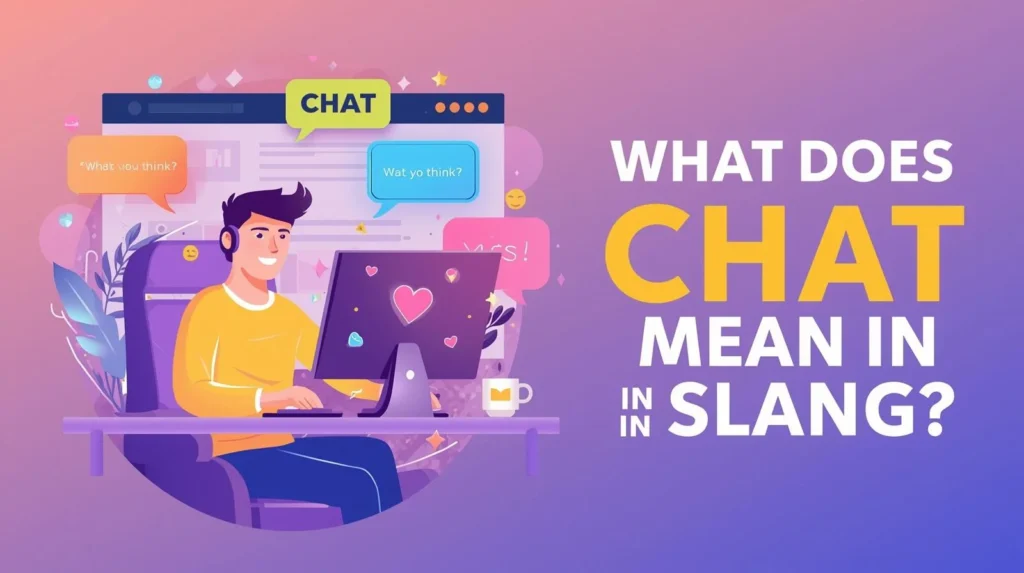

In slang, “chat” is often used to address a group of people online or viewers watching a stream. It usually means “everyone watching or listening right now”, especially on platforms like TikTok, Twitch, and live streams.
Chat Meaning in Text
Chat Meaning in Text Messages
The slang term “chat” has evolved beyond its traditional meaning of simply talking online. In modern internet culture, especially among Gen Z, the word chat is often used to refer to the audience, followers, or people currently watching a conversation or livestream.
Example:
“Chat, did you see what just happened?”
Here, the speaker is addressing everyone watching the stream or conversation, not just one person.
Chat Slang Meaning
In slang usage, chat means a group of people listening, watching, or following along with a conversation online.
This slang meaning became popular through:
- Live streaming culture
- Gaming communities
- TikTok and YouTube videos
- Interactive audience conversations
Example:
“Chat, is this outfit good or bad?”
In this case, the speaker is asking the entire audience for feedback.
What Does Chat Mean in Chat?
Interestingly, the slang “chat” is often used inside chat conversations themselves.
Instead of addressing someone directly, people say “chat” as if they are speaking to a crowd of viewers.
Example:
A: “Chat, should I order pizza or burgers?”
B: “Pizza obviously.”
Even in private messages, people sometimes jokingly say “chat” to mimic livestream language.
Chat Meaning on Snapchat
On Snapchat, the word chat typically keeps its normal meaning of sending messages. However, younger users sometimes use it in a slang way to refer to friends watching stories or reacting to posts.
Example:
“Chat saw that story and started roasting me.”
This means friends or viewers reacted to something posted.
Chat Meaning on Instagram, TikTok, and WhatsApp
On Instagram, chat slang appears in reels or live streams when creators speak directly to followers.
Example:
“Chat, should I post this or delete it?”
Here, chat = followers watching the content.
TikTok
TikTok helped popularize the slang meaning of chat.
Creators often say things like:
“Chat, what do we think?”
This style imitates livestream culture and makes viewers feel involved.
On WhatsApp, chat usually keeps its regular meaning, referring to a conversation or message thread.
Example:
“Check the group chat.”
However, some younger users jokingly say chat as if they are addressing an audience.
Example:
“Chat, this group is chaotic.”
Is Chat an Acronym or a Short Form?
Unlike many internet slang terms, chat is not an acronym.
Instead, it is simply a regular word that gained a new slang meaning through internet culture.
Here’s how it fits linguistically:
| Type | Explanation |
|---|---|
| Acronym | No |
| Short form | No |
| Phonetic spelling | No |
| Word with new slang meaning | Yes |
This happens frequently in digital communication, where existing words develop new meanings.
Tone & Context Variations
The meaning of chat can shift slightly depending on tone and situation.
Funny Tone
In a funny tone, chat is used jokingly to involve imaginary viewers.
Example:
A: “Chat, did you see me trip?”
B: “That replay was brutal.”
Sarcastic Tone
People sometimes say chat sarcastically when exaggerating a situation.
Example:
A: “Chat, I clearly failed that test.”
B: “Yeah… the whole internet saw it.”
Romantic Tone
Occasionally, chat appears in playful romantic conversations.
Example:
A: “Chat, should I tell them I like them?”
B: “Yes, do it!”
Here the speaker pretends an audience is giving relationship advice.
Angry Tone
Sometimes chat is used when expressing frustration.
Example:
A: “Chat, why is this happening today?”
B: “Because the universe hates Mondays.”
Playful Tone
Playful usage is the most common.
Example:
A: “Chat, should I skip class?”
B: “Don’t blame us if you get caught.”
Real Chat Examples (Natural & Relatable)
Here are 15 realistic texting-style conversations showing how chat appears in modern slang.
Example 1
A: “Chat, should I cut my hair?”
B: “Nooo keep it long.”
Example 2
A: “Chat, this movie is boring.”
B: “Give it 10 minutes.”
Example 3
A: “Chat, I forgot my homework.”
B: “Classic.”
Example 4
A: “Chat, rate this outfit.”
B: “Solid 8.”
Example 5
A: “Chat, should I text them first?”
B: “Yes. Life’s short.”
Example 6
A: “Chat, this game is impossible.”
B: “Skill issue.”
Example 7
A: “Chat, why did I agree to this?”
B: “Because it sounded fun.”
Example 8
A: “Chat, I might quit my job.”
B: “Take a vacation first.”
Example 9
A: “Chat, is pineapple on pizza okay?”
B: “Controversial topic.”
Example 10
A: “Chat, my phone battery is at 2%.”
B: “Charge it!”
Example 11
A: “Chat, this weather is perfect.”
B: “Time for a walk.”
Example 12
A: “Chat, help me choose a movie.”
B: “Comedy.”
Example 13
A: “Chat, should I buy this?”
B: “If you like it, yes.”
Example 14
A: “Chat, I just spilled coffee.”
B: “Moment of silence.”
Example 15
A: “Chat, I passed the test!”
B: “Let’s go!”
Grammar & Language Role
Understanding how chat functions grammatically helps clarify how people use it in slang.
Part of Speech
In slang conversations, chat usually acts as a noun referring to a group of listeners or viewers.
Example:
“Chat thinks this is funny.”
Sentence Position
Chat often appears at the beginning of a sentence.
Example:
“Chat, what do you think?”
However, it can also appear later.
Example:
“This is embarrassing, chat.”
Replacing a Full Sentence
Sometimes chat replaces longer phrases like:
- “Everyone watching”
- “Guys”
- “People online”
Example:
“Chat, help.”
Tone Impact
Using chat instead of addressing someone directly creates a casual and playful tone.
It also mimics streamer language.
Formal vs Informal Use
| Setting | Appropriate? |
|---|---|
| Text messages | Yes |
| Social media | Yes |
| Livestreams | Yes |
| Professional emails | No |
| Academic writing | No |
How to Reply When Someone Says Chat
When someone uses chat in a message, your response depends on the mood of the conversation.
Funny Reply
- “Chat says yes.”
- “The chat approves.”
Serious Reply
- “I think you should do it.”
- “Maybe wait and think first.”
Flirty Reply
- “Chat thinks you’re cute.”
- “Chat supports this relationship.”
Neutral Reply
- “Up to you.”
- “Sounds good.”
Comparison Table
| Term | Meaning | Formal/Informal | Tone | Popularity | Risk of Misunderstanding |
|---|---|---|---|---|---|
| Chat | Audience or group watching | Informal | Playful | Growing | Medium |
| IDK | I don’t know | Informal | Neutral | Very high | Low |
| ION | I don’t | Informal | Casual | Medium | Medium |
| Dunno | Don’t know | Semi-informal | Relaxed | High | Low |
| IDC | I don’t care | Informal | Blunt | High | Medium |
Who Uses This Term?
Age Group
The slang chat is most common among:
- Gen Z
- Younger Millennials
Older generations typically use the traditional meaning.
Region
This slang is popular in:
- United States
- United Kingdom
- Canada
- Australia
- Online global communities
Because internet culture spreads quickly, the term appears worldwide.
Platforms Where It’s Most Common
You’ll see chat slang most often on:
- TikTok
- Twitch
- YouTube livestreams
- Discord
- Instagram Live
These platforms involve interactive audiences, which explains the slang’s popularity.
Origin & Internet Culture Insight
The slang meaning of chat developed mainly from livestream culture.
Early Origins
Streaming platforms allowed creators to interact with viewers through live comment sections called chat boxes.
Creators began saying things like:
“Chat, what should I do next?”
Over time, the word chat became shorthand for the audience itself.
TikTok Influence
TikTok helped spread the phrase to everyday conversations.
Creators started saying “Chat…” in videos even when they weren’t streaming.
This created a meme-like communication style.
Meme Culture
The phrase “Chat, is this real?” became a common meme used when reacting to surprising or funny situations.
Fast Typing Culture
Modern messaging favors short, expressive language.
Instead of saying:
“Everyone watching this…”
People simply say:
“Chat.”
Safety & Appropriateness
Is Chat Rude?
No.
The slang chat is usually harmless and friendly.
Is Chat a Bad Word?
No.
It is simply a casual internet slang term.
Should You Use It in School or Office?
Use caution.
While it’s fine in casual conversations, it may sound strange in formal settings.
Better alternatives in professional situations include:
- Everyone
- Team
- Colleagues
Experience-Based Insight
In real online conversations, people often use chat jokingly even when they are not livestreaming. For example, someone might post a selfie and caption it:
“Chat, do we like this haircut?”
This playful style makes followers feel like they are part of a live audience, even on regular posts. It shows how internet culture turns everyday communication into interactive experiences.
Frequently Asked Questions
What does chat mean in text?
In slang, chat refers to the group of people watching or listening online, similar to addressing an audience.
Is chat rude?
No. The slang version of chat is usually playful and harmless.
What does chat mean on Snapchat?
On Snapchat, chat typically means a message conversation, but sometimes it can refer to friends reacting to content.
Is chat the same as IDK?
No.
- Chat refers to an audience or group.
- IDK means “I don’t know.”
Can adults use chat slang?
Yes, although it is most commonly used by Gen Z internet users.
How do you respond to chat in text?
You can respond normally with:
- Advice
- Opinions
- Jokes
For example:
“Chat approves.”
Why do people say chat on TikTok?
They use it to address viewers like a livestream audience, making content feel interactive.
Does chat always mean audience?
Not always.
Sometimes it still refers to a regular message conversation depending on context.
Summary
The slang term chat has evolved from simply meaning an online conversation to referring to the audience or viewers watching content. This meaning became popular through livestreaming platforms, TikTok culture, and interactive social media communication.
Today, people use chat casually when addressing groups online, asking for opinions, or joking with friends.
Usage Tips
Use chat when:
- Talking to followers or viewers
- Posting interactive content
- Joking about audience reactions
Common Mistakes
People sometimes misunderstand chat because:
- It also has a traditional meaning
- Context determines the slang interpretation
When to Use and When to Avoid
Use chat in:
- Social media posts
- Texting with friends
- Livestream conversations
Avoid chat in:
- Professional emails
- Academic writing
- Formal communication