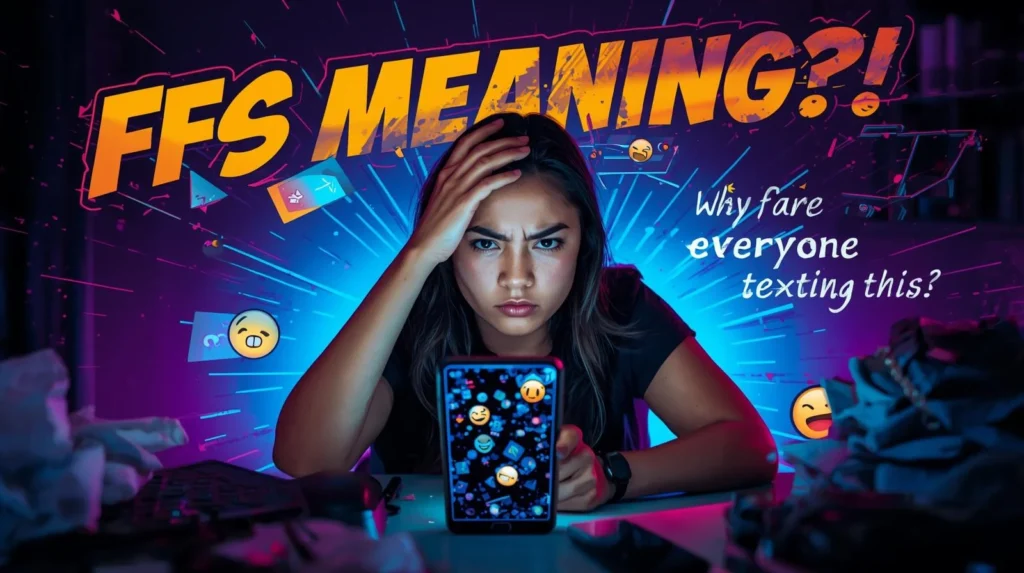

FFS in slang means “for fk’s sake.” In texting and online chat, it expresses frustration, annoyance, disbelief, or strong emotion about a situation.** It is a common internet slang term used in casual digital conversations.
Meaning & Explanation of FFS in Slang
What Does FFS Mean in Text?
The “what does FFS mean in slang” meaning in text refers to a short expression people use when they feel irritated, stressed, shocked, or tired of something.
Example:
- “FFS, my internet stopped again.”
- “Can you listen for once? FFS.”
In modern digital communication, this slang helps users quickly show strong emotions without typing long sentences.
FFS Slang Meaning
The FFS slang meaning comes from a strong emotional phrase used to show:
- Frustration
- Anger
- Disbelief
- Impatience
- Stress
Sometimes it can also be used playfully among friends, depending on tone.
What Does FFS Mean in Chat?
In chat, FFS can mean:
- “I’m annoyed.”
- “This is unbelievable.”
- “Please stop.”
- “Why is this happening?”
Example:
A: I forgot the tickets again.
B: FFS… now what?
FFS Meaning on Snapchat
On Snapchat, FFS appears in:
- Story captions
- Quick replies
- Rant messages
Example:
- “FFS I woke up late again.”
It often reflects real-time emotional reactions.
FFS Meaning on Instagram, TikTok & WhatsApp
- Used in captions about daily struggles.
TikTok
- Appears in rant videos, memes, and comment replies.
- Common in group chats during stressful discussions.
This shows how slang evolves with fast-paced online conversations.
Is FFS an Acronym?
FFS is:
- ✅ A texting abbreviation / acronym
- ❌ Not a typo
- ❌ Not phonetic slang
It shortens a strong phrase to make typing faster.
Tone & Context Variations
Funny Tone
Friends sometimes use FFS humorously.
A: I dropped my pizza.
B: FFS… tragedy.
A: Worst day ever.
Sarcastic Tone
Used ironically to exaggerate frustration.
A: I spilled water on my notes.
B: FFS, the universe hates you.
Romantic Tone
Sometimes used playfully in relationships.
A: You forgot our anniversary joke again.
B: FFS I’m sorry.
A: I’m teasing.
Angry Tone
Used seriously during arguments.
A: Stop interrupting me.
B: FFS just let me speak.
Playful Tone
Light teasing among friends.
A: You lost your keys again?
B: FFS not this again.
A: Classic you.
Real Chat Examples (Natural & Relatable)
Conversation 1
A: My phone battery died.
B: FFS you just charged it.
A: I know.
Conversation 2
A: I missed the bus.
B: FFS that’s unlucky.
A: Totally.
Conversation 3
A: He changed the plan again.
B: FFS seriously?
A: Yep.
Conversation 4
A: I forgot my password.
B: FFS write it down.
A: Lesson learned.
Conversation 5
A: The game crashed.
B: FFS not again.
A: Pain.
Conversation 6
A: I woke up late.
B: FFS set more alarms.
A: True.
Conversation 7
A: I spilled coffee on my laptop.
B: FFS that’s terrible.
A: I’m stressed.
Conversation 8
A: He canceled last minute.
B: FFS rude.
A: Exactly.
Conversation 9
A: I can’t find my wallet.
B: FFS check your bag.
A: Found it.
Conversation 10
A: My internet is slow.
B: FFS same problem here.
A: So annoying.
Conversation 11
A: I forgot to submit the assignment.
B: FFS panic mode.
A: Help.
Conversation 12
A: The meeting got extended.
B: FFS I’m exhausted.
A: Same.
Grammar & Language Role
Part of Speech
FFS acts as:
- Interjection → “FFS, this is frustrating.”
- Standalone reaction → “FFS.”
Sentence Position
It can appear:
- Beginning → “FFS, listen to me.”
- Middle → “Why, FFS, does this happen?”
- End → “You forgot again, FFS.”
Can It Replace a Full Sentence?
Yes.
Example:
A: I broke your headphones.
B: FFS.
Meaning: shock + frustration.
Tone Impact
Tone can make FFS:
- Aggressive
- Dramatic
- Humorous
- Emotional
Formal vs Informal Use
FFS is very informal.
Avoid using it in:
- Workplace emails
- Academic writing
- Professional messaging
How to Reply When Someone Says FFS
Funny Reply
- “Take a deep breath.”
- “Drama level: expert.”
Serious Reply
- “What happened?”
- “How can I help?”
Flirty Reply
- “Relax, I’ll fix it for you.”
Neutral Reply
- “Okay.”
- “That sounds stressful.”
Comparison Table
| Term | Meaning | Formal/Informal | Tone | Popularity | Risk of Misunderstanding |
|---|---|---|---|---|---|
| FFS | Frustration expression | Informal | Strong | High | Medium |
| IDK | I don’t know | Informal | Neutral | Very high | Low |
| ION | I don’t | Informal | Casual | Medium | Medium |
| Dunno | Don’t know | Informal | Relaxed | Medium | Low |
| IDC | I don’t care | Informal | Dismissive | High | Medium |
Who Uses This Term?
Age Group
Common among:
- Teenagers
- Young adults
- Gamers
- Online communities
Gen Z vs Millennials
Gen Z
- Uses FFS in memes and rants
Millennials
- Use it in stress-related conversations
Regions
- UK
- US
- Global internet users
Platforms
- TikTok
- Discord
Origin & Internet Culture Insight
FFS comes from spoken frustration expressions that moved into texting.
TikTok Influence
Rant videos and relatable content made FFS trendy again.
Meme Culture
Memes exaggerate frustration using FFS for humor.
Fast Typing Culture
People shorten emotional phrases for speed.
Safety & Appropriateness
Is FFS Rude?
It can sound rude or aggressive in serious situations.
Is It a Bad Word?
Indirectly — because it refers to a strong phrase.
Should You Use It in School or Office?
Best to avoid in formal settings.
Experience-Based Insight
In real life, many people use FFS more as emotional release than insult. It helps express stress quickly during busy online conversations. However, tone and relationship with the listener determine whether it sounds funny or offensive.
FAQ
What does FFS mean in text?
It means expressing frustration or annoyance.
Is FFS rude?
Sometimes, depending on tone.
What does FFS mean on Snapchat?
It shows real-time irritation or disbelief.
Is FFS the same as IDK?
No. IDK means “I don’t know.”
Can adults use FFS?
Yes, but it is informal slang.
How do you respond to FFS?
With empathy, humor, or calm replies.
Why is FFS popular online?
Because it quickly shows strong emotions.
Does FFS always mean anger?
No. It can also be playful or sarcastic.
Summary
The slang FFS is a popular texting abbreviation used to express frustration, shock, or impatience in online conversations.
Usage Tips
- Use in casual chats
- Understand emotional tone
- Avoid in formal communication
Common Mistakes
- Using it with strangers
- Sounding aggressive unintentionally
- Overusing it in serious discussions
When to Use
- Friend group chats
- Gaming conversations
- Stressful moments
When to Avoid
- Work messages
- Academic writing
- Sensitive topics