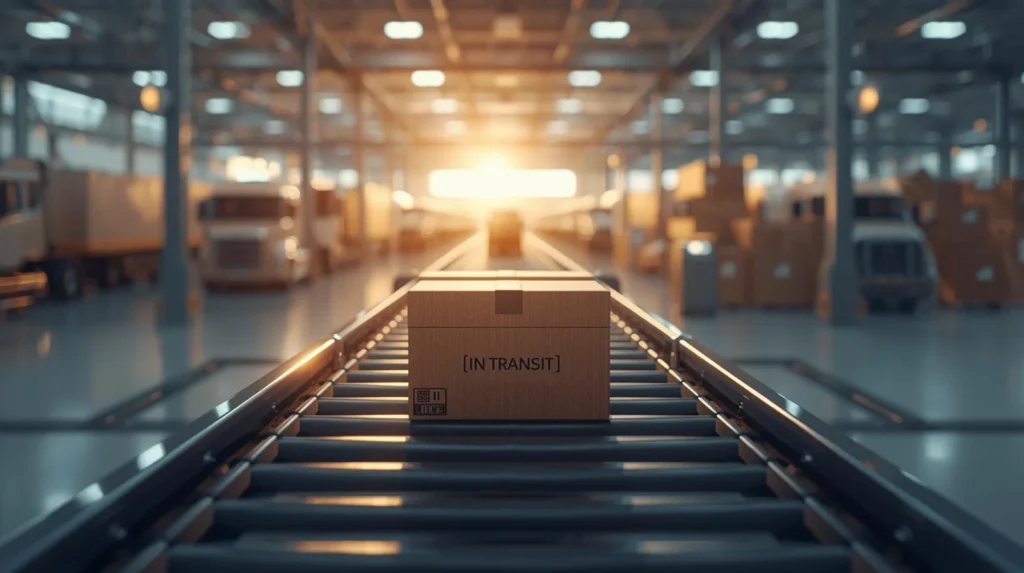

You check your tracking number.
You refresh the page.
And there it is:
“In Transit.”
But what does that actually mean?
Is your package moving?
Is it stuck somewhere?
Is it almost at your door—or still miles away?
If you’ve searched “what does it mean when a package is in transit,” you’re not alone. It’s one of the most common tracking updates, yet also one of the most misunderstood.
Let’s break it down in simple, practical terms—so you know exactly what’s happening behind the scenes.
What Does It Mean When a Package Is in Transit – Quick Meaning
When a package is in transit, it means:
- Your package has left its original shipping location.
- It is currently moving through the delivery network.
- It has not yet reached its final destination.
In short:
“In transit” means your package is on the way.
It may be:
- On a truck
- In a sorting facility
- On a plane
- At a regional distribution center
A few quick examples:
“Your order has shipped and is now in transit.”
“Package departed facility – in transit to next location.”
“Item processed and in transit.”
It doesn’t mean delayed.
It doesn’t mean lost.
It simply means moving.
Origin & Background
The phrase “in transit” comes from logistics and transportation terminology.
The word transit originates from the Latin word transire, meaning “to go across” or “to pass through.”
Long before online shopping, transit was used to describe:
- Goods transported by ship
- Freight carried by rail
- Mail moved between cities
With the rise of e-commerce and real-time tracking systems, “in transit” became one of the most visible shipping updates worldwide.
Today, it’s part of everyday digital language. Millions of people see it daily on:
- Amazon
- USPS
- FedEx
- UPS
- DHL
- Local courier apps
It has evolved from a logistics term into a common household phrase.
Real-Life Conversations
WhatsApp Chat
Person A: My shoes haven’t arrived yet.
Person B: What does tracking say?
Person A: It says “in transit.”
Person B: That means it’s on the way. Relax.
Instagram DM
Person A: I ordered that jacket last week and it still says in transit.
Person B: Mine stayed like that for 3 days before delivery. It’ll come.
TikTok Comments
Comment 1: Why has my package been in transit for 5 days??
Reply: It’s probably moving between sorting centers.
This shows how common the confusion is.
Emotional & Psychological Meaning
It might seem like a simple status update—but emotionally, “in transit” can trigger impatience.
When we order something, especially online, we expect speed.
“In transit” can feel like:
- Waiting
- Uncertainty
- Anticipation
- Mild anxiety
In today’s fast-paced world, we’re used to instant results. So when something is “in transit” for several days, it can feel longer than it actually is.
Psychologically, it represents the gap between expectation and arrival.
But here’s the key: transit is progress.
If it’s in transit, it hasn’t stalled. It’s moving.
Usage in Different Contexts
1. Social Media
People often joke about it:
- “My package has been in transit since 2019.”
- “In transit = emotional rollercoaster.”
Tone: Lighthearted, impatient humor.
2. Friends & Relationships
Sometimes used metaphorically:
- “I’m in transit between jobs.”
- “We’re in transit to a better phase.”
Tone: Transitional, reflective.
3. Work or Professional Settings
In business logistics:
- “Shipment is in transit to regional hub.”
- “Inventory currently in transit.”
Tone: Neutral, operational.
4. Casual vs Serious Tone
| Casual | Professional |
|---|---|
| “It’s still in transit.” | “The shipment remains in transit between facilities.” |
| Everyday speech | Logistics terminology |
Same phrase—different tone.
Common Misunderstandings
1. In Transit Means Out for Delivery
Not necessarily.
“In transit” means moving within the network.
“Out for delivery” means it’s on the final vehicle to you.
2. In Transit Means Delayed
No.
It only means it hasn’t arrived yet.
3. If It Stays In Transit, It’s Lost
Not always.
Sometimes tracking updates lag behind actual movement.
4. It Should Update Every Hour
Shipping systems don’t always update in real time. Scans happen at checkpoints.
5. In Transit Means It’s Close
It could still be in another city or country.
Comparison Table
| Status | Meaning | How It Differs |
|---|---|---|
| In Transit | Moving within shipping network | Not yet at final stage |
| Shipped | Left origin facility | Early stage |
| Out for Delivery | On vehicle to your address | Final stage |
| Delivered | Arrived at destination | Completed |
| Exception | Delay or issue occurred | Problem indicated |
Key Insight:
“In transit” signals progress—not completion.
Variations / Types of Transit Updates
- Departed Facility
Left a sorting center. - Arrived at Facility
Reached a new checkpoint. - In Transit to Next Facility
Moving between hubs. - International Transit
Crossing borders. - Customs Transit
Under inspection at border. - Air Transit
Traveling by airplane. - Ground Transit
Moving by truck or van. - Rail Transit
Transported by train. - Transit Delay
Movement paused due to weather or logistics. - Final Transit Stage
Approaching local delivery center.
Each version adds detail to the journey.
How to Respond When Someone Uses It
Casual Replies
- “It’s on the way.”
- “Just give it a day or two.”
Funny Replies
- “It’s sightseeing before arriving.”
- “Your package is taking the scenic route.”
Mature / Confident Replies
- “Transit means it’s progressing through the system.”
- “That’s normal before final delivery.”
Private or Respectful Replies
If someone is stressed:
- “I know waiting is frustrating.”
- “It should update soon.”
- “Let’s check the estimated delivery date.”
Regional & Cultural Usage
Western Culture
“In transit” is extremely common due to high online shopping volumes.
Consumers expect frequent tracking updates.
Asian Culture
Fast shipping standards (especially in countries like Japan and South Korea) mean transit times are often shorter.
Middle Eastern Culture
Transit times may vary more due to customs procedures and international routing.
Global Internet Usage
“In transit” has become almost universal. Regardless of country, the phrase typically signals the same thing: movement through the shipping network.
FAQs
1. What does it mean when a package is in transit?
It means the package is moving through the shipping network but has not yet been delivered.
2. How long can a package stay in transit?
It depends on distance, shipping method, and logistics. It can range from one day to several weeks for international shipments.
3. Is in transit the same as out for delivery?
No. Out for delivery means it will arrive that day. In transit means it is still moving between facilities.
4. Why hasn’t my tracking updated?
Tracking updates occur when packages are scanned at checkpoints. It may still be moving.
5. Can a package be lost while in transit?
It’s rare, but possible. If it exceeds the expected delivery window significantly, contact the carrier.
6. Does in transit mean it cleared customs?
Not necessarily. It could still be awaiting customs processing.
7. Should I worry if it says in transit for days?
Usually no. Check the estimated delivery date first.
Conclusion
So, what does it mean when a package is in transit?
It means your package is on its journey—moving between facilities, heading toward you, but not quite there yet.
It’s not lost.
It’s not stuck (in most cases).
It’s simply in motion.
In a world built on instant gratification, waiting can feel longer than it is. But “in transit” is a good sign—it means progress is happening behind the scenes.
Next time you see that status update, you’ll know exactly what it means.
Your package is on its way.