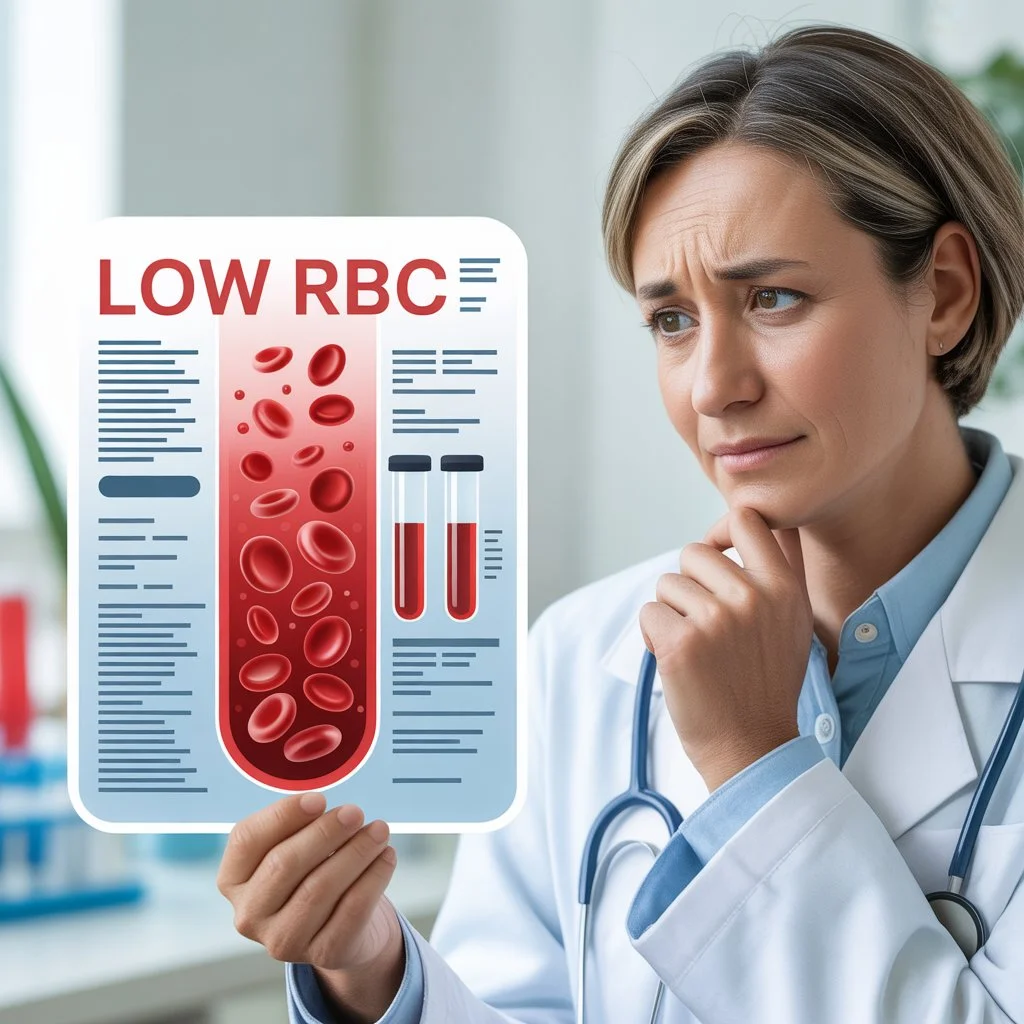

Seeing “low RBC” on a blood test can feel unsettling, especially if you weren’t expecting it. Many people search this term right after opening lab results, unsure whether to worry or wait.
Low RBC is a medical finding, not a diagnosis by itself. It points to what’s happening inside your body, often explaining symptoms like tiredness, weakness, or shortness of breath.
This guide clears the confusion by explaining what low RBC means, why it happens, and how people commonly talk about it in real life.
What Does Low RBC Mean? – Quick Meaning
Low RBC means your blood has fewer red blood cells than normal.
Red blood cells (RBCs) carry oxygen from your lungs to the rest of your body. When the count is low, your tissues may not get enough oxygen.
In simple terms:
- Fewer oxygen carriers in your blood
- Often associated with anemia
- Can cause fatigue, dizziness, or weakness
Everyday examples:
- “My doctor said my RBC is low, which explains why I’m exhausted all the time.”
- “The report shows low RBC, so they’re checking for iron deficiency.”
- “Low RBC doesn’t mean panic, but it does mean follow-up.”
Origin & Background
The term RBC comes from basic hematology, the study of blood. Red blood cells have been measured for over a century as a core indicator of health.
Doctors began tracking RBC counts routinely as lab testing became standardized. Over time, “low RBC” entered everyday language as patients gained access to their own lab reports through online portals.
Unlike slang terms, low RBC is clinical. However, the way people talk about it today—on social media, forums, and group chats—has made it feel more personal and relatable.
Real-Life Conversations (MANDATORY)
WhatsApp chat
Person A:
Just got my blood work back. It says low RBC. Should I be worried?
Person B:
I had that last year. Turned out I was low on iron. Doctor fixed it pretty fast.
Instagram DMs
Person A:
Why am I tired all the time?
Person B:
Honestly, check your blood. My low RBC explained everything.
Text message
Person A:
The lab report scared me. Low RBC sounds serious.
Person B:
It sounds scary, but it’s common. They’ll just look for the cause.
Emotional & Psychological Meaning
Low RBC often triggers anxiety because it shows up unexpectedly on medical reports. People tend to associate blood results with serious illness, even when the cause is mild or temporary.
Emotionally, it reflects:
- A sense of low energy or burnout
- Concern about long-term health
- Frustration when symptoms finally get a name
Psychologically, many feel relief once low RBC explains symptoms they’ve been ignoring. It validates that constant tiredness isn’t “just in your head.”
Usage in Different Contexts
Social Media
People often post screenshots of lab results asking for advice or reassurance. Low RBC is commonly mentioned alongside fatigue memes or wellness discussions.
Friends & Relationships
It’s used casually to explain behavior:
- “Sorry I’m canceling plans, my RBC is low and I feel drained.”
Work or Professional Settings
More formal tone:
- “I’m dealing with a temporary health issue related to low RBC.”
Casual vs Serious Tone
- Casual: “My RBC’s a bit low lately.”
- Serious: “My doctor is investigating persistent low RBC levels.”
Common Misunderstandings
What People Get Wrong
- Low RBC always means a serious disease
- It’s the same as low iron (it’s not always)
- It can’t be temporary
When the Meaning Changes
Low RBC during pregnancy, after illness, or following surgery may be expected and monitored rather than alarming.
When It Should NOT Be Used
Avoid self-diagnosing or labeling yourself anemic without professional interpretation. Low RBC is a clue, not a conclusion.
Comparison Table
| Term | Meaning | How It Relates |
| Low RBC | Fewer red blood cells | Core measurement |
| Anemia | Condition causing low RBC or hemoglobin | Often related |
| Low Hemoglobin | Less oxygen-carrying protein | May occur with low RBC |
| High RBC | Excess red blood cells | Opposite condition |
| Iron Deficiency | Lack of iron | Common cause |
Key Insight:
Low RBC is a measurement, while anemia and deficiencies explain why it’s low.
Variations / Types of Low RBC (Common Causes)
- Iron-deficiency related
Not enough iron to produce RBCs. - Vitamin B12 deficiency
Affects RBC formation and size. - Folate deficiency
Impairs healthy red blood cell production. - Chronic disease–related
Seen in long-term inflammatory conditions. - Blood loss–related
From injury, surgery, or heavy periods. - Bone marrow suppression
Reduced RBC production. - Pregnancy-related
Dilutional effect due to increased blood volume. - Kidney-related causes
Reduced erythropoietin hormone. - Genetic blood disorders
Less common but significant.
How to Respond When Someone Mentions Low RBC
Casual Replies
- “That explains the fatigue you’ve been talking about.”
- “Hopefully it’s something simple to fix.”
Funny Replies
- “Your blood just needs a coffee.”
- “Time to upgrade those oxygen carriers.”
Mature / Confident Replies
- “Good thing you caught it early. Now you can address it properly.”
Private or Respectful Replies
- “If you want to talk about it, I’m here.”
Regional & Cultural Usage
Western Culture
Low RBC is openly discussed, especially in wellness and preventative health conversations.
Asian Culture
Often approached cautiously, with strong emphasis on diet, balance, and traditional remedies alongside medical advice.
Middle Eastern Culture
Family involvement is common, and low RBC may prompt collective concern and care.
Global Internet Usage
The term is widely searched after lab results, especially through health portals and mobile apps.
FAQs
Is low RBC the same as anemia?
Not always. Anemia is a condition; low RBC is one possible indicator.
Can low RBC cause fatigue?
Yes. Reduced oxygen delivery commonly leads to tiredness and weakness.
Is low RBC dangerous?
It depends on the cause and severity. Many cases are mild and treatable.
Can dehydration cause low RBC?
Dehydration usually raises RBC concentration, not lowers it.
How is low RBC treated?
Treatment focuses on addressing the underlying cause, such as nutrient deficiency or blood loss.
Can low RBC be temporary?
Yes. Illness, pregnancy, or recovery periods can cause short-term changes.
Conclusion
Low RBC means your body has fewer red blood cells than it needs to efficiently carry oxygen. While the term can sound intimidating, it’s often the first step toward understanding unexplained fatigue or weakness.
For many people, low RBC becomes a turning point—a signal to slow down, pay attention, and take health seriously. When understood correctly, it’s not a label to fear, but information to use wisely.
Listening to your body, asking the right questions, and following up appropriately can turn a confusing lab result into a clear path forward.