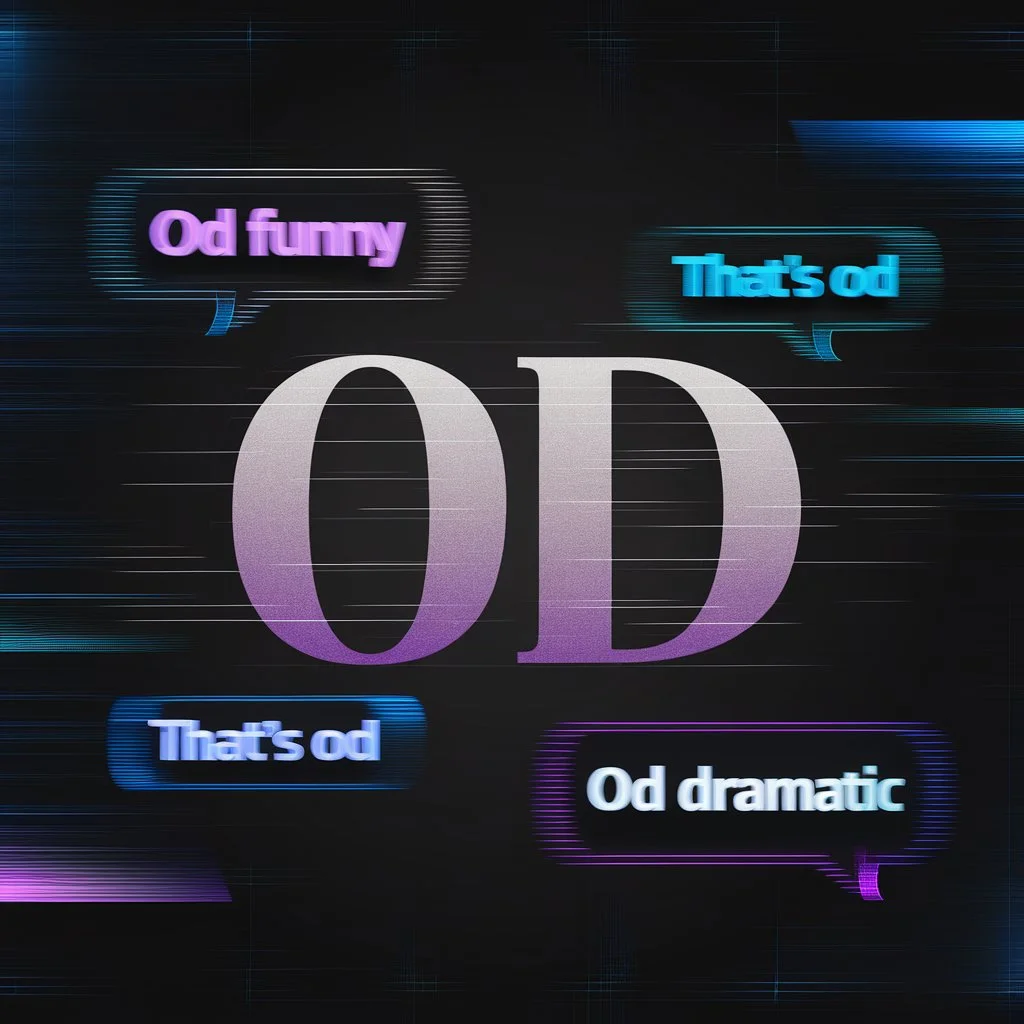

OD in slang usually means “overdoing it” or “overly / too much.” In text, it describes something excessive, dramatic, or extreme — often in a funny or casual way.
If you’ve seen someone text, “You’re OD,” or comment “That’s OD funny,” you might wonder what it actually means.
In modern digital communication, OD is an internet slang term used to describe something as excessive, extreme, or over-the-top.
Let’s break it down clearly and simply.
OD Meaning in Text
The OD meaning in text usually stands for:
- Overdoing
- Overly
- Too much
- Extremely
It’s commonly used to emphasize intensity.
Examples:
- “That test was OD hard.”
- “You’re OD dramatic.”
- “This food is OD good.”
In most cases, it replaces words like very or extremely.
OD Slang Meaning
The OD slang meaning depends on context, but most often it refers to something being excessive.
However, it can have another meaning:
- OD = Overdose
This second meaning is more serious and usually related to health or medical contexts.
But in everyday Gen Z vocabulary and casual chat phrase usage, OD typically just means “too much.”
What Does OD Mean in Chat?
When someone uses OD in chat, they usually mean:
- “You’re doing too much.”
- “That’s extra.”
- “That’s intense.”
Example:
A: I texted him 6 times.
B: That’s OD.
A: I know, I panicked.
It can be teasing, critical, or playful depending on tone.
OD Meaning on Snapchat
On Snapchat, OD is often used:
- In story replies
- In private snaps
- In casual reactions
Example:
“This filter is OD cute.”
It simply means “very” or “extremely.”
OD Meaning on Instagram, TikTok, WhatsApp
Used in comments:
- “That fit is OD.”
- “This glow-up is OD.”
TikTok
Common in comments:
- “This edit is OD clean.”
- “Why is this song OD catchy?”
More casual:
- “You’re OD funny bro.”
Across platforms, it functions as a texting abbreviation to show emphasis.
Is OD an Acronym?
Yes — but loosely.
OD originally stands for:
- Overdose
However, in slang use meaning “overly” or “overdoing it,” it functions more like a shortened form than a formal acronym.
It is:
✔ A short form
✔ A texting abbreviation
✔ An internet slang term
It is NOT:
- A typo
- A phonetic spelling
Tone & Context Variations
Tone matters a lot with OD.
1️⃣ Funny Tone
Used playfully.
A: I ate 5 slices of pizza.
B: That’s OD 😂
A: I regret nothing.
Here, it’s light and humorous.
2️⃣ Sarcastic Tone
Can imply someone is being dramatic.
A: He liked someone else’s photo.
B: You’re OD jealous.
A: I’m not! (I am.)
It becomes teasing.
3️⃣ Romantic Tone
Sometimes used affectionately.
A: I miss you.
B: You’re OD cute.
A: Stoppp.
It softens into flirtation.
4️⃣ Angry Tone
Can feel critical.
A: I just asked one question.
B: You’re OD annoying right now.
A: Wow okay.
Tone here feels harsher.
5️⃣ Playful Tone
Very common.
A: I changed my outfit three times.
B: OD dramatic.
A: It’s called fashion.
Playful teasing is the most common use.
Real Chat Examples
Here are realistic texting conversations:
1
A: This homework is so long.
B: It’s OD for no reason.
A: Exactly.
2
A: I bought another pair of shoes.
B: You’re OD.
A: It was on sale!
3
A: I rewatched that show again.
B: That’s OD dedication.
A: It’s comfort TV.
4
A: I ran 10km today.
B: OD fitness mode.
A: I’m trying.
5
A: I cried at that ad.
B: You’re OD emotional.
A: It was cute okay.
6
A: This burger is amazing.
B: OD good?
A: Like actually.
7
A: I stayed up till 4am.
B: That’s OD unhealthy.
A: Don’t judge me.
8
A: I cleaned my entire house today.
B: OD productive.
A: New era.
9
A: He posted her again.
B: You’re OD stalking.
A: I was just curious.
10
A: I bought concert tickets.
B: OD exciting!
A: I’m shaking.
11
A: I changed my bio again.
B: OD indecisive.
A: Maybe.
12
A: I ordered dessert too.
B: OD sweet tooth.
A: Worth it.
Grammar & Language Role
Part of Speech
OD functions mostly as:
- Adverb: “That’s OD funny.”
- Adjective (informal): “You’re OD.”
Sentence Position
Common positions:
- Before adjectives: “OD tired.”
- After subject: “You’re OD.”
- Standalone reaction: “That’s OD.”
Can It Replace a Full Sentence?
Yes.
Instead of:
“You’re overreacting.”
Someone might simply say:
“OD.”
Context fills in the rest.
Tone Impact
OD adds:
- Emphasis
- Intensity
- Casual attitude
Without emojis or tone markers, it can sound blunt.
Formal vs Informal Use
✔ Texting
✔ Social media
✔ Friend groups
❌ Workplace communication
❌ Academic writing
❌ Professional emails
It belongs in informal digital communication only.
How to Reply When Someone Says OD
How you respond depends on tone.
Funny Reply
- “Let me live.”
- “Mind your business.”
- “And what about it?”
Serious Reply
- “You’re right, I went too far.”
- “Okay, I’ll calm down.”
- “I didn’t realize.”
Flirty Reply
- “Only for you.”
- “You like it though.”
- “Stop, you love it.”
Neutral Reply
- “Maybe.”
- “That’s fair.”
- “Okay.”
Comparison Table
| Term | Meaning | Formal/Informal | Tone | Popularity | Risk of Misunderstanding |
|---|---|---|---|---|---|
| OD | Overdoing / Extremely | Informal | Intense | High (Gen Z) | Medium |
| idk | I don’t know | Informal | Neutral | Very High | Low |
| ion | I don’t | Informal | Casual | Medium | Medium |
| dunno | Don’t know | Informal | Relaxed | Medium | Low |
| idc | I don’t care | Informal | Dismissive | High | Medium |
OD is more expressive and tone-dependent than idk or dunno.
Who Uses This Term?
Age Group
Mostly:
- Teens
- Early 20s
- Gen Z
Some younger Millennials use it too.
Gen Z vs Millennials
Gen Z:
- Uses OD daily
- Uses it as emphasis
Millennials:
- Use it less frequently
- Sometimes confuse it with “overdose”
Region
Most common in:
- United States
- Urban slang communities
Now spreading globally due to TikTok.
Platforms
Most common on:
- TikTok
- Snapchat
- Twitter/X
Less common on professional platforms.
Origin & Internet Culture Insight
OD likely evolved from:
- “Overdose” in hip-hop culture
- Shortened slang used in fast typing
It became detached from the medical meaning and shifted toward exaggeration.
TikTok accelerated its popularity. Short captions like:
- “OD clean”
- “OD wild”
- “OD funny”
fit perfectly into meme culture and short-form content.
Fast typing culture favors two-letter slang. OD is quick, efficient, and expressive.
Is OD Rude?
Not inherently.
But it can feel rude if used critically.
For example:
- “You’re OD annoying” can feel harsh.
Tone determines impact.
Is It a Bad Word?
No.
It’s not profanity. However, because OD can also mean overdose, context matters.
Should You Use It in School or Office?
With friends in school? ✔ Yes.
In a classroom presentation? Probably not.
In an office email?
❌ Avoid it.
Keep it in casual settings.
Experience-Based Insight
In real conversations, OD is often used playfully between friends. It rarely means something serious unless context suggests it.
Most people use it to exaggerate humor or reactions — not to criticize harshly.
Tone and relationship matter more than the word itself.
FAQs
What does OD mean in text?
It usually means “overdoing it” or “extremely.”
Is OD rude?
No, but it can sound blunt depending on tone.
What does OD mean on Snapchat?
It typically means “very” or “too much” in story replies or chats.
Is OD the same as idk?
No. OD expresses intensity. idk means “I don’t know.”
Can adults use OD?
Yes, but it’s mostly used by younger generations in casual chats.
How do you respond to OD?
You can reply with humor, agree, defend yourself, or stay neutral.
Does OD always mean overdose?
No. In slang contexts, it usually means “overly” or “excessive.”
Final Summary
OD is a popular internet slang term meaning “overdoing it” or “extremely.”
It’s:
- Informal
- Emphasizing
- Gen Z-driven
- Context-sensitive
Usage Tips
✔ Use with friends
✔ Pay attention to tone
✔ Add emojis if joking
Common Mistakes
- Using it in formal settings
- Confusing it with medical overdose
- Misreading sarcasm
When to Use
- Social media comments
- Casual texting
- Friendly teasing
When to Avoid
- Professional emails
- Academic writing
- Serious conversations about health