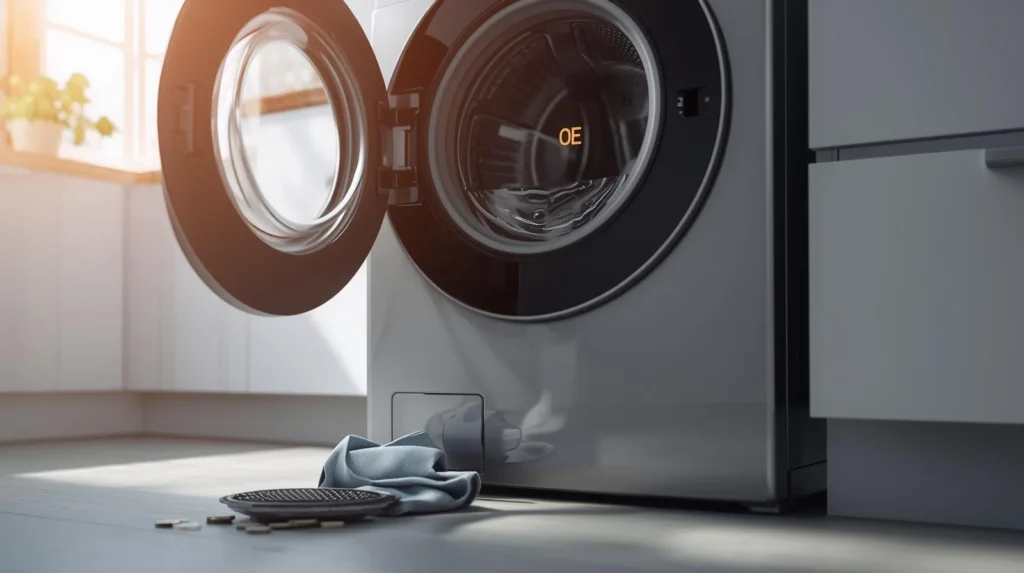

If you’ve ever walked into your laundry room and seen “OE” flashing on your LG washer, you know that small code can feel surprisingly stressful.
The machine stops. The clothes are soaking wet. And suddenly you’re wondering if you need a repair technician.
You’re not alone.
Thousands of people search “what does OE mean on LG washer” because the error appears without much explanation. The good news? In most cases, it’s fixable at home—without tools, without panic, and without replacing the machine.
Let’s break it down clearly and practically.
What Does OE Mean on LG Washer – Quick Meaning
OE on an LG washer means the machine is not draining properly.
In simple terms:
- The washer tried to drain water.
- The water didn’t leave the drum as expected.
- The machine stopped the cycle to prevent damage.
You might hear someone say:
“My LG washer says OE and won’t finish the cycle.”
“There’s water stuck inside and the OE code keeps flashing.”
“It spins but doesn’t drain — just shows OE.”
That’s the whole issue: a drainage problem.
But let’s go deeper so you actually understand what’s happening.
Origin & Background of the OE Error Code
LG washing machines use digital diagnostic systems. Instead of vague blinking lights like older machines, modern LG washers show specific two-letter codes.
“OE” stands for Outlet Error — meaning something is wrong with the water outlet or drainage system.
Over time, appliance manufacturers introduced error codes to:
- Help users identify problems quickly
- Reduce unnecessary service calls
- Protect internal components from damage
Before digital displays, washers would just stop mid-cycle. Now, at least, the machine tells you something is wrong.
It’s not a slang term. It’s a mechanical signal.
And once you understand it, it’s far less intimidating.
Why OE Happens: The Real-Life Causes
From years of practical troubleshooting experience, here are the most common reasons OE appears:
- Clogged drain filter
- Blocked or kinked drain hose
- Drain pump obstruction
- Improper installation
- Frozen drain hose (in cold climates)
In 70–80% of cases, it’s simply a clogged filter. Coins, hair ties, lint, buttons, and small fabric pieces love to hide there.
Real-Life Conversations (Because This Is How It Actually Happens)
WhatsApp Chat
Sarah:
Why is my washer stuck on OE??
Nadia:
Check the drain filter! Mine did that last week. Found two coins and a hair clip in there 😅
Sarah:
Wait seriously? I thought it was broken!
Instagram DM
Alex:
Bro my LG washer won’t drain. Just says OE.
Mike:
Tilt the drain hose. Make sure it’s not bent behind the machine. That fixed mine.
TikTok Comments
User1:
I thought OE meant my washer was dead 💀
User2:
Nah, just clean the little filter at the bottom. Saved me $120 repair fee.
These conversations happen every day. Most people assume the worst before checking the basics.
Emotional & Psychological Meaning of Seeing “OE”
It’s interesting how two letters can cause frustration.
When OE appears, people often feel:
- Annoyed (because laundry is already a chore)
- Stressed (especially if you’re in a hurry)
- Financial anxiety (fear of repair costs)
- Helplessness (not knowing what it means)
Modern life depends on appliances. When one stops, it feels like your routine is disrupted.
But here’s the empowering part:
OE is usually a minor issue, not a major breakdown.
Once you understand that, the panic disappears.
How OE Is Used in Different Contexts
Even though OE is a technical code, people discuss it in different ways.
On Social Media
People often post:
- “LG washer OE error help!”
- “How do I fix OE code?”
- “Is my drain pump dead?”
The tone is usually urgent.
Among Friends & Family
It sounds more casual:
- “My washer’s acting up.”
- “It says OE again.”
In Professional Settings
Technicians describe it more specifically:
- “The OE code indicates a drainage fault.”
- “We need to inspect the pump assembly.”
Same issue. Different tone.
Common Misunderstandings About OE
Let’s clear up confusion.
❌ “OE means the washer is broken.”
Not necessarily. It just means drainage failed.
❌ “I need to replace the pump immediately.”
Only if cleaning and hose checks don’t solve it.
❌ “Restarting the machine fixes it permanently.”
Restarting may clear the code temporarily, but if the blockage remains, it will return.
❌ “It’s an electrical error.”
No — it’s almost always mechanical (water flow related).
Step-by-Step: What to Do When You See OE
Here’s the practical part.
Step 1: Turn Off and Unplug the Washer
Safety first.
Step 2: Check the Drain Filter
- Locate the small access panel at the bottom front.
- Place a towel underneath.
- Slowly remove the filter cap.
- Drain remaining water.
- Remove debris.
You might find coins, lint, or even small socks.
Step 3: Inspect the Drain Hose
- Make sure it’s not bent or twisted.
- Ensure it’s not inserted too deeply into the standpipe.
- Check for clogs.
Step 4: Restart the Machine
Run a rinse and spin cycle to test.
If OE returns, the drain pump may need inspection.
Comparison Table
| Term / Code | Meaning | Similar To | Opposite Situation | Related Components |
|---|---|---|---|---|
| OE | Drainage failure | Drain error | Proper water draining | Drain hose, pump, filter |
| IE | Water inlet error | Fill error | Proper water filling | Water valve |
| UE | Unbalanced load | Spin issue | Balanced drum | Suspension system |
| FE | Overflow error | Overfill | Normal water level | Pressure switch |
Key Insight:
OE specifically relates to water exiting the machine — not entering it and not spinning balance.
Variations & Related Drainage Issues
- Partial Drainage Issue
Water drains slowly but not fully. - Complete Drain Blockage
No water exits at all. - Intermittent OE Error
Comes and goes depending on load size. - Cold Weather Drain Issue
Frozen hose causing blockage. - Installation Height Problem
Drain hose installed too high. - Clogged Pump Impeller
Small objects stuck inside pump blades. - Lint Buildup Over Time
Gradual blockage from repeated washing. - Suds Lock Condition
Too much detergent prevents proper draining. - Foreign Object Obstruction
Buttons, hairpins, coins. - Pump Motor Failure
Actual mechanical malfunction (less common).
How to Respond When Someone Mentions OE
Casual Replies
- “Check the drain filter first.”
- “Probably just clogged.”
Funny Replies
- “Your washer’s just tired of your laundry 😄”
- “It found your missing coins!”
Mature / Confident Replies
- “It’s a drainage error. Clean the filter and inspect the hose.”
- “Most likely a simple blockage.”
Private / Respectful Replies
- “If it continues after cleaning, a technician can inspect the pump safely.”
Regional & Cultural Usage
The meaning of OE doesn’t change globally, but responses do.
Western Culture
DIY culture is strong. Many people fix it themselves using YouTube tutorials.
Asian Culture
Appliance care is taken seriously. Regular filter cleaning is more common.
Middle Eastern Culture
People often consult a local technician quickly to avoid appliance damage.
Global Internet Usage
Search queries like:
- “LG washer OE fix”
- “How to clear OE code”
- “LG washing machine not draining”
The approach varies, but the problem is universal.
Preventing OE in the Future
From experience, prevention is simple.
- Clean the drain filter every 1–2 months.
- Avoid overloading the washer.
- Use proper detergent amounts.
- Check pockets before washing.
- Ensure proper hose installation.
Small habits prevent big headaches.
FAQs
What does OE mean on LG washer?
It means the washer cannot drain water properly.
Can I fix OE error myself?
Yes. In most cases, cleaning the drain filter or hose resolves it.
Is OE dangerous?
No, but ignoring it can strain the drain pump.
How often should I clean the filter?
Every 1–2 months for regular use.
Does OE mean I need a new washer?
Almost never. It’s usually a maintenance issue.
How long does it take to fix?
Typically 10–20 minutes if it’s a simple blockage.
Conclusion
So, what does OE mean on LG washer?
It means your washer is struggling to drain water.
That’s it.
Not a disaster. Not a replacement emergency. Just a drainage interruption.
Most of the time, a simple filter cleaning solves the issue. Understanding this small code removes unnecessary stress and gives you confidence in handling your appliance.
Modern machines are smart enough to warn you before damage happens. Once you know how to respond, OE becomes less of a panic signal and more of a reminder: maintenance matters.
And the next time it flashes?
You’ll know exactly what to do.