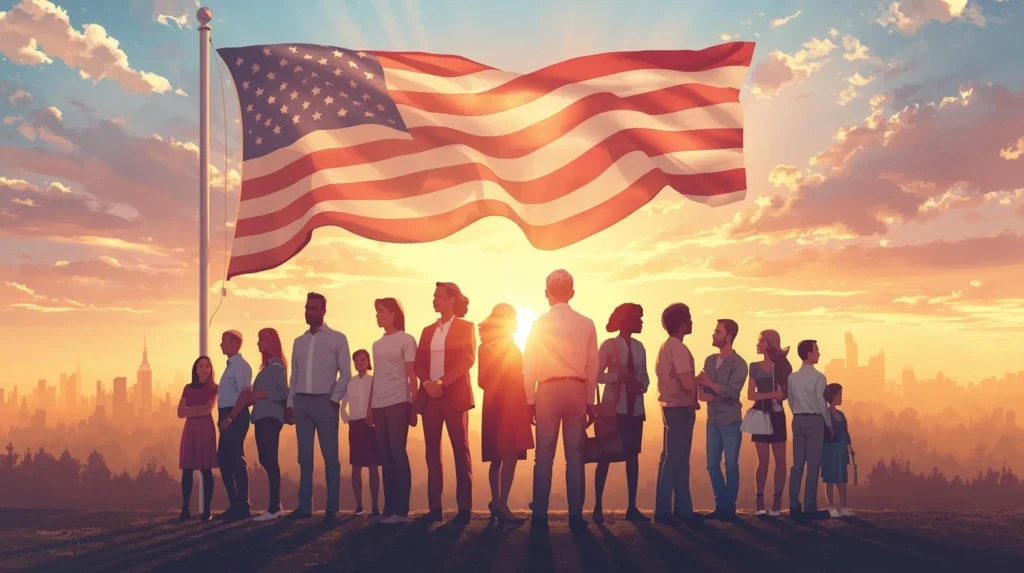

If you’ve searched “what does patriotism mean”, you’re likely trying to understand more than a dictionary definition.
Is patriotism just waving a flag?
Is it political loyalty?
Is it blind support—or thoughtful love?
The word gets used constantly, especially during elections, national holidays, protests, and global conflicts. Yet people often mean very different things when they say it.
Let’s unpack patriotism in a way that feels real, balanced, and relevant to modern life.
What Does Patriotism Mean? – Quick Meaning
Patriotism means love, loyalty, and devotion to one’s country.
At its core, it involves:
- Pride in your nation’s values or culture
- A desire to support and improve your country
- Emotional attachment to national identity
Simple Examples
“Volunteering after the flood felt like true patriotism.”
“You can criticize your country and still be patriotic.”
“Standing for the anthem shows her sense of patriotism.”
Patriotism is not just symbolic behavior. It’s a mindset rooted in belonging and responsibility.
Origin & Background
The word patriotism comes from the Greek word “patriōtēs,” meaning “fellow countryman.” It passed into Latin as patriota, and eventually into English in the 16th century.
Originally, a patriot was simply someone who shared loyalty to their homeland.
Over time, patriotism became closely linked to:
- National independence movements
- Wartime unity
- Civic duty
- Democratic participation
In history, figures like George Washington, Mahatma Gandhi, and Nelson Mandela were often described as patriots—not because they agreed with everything in their nations, but because they worked toward improvement and freedom.
In modern times, patriotism has evolved again. Social media and global connectivity have changed how people express national pride. Today, patriotism might show up as:
- Civic engagement
- Peaceful protest
- Military service
- Voting
- Supporting local businesses
It’s broader than it used to be.
Real-Life Conversations (How People Actually Use It)
Here’s how patriotism comes up in everyday digital conversations.
1️⃣ WhatsApp Family Group
Dad:
Are you going to the Independence Day ceremony?
Daughter:
Yes. It’s important to remember our history.
Dad:
That’s real patriotism right there.
2️⃣ Instagram Comment Section
User 1:
You’re criticizing the government again?
User 2:
Holding leaders accountable is patriotism, not betrayal.
3️⃣ Text Message Between Friends
Ali:
I’m volunteering for the community cleanup this weekend.
Sara:
That’s patriotic in its own way.
Notice something important: patriotism is often debated, not just declared.
Emotional & Psychological Meaning
Patriotism connects deeply with identity.
People feel patriotic because:
- They grew up in a culture that shaped them
- Their family history is tied to the nation
- They feel gratitude for opportunities
Psychologically, patriotism reflects:
- Belonging
- Loyalty
- Collective pride
- Emotional security
However, it can also reflect:
- Fear of change
- Protection of tradition
- Resistance to criticism
Healthy patriotism often balances pride with reflection. It allows space for growth.
Usage in Different Contexts
1️⃣ Social Media
Online, patriotism is expressed through:
- Flags in bios
- National holidays posts
- Military appreciation content
- Political slogans
Tone varies widely—from celebratory to confrontational.
2️⃣ Friends & Relationships
Among friends, patriotism might surface during:
- Sports events
- Cultural celebrations
- Political discussions
It often feels more personal than ideological.
3️⃣ Work or Professional Settings
In professional environments, patriotism may show through:
- Public service
- Ethical leadership
- Corporate responsibility
- National representation in global markets
In these contexts, patriotism is usually subtle and respectful.
4️⃣ Casual vs Serious Tone
- Casual: “I love our food culture—that’s my patriotism.”
- Serious: “Patriotism requires civic responsibility.”
Tone depends on setting and emotion.
Common Misunderstandings
❌ Misunderstanding 1: Patriotism Means Blind Support
True patriotism allows constructive criticism. Loving your country doesn’t mean ignoring its flaws.
❌ Misunderstanding 2: Patriotism Equals Nationalism
They are not the same. Patriotism focuses on love for one’s country. Nationalism can involve superiority over others.
❌ Misunderstanding 3: Only Soldiers Are Patriotic
Military service is one form of patriotism—but teachers, doctors, volunteers, and voters can also embody it.
❌ When Not to Use the Term
- To silence disagreement
- To shame others
- In heated arguments where nuance is needed
Patriotism should unite—not intimidate.
Comparison Table
| Term | Meaning | Tone | Key Focus |
|---|---|---|---|
| Patriotism | Love and loyalty to country | Positive | Belonging |
| Nationalism | Strong national identity, sometimes superiority | Intense | Dominance |
| Civic Duty | Responsibility to participate | Neutral | Action |
| Loyalty | Faithfulness to group or cause | Broad | Commitment |
| Globalism | Emphasis on international cooperation | Inclusive | World focus |
Key Insight
Patriotism centers on love and responsibility. It doesn’t require hostility toward other nations.
Variations & Types of Patriotism
Here are common forms:
- Civic Patriotism
Pride rooted in democratic participation. - Cultural Patriotism
Love for traditions, language, and heritage. - Constitutional Patriotism
Loyalty to national laws and values. - Military Patriotism
Support for armed forces. - Critical Patriotism
Loving a country while pushing for reform. - Economic Patriotism
Supporting domestic industries. - Environmental Patriotism
Protecting national land and resources. - Symbolic Patriotism
Flags, anthems, public ceremonies. - Digital Patriotism
Expressing national pride online. - Community Patriotism
Serving local neighborhoods.
How to Respond When Someone Uses “Patriotism”
Casual Replies
- “I respect that.”
- “We all show it in different ways.”
Funny Replies
- “Does loving local food count?”
- “If cheering at sports events qualifies, I’m in.”
Mature / Confident Replies
- “Patriotism includes accountability.”
- “Love for a country should inspire improvement.”
Private or Respectful Replies
- “I appreciate your perspective.”
- “We may define it differently, but I value the discussion.”
Regional & Cultural Usage
Western Culture
In countries like the U.S., patriotism is strongly tied to:
- National holidays
- Military recognition
- Political identity
It can become polarized during elections.
Asian Culture
In many Asian nations, patriotism is closely connected to:
- Cultural heritage
- Respect for ancestors
- National unity
Public expressions may be more collective.
Middle Eastern Culture
Patriotism often blends with:
- Religious identity
- Tribal or cultural loyalty
- Historical resilience
It can carry deep emotional weight due to regional history.
Global Internet Usage
Online, patriotism trends during:
- Global sporting events
- Political crises
- National celebrations
Hashtags amplify national identity quickly and emotionally.
FAQs
1. What does patriotism mean in simple words?
Patriotism means loving and being loyal to your country.
2. Is patriotism the same as nationalism?
No. Patriotism is love for your country. Nationalism can include feelings of superiority over others.
3. Can you criticize your country and still be patriotic?
Yes. Many believe constructive criticism is a form of patriotism.
4. Is patriotism political?
It can become political, but at its core, it’s about belonging and loyalty.
5. How do people show patriotism?
Through voting, volunteering, military service, community work, and celebrating culture.
6. Is patriotism always positive?
It depends on expression. Healthy patriotism promotes unity and responsibility.
7. Why is patriotism debated today?
Because people define loyalty, accountability, and national identity differently in modern society.
Conclusion
So, what does patriotism mean?
At its heart, patriotism is love for your country—paired with a desire to see it thrive.
It’s not just flags or slogans. It’s community service. It’s voting. It’s honest conversation. It’s protecting shared values.
Healthy patriotism leaves room for pride and progress at the same time.
In a world that feels increasingly divided, perhaps the strongest form of patriotism is one that balances loyalty with wisdom—and love with responsibility.