
You’ve probably heard the word region in geography class, on the news, or while filling out an online form.
“Select your region.”
“This region is known for agriculture.”
“The northern region experienced heavy rainfall.”
But what does region mean exactly?
Is it the same as a country? A city? A state? Why does the meaning seem to shift depending on the context?
If you’ve ever felt slightly unsure about how the word is being used, you’re not alone. Let’s clear it up in a way that feels practical and easy to understand.
What Does Region Mean – Quick Meaning
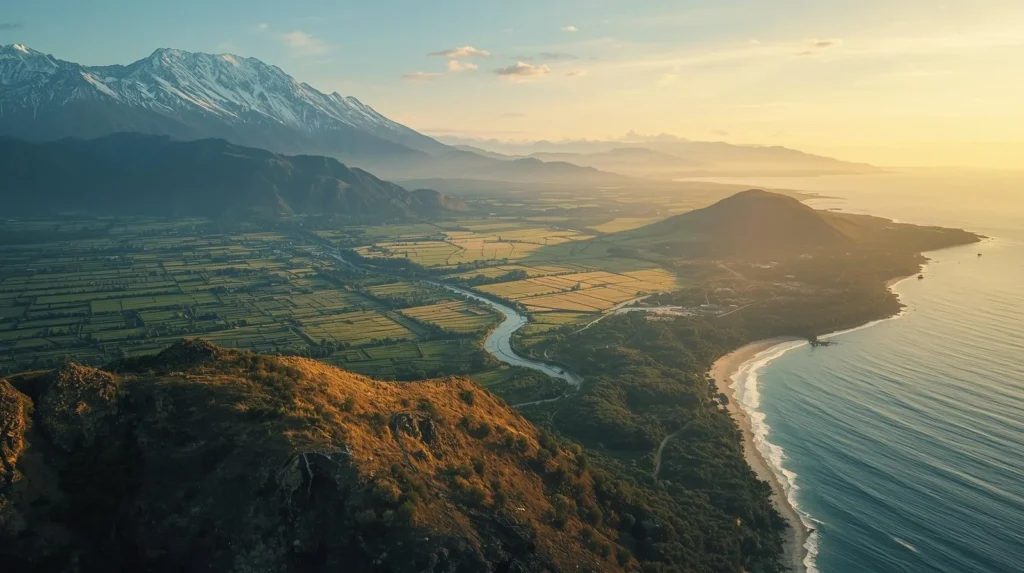
A region is an area or part of a larger place that shares common features.
Those features might be:
- Geographic (mountains, rivers, climate)
- Political (administrative divisions)
- Cultural (language, traditions)
- Economic (industry, trade patterns)
In simple terms, a region is a section of space grouped together for a reason.
Examples people often say:
“The southern region gets more sunlight.”
“This region is famous for its food.”
“Shipping isn’t available in your region.”
A region can be small, like a neighborhood zone, or large, like an entire continent divided into parts.
Origin & Background
The word region comes from the Latin word “regio,” meaning direction, boundary, or district.
Historically, the concept of regions helped societies:
- Organize land
- Collect taxes
- Manage governance
- Understand geography
Ancient civilizations divided land into regions based on rivers, mountains, or political power.
Over time, the meaning expanded beyond physical geography. Today, we use region in:
- Business
- Technology
- Climate science
- Education
- Marketing
- International relations
It has become a flexible word that adapts to context.
Real-Life Conversations (How People Actually Use the Term)
📱 WhatsApp Chat
Person A: Why can’t I access this show?
Person B: It’s probably restricted in your region.
📲 Instagram DM
Person A: The weather’s crazy here.
Person B: Yeah, our region always gets heavy rain this time of year.
💬 Text Message
Person A: Where are you relocating?
Person B: Same company, different region. Moving to the western branch.
These everyday conversations show that “region” isn’t just academic — it’s practical.
Emotional & Psychological Meaning
Interestingly, region often carries emotional weight.
When someone says:
“This is my region.”
They might mean:
- Where they grew up
- Where their culture belongs
- Where their identity feels rooted
Regions often represent:
- Belonging
- Community
- Shared experiences
- Pride
People strongly identify with regional accents, food, sports teams, and traditions.
Psychologically, regions create mental maps in our minds. We group places to understand the world more easily.
It helps simplify complexity.
Usage in Different Contexts
1. Social Media
Online, region often appears in phrases like:
- “Not available in your region.”
- “Regional trend.”
- “This meme is big in my region.”
It’s commonly used in digital platforms where content varies by location.
2. Friends & Relationships
Among friends:
- “She’s from my region.”
- “That’s a regional thing.”
Here, it signals shared background or inside knowledge.
3. Work or Professional Settings
In business:
- “Regional manager”
- “Regional office”
- “Regional sales targets”
It refers to operational divisions inside a company.
Tone becomes formal:
“Our region exceeded quarterly expectations.”
4. Casual vs Serious Tone
Casual:
- “That’s a regional dish.”
Serious:
- “The region is experiencing economic decline.”
Context changes intensity.
Common Misunderstandings
❌ Region means country.
Not necessarily.
A region can exist inside a country. For example:
- Northern region
- Coastal region
- Urban region
❌ Region always refers to geography.
It can also refer to:
- Business divisions
- Climate zones
- Digital access areas
❌ Region and state mean the same thing.
A state is a formal political division.
A region may or may not be official.
❌ Regions have fixed boundaries.
Sometimes they do (like administrative regions).
Other times, they’re flexible and defined loosely.
Comparison Table
| Term | Meaning | Official Boundaries? | Example | Scope |
|---|---|---|---|---|
| Region | Area with shared characteristics | Sometimes | Northern region | Flexible |
| Country | Independent nation | Yes | Canada | National |
| State/Province | Political subdivision | Yes | California | Administrative |
| District | Smaller administrative unit | Yes | School district | Local |
| Zone | Defined area for specific purpose | Often | Time zone | Functional |
Key Insight:
A region is defined more by shared traits than strict political borders.
Variations / Types of Regions
Here are common types of regions used globally:
1. Geographic Region
Defined by physical features like mountains or rivers.
2. Climate Region
Grouped by weather patterns (tropical, arid, temperate).
3. Cultural Region
Shared language, traditions, or religion.
4. Economic Region
Areas with similar industries or trade systems.
5. Political Region
Government-defined administrative areas.
6. Agricultural Region
Land categorized by farming patterns.
7. Urban Region
City-based interconnected areas.
8. Digital Region
Online platforms dividing users by location.
9. Marketing Region
Business territories for sales and strategy.
10. Ecological Region
Areas sharing environmental characteristics.
Each type serves a different purpose but follows the same core idea: grouping by similarity.
How to Respond When Someone Uses It
If someone mentions “region,” your reply depends on context.
Casual Replies
- “Oh, which region?”
- “That makes sense.”
- “I didn’t know that about your region.”
Funny Replies
- “Is that the elite region?”
- “Best region award goes to…”
- “Sounds exclusive.”
Mature & Confident Replies
- “Regional differences are fascinating.”
- “Each region has its strengths.”
- “That perspective varies by region.”
Private or Respectful Replies
If someone speaks about regional identity:
- “That must mean a lot to you.”
- “It’s great to stay connected to your region.”
Respect cultural pride.
Regional & Cultural Usage
Western Culture
Regions are often linked to:
- Climate (Midwest, Northeast)
- Lifestyle (coastal vs rural)
- Political differences
Regional identity can influence speech accents and social norms.
Asian Culture
Regions are often deeply tied to:
- Language dialects
- Cuisine
- Historical kingdoms
Regional pride is strong and sometimes competitive.
Middle Eastern Culture
Regions often reflect:
- Tribal or cultural groupings
- Climate zones (desert, coastal)
- Economic centers
Regional heritage plays an important role in identity.
Global Internet Usage
Online platforms frequently use region for:
- Streaming availability
- Gaming servers
- E-commerce shipping
“You’re not in the supported region” is a common message globally.
FAQs
1. What does region mean in simple words?
A region is an area that shares common features, such as geography, culture, or climate.
2. Is a region the same as a country?
No. A region can exist within a country.
3. What is an example of a region?
The northern region of a country or a tropical climate region.
4. Why do companies divide areas into regions?
To manage operations, sales, and marketing more efficiently.
5. What does region mean online?
It usually refers to geographic location restrictions or service availability.
6. Can regions change over time?
Yes. Political and economic shifts can redefine regions.
7. Are regions always official?
No. Some are informal and based on shared characteristics.
Conclusion
So, what does region mean?
It means a part of a larger area grouped together because it shares something in common — geography, culture, climate, economy, or purpose.
It’s a simple word with flexible meaning.
It helps us organize the world.
It helps businesses operate.
It helps people identify where they belong.
Regions shape food, language, traditions, weather, and opportunity.
Understanding the word isn’t just about geography — it’s about understanding how humans organize space and identity.
And once you see that, you’ll notice the word “region” everywhere — quietly structuring the world around you.