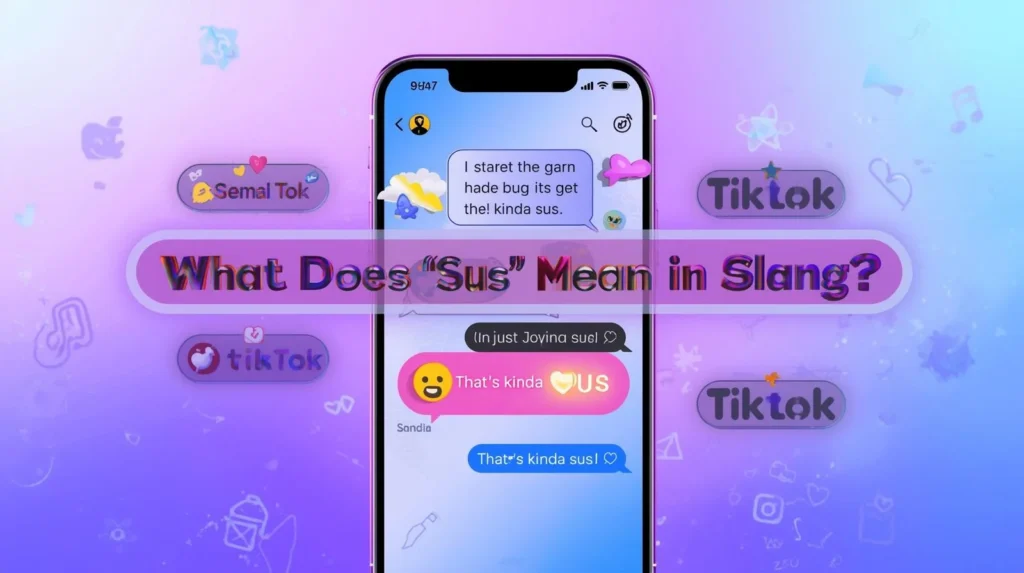

“Sus” means suspicious or not trustworthy in text. It’s used when something feels off, shady, or doubtful in a casual conversation.
If you’ve ever seen someone text “That’s sus 👀” and felt confused, you’re not alone. This tiny word has taken over chats, memes, and social media—and its meaning can shift depending on tone, context, and platform.
Let’s break it down in a simple, practical, and real-world way so you can actually use it confidently (and not just understand it).
1️⃣ Meaning & Explanation
What does “sus” mean in text?
“Sus” is a short form of suspicious.
It’s used when something feels strange, questionable, or not quite right.
“Sus” slang meaning
- Main meaning: Suspicious / doubtful
- Tone: Casual, playful, or sometimes accusing
- Usage: Mostly in texting and online chats
What does “sus” mean in chat?
In chat, “sus” usually implies:
- Someone is acting weird
- Something doesn’t add up
- A situation feels off
👉 Example:
“Why did you delete that message? That’s kinda sus.”
“Sus” meaning on Snapchat, Instagram, TikTok, WhatsApp
Across platforms, the meaning stays mostly the same, but the tone changes:
- Snapchat: Playful suspicion (“Who were you snapping at 2 AM? 👀 Sus!”)
- Instagram: Used in comments, often joking or teasing
- TikTok: Meme-driven, exaggerated suspicion
- WhatsApp: More direct, sometimes serious depending on conversation
Is “sus” an acronym, short form, or something else?
“Sus” is:
- ✅ A short form of “suspicious”
- ❌ Not an acronym
- ❌ Not a typo
It became popular through fast typing and meme culture.
2️⃣ Tone & Context Variations
The meaning of “sus” changes a lot depending on tone. This is where many people misunderstand it.
Funny Tone 😄
Used for jokes or light teasing.
Example:
A: “I ate your chocolate.”
B: “You said you’re on a diet… that’s sus 😂”
👉 No real accusation—just playful humor.
Sarcastic Tone 🙃
Used to mock or exaggerate suspicion.
Example:
A: “I totally didn’t cheat.”
B: “Yeah, very sus… sure.”
👉 Implies disbelief.
Romantic Tone 💖
Used in flirty or teasing situations.
Example:
A: “Who were you texting?”
B: “No one special…”
A: “Hmm, sounds sus 😏”
👉 Light teasing, not serious.
Angry Tone 😠
Used when genuinely upset or suspicious.
Example:
A: “Why didn’t you tell me earlier?”
B: “I forgot.”
A: “That’s really sus.”
👉 Now it sounds like an accusation.
Playful Tone 😜
Used among friends casually.
Example:
A: “I saw you talking to my crush.”
B: “Relax 😂”
A: “Nah, that’s sus!”
👉 Friendly teasing.
3️⃣ Real Chat Examples
Here are realistic conversations you might actually see:
1
A: You online at 3 AM??
B: Couldn’t sleep
A: Hmm… sus
2
A: I didn’t eat the cake
B: Then why is your mouth chocolatey?
A: …
B: SUS 😭
3
A: Who liked your post instantly?
B: Just a friend
A: Sounds sus 👀
4
A: I finished my homework
B: Already??
A: Yes
B: That’s kinda sus
5
A: I’m not hiding anything
B: Then show me your phone
A: No
B: Exactly… sus
6
A: I saw you leave early
B: Yeah I had work
A: Hmm okay… still sus
7
A: I didn’t laugh
B: You literally laughed
A: No I didn’t
B: SUS 😂
8
A: I don’t use social media
B: You posted yesterday
A: Oh…
B: Sus much?
9
A: I love only you
B: Only me?
A: Yes
B: That sounded a bit sus 😅
10
A: I didn’t copy your answers
B: Then why are they identical?
A: …
B: SUS
11
A: I didn’t take your charger
B: Then where is it?
A: I don’t know
B: That’s sus
12
A: I’m busy
B: Busy doing what?
A: Just busy
B: Sus behavior
4️⃣ Grammar & Language Role
Part of speech
“Sus” works mainly as:
- Adjective:
“That’s sus behavior.” - Standalone expression:
“Sus.”
Sentence position
- Beginning: “Sus move, not gonna lie.”
- Middle: “That sounds kinda sus to me.”
- End: “You’re acting sus.”
Can it replace a full sentence?
Yes!
Instead of saying:
“That seems suspicious.”
You can just say:
👉 “Sus.”
Tone impact
- Adds casual and modern feel
- Can make a message lighter or more playful
- Can also sound accusing if used seriously
Formal vs informal use
| Context | Suitable? |
|---|---|
| Friends chat | ✅ Yes |
| Social media | ✅ Yes |
| School essay | ❌ No |
| Office email | ❌ No |
5️⃣ How to Reply When Someone Says “Sus”
This is where many people struggle—what do you say back?
Funny Replies 😂
- “Caught me 🤣”
- “Don’t expose me like that”
- “I plead the fifth 😭”
Serious Replies 😐
- “Why do you think that?”
- “I’m not hiding anything.”
- “You misunderstood.”
Flirty Replies 😏
- “Only sus for you 😉”
- “You like me being sus?”
- “Maybe I want your attention”
Neutral Replies 😶
- “Okay…”
- “If you say so”
- “It’s not like that”
6️⃣ Comparison Table
| Term | Meaning | Formal/Informal | Tone | Popularity | Risk of Misunderstanding |
|---|---|---|---|---|---|
| sus | Suspicious | Informal | Playful/accusing | Very high | Medium |
| idk | I don’t know | Informal | Neutral | Very high | Low |
| ion | I don’t | Informal | Casual/slang | Medium | High |
| dunno | Don’t know | Semi-informal | Neutral | Medium | Low |
| idc | I don’t care | Informal | Dismissive | High | Medium |
👉 Notice: “Sus” carries emotion, while others are more informational.
7️⃣ Who Uses This Term?
Age Group
- Mostly Gen Z (13–25)
- Also used by younger Millennials
Gen Z vs Millennials
- Gen Z: Uses it naturally and frequently
- Millennials: Understand it but use it less
Region
- Originated in English-speaking regions (US, UK)
- Now used globally, including Pakistan, India, etc.
Platforms
Most common on:
- TikTok
- Snapchat
- Gaming chats (especially multiplayer games)
8️⃣ Origin & Internet Culture Insight
“Sus” became massively popular because of the game Among Us (2020).
Players would say:
- “He’s sus” → meaning “He’s suspicious (maybe the imposter)”
From there:
- It spread into memes
- Then into TikTok
- Then into everyday texting
Why it spread so fast
- Short and easy to type
- Funny and expressive
- Fits meme culture perfectly
- Works in many situations
It’s a perfect example of how internet slang evolves through gaming + social media.
9️⃣ Safety & Appropriateness
Is “sus” rude?
- ❌ Not inherently rude
- ✅ Can feel rude if used seriously
Is it a bad word?
- ❌ No
- It’s safe and widely accepted
Should you use it in school or office?
- School (casual talk): ✅ Yes
- Formal writing: ❌ No
- Office communication: ❌ Avoid
👉 Use it only in casual digital communication.
🔟 Experience-Based Insight
In real conversations, people rarely use “sus” in a serious, literal way. Most of the time, it’s used jokingly—even when something is suspicious.
For example, friends often say “sus” just to tease, not accuse. But in sensitive situations (like trust issues), the same word can quickly feel serious or confrontational.
So the tone matters more than the word itself.
🔹 SEO FAQ Section
What does “sus” mean in text?
It means suspicious—something feels off, strange, or not trustworthy.
Is “sus” rude?
Not usually. It depends on tone. It can feel rude if used seriously.
What does “sus” mean on Snapchat?
It means the same—something suspicious, often used playfully.
Is “sus” the same as “idk”?
No.
- “Sus” = suspicious
- “idk” = I don’t know
Can adults use “sus”?
Yes, but it’s mostly used by younger people in casual chats.
How do you respond to “sus”?
You can reply:
- Funny: “You caught me 😂”
- Serious: “That’s not true”
- Flirty: “Only for you 😏”
Why do people say “sus” so much?
Because it’s short, expressive, and popular in meme culture.
Is “sus” still trending in 2026?
Yes, though it’s now a standard slang term, not just a trend.
✅ Final Summary
“Sus” is a simple but powerful slang word meaning suspicious. It’s widely used in texting, social media, and casual conversations to point out something that feels off.
✅ Usage Tips
- Use it with friends or casual chats
- Pay attention to tone (joking vs serious)
- Keep it light unless you mean it seriously
⚠️ Common Mistakes
- Using it in formal writing ❌
- Assuming it always means serious accusation ❌
- Misreading tone in messages ❌
📌 When to Use & Avoid
Use it:
- Casual chats
- Social media
- Friendly teasing
Avoid it:
- Professional communication
- Academic writing
- Sensitive conversations (unless careful)