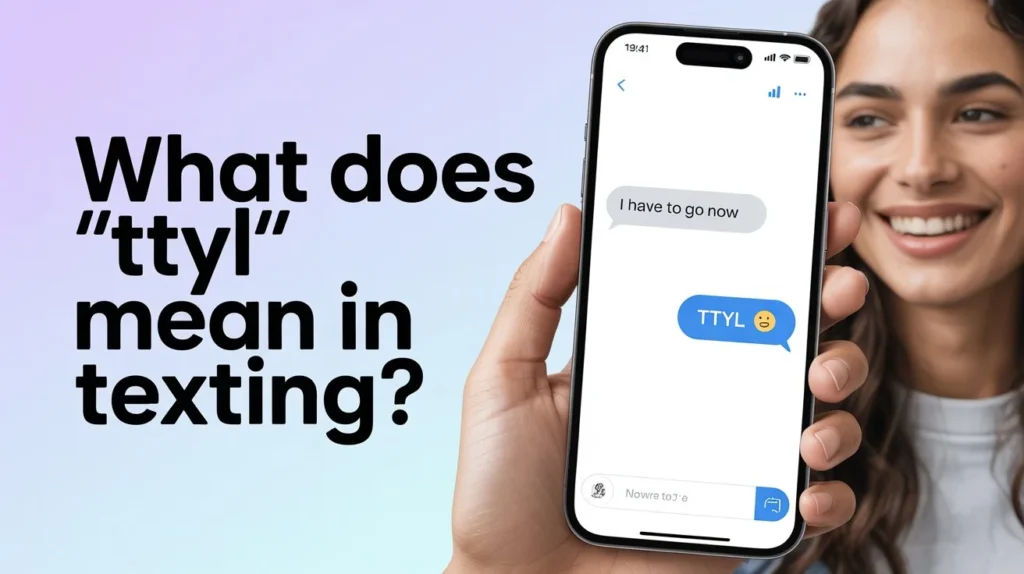

“TTYL” in texting means “Talk To You Later.” It’s a quick and friendly way to end a conversation while letting the other person know you’ll chat again soon.
Meaning & Explanation of “TTYL” in Texting
What does “TTYL” mean in texting meaning in text?
In text messages, “TTYL” stands for “Talk To You Later.” It’s used when someone is ending a conversation but plans to continue it another time.
Example:
- “I have to go now, ttyl!”
This means “I’ll talk to you later.”
“TTYL” slang meaning
The slang meaning of “TTYL” is simple:
- 👋 A friendly goodbye
- ⏳ A temporary ending to a conversation
- 💬 A promise to reconnect later
It’s one of the most common texting abbreviations in digital communication.
What does “TTYL” mean in chat?
In chat, “TTYL” is used to:
- Wrap up conversations
- Exit politely
- Keep things casual
Instead of writing a full sentence, people use “TTYL” as a quick closing phrase.
“TTYL” meaning on Snapchat
On Snapchat, “TTYL” is used:
- When ending a chat
- When leaving a conversation mid-day
- Before going offline
Example:
“Gotta go eat, ttyl”
“TTYL” meaning on Instagram, TikTok, WhatsApp
Across platforms:
- Instagram DMs: Ending casual chats
- TikTok comments: Less common, but still used
- WhatsApp: Very common in daily messaging
It fits perfectly into fast, informal conversations.
Is “TTYL” an acronym or abbreviation?
“TTYL” is:
- ✅ An acronym (made from first letters)
- ❌ Not a typo
- ❌ Not phonetic spelling
It’s a classic internet slang term that dates back to early texting culture.
Tone & Context Variations
Even though “TTYL” has a fixed meaning, tone can change how it feels.
Funny Tone 😄
Used playfully.
Example:
- A: “I just ate 5 burgers”
- B: “Go rest 😂 ttyl”
- A: “I need help”
Sarcastic Tone 🙃
Can feel dismissive.
Example:
- A: “I’ll explain everything now”
- B: “Yeah… ttyl 🙃”
Implies avoiding the conversation.
Romantic Tone ❤️
Soft and caring.
Example:
- A: “I’m heading to sleep”
- B: “Okay, ttyl ❤️ miss you already”
- A: “Goodnight”
Angry Tone 😠
Can feel abrupt.
Example:
- A: “We need to talk about this”
- B: “TTYL.”
This can sound like avoiding or shutting down.
Playful Tone 😏
Light and friendly.
Example:
- A: “I’m winning this game”
- B: “We’ll see… ttyl 😏”
- A: “Bring it on”
Real Chat Examples
1
A: “I’m heading out now”
B: “Okay ttyl”
A: “Bye!”
2
A: “Class is starting”
B: “Good luck, ttyl”
A: “Thanks!”
3
A: “I’m sleepy”
B: “Go rest, ttyl ❤️”
A: “Night”
4
A: “I have work now”
B: “Alright, ttyl”
A: “Talk soon”
5
A: “Call you later?”
B: “Sure, ttyl”
A: “Cool”
6
A: “Mom’s calling me”
B: “Okay ttyl 😂”
A: “Pray for me”
7
A: “Battery dying”
B: “TTYL”
A: “Bye”
8
A: “Let’s continue later”
B: “TTYL”
A: “Deal”
9
A: “I need to study”
B: “Go ahead, ttyl”
A: “Thanks”
10
A: “Game starting now”
B: “Have fun, ttyl”
A: “Will do”
11
A: “Dinner time”
B: “Enjoy, ttyl”
A: “Thanks”
12
A: “Internet is lagging”
B: “TTYL then”
A: “Yeah”
Grammar & Language Role
Part of Speech
“TTYL” acts as:
- Interjection (used to express a closing thought)
- Phrase substitute (replaces a full sentence)
Sentence Position
- End → “Gotta go, ttyl”
- Standalone → “TTYL”
Does it replace a full sentence?
Yes.
“TTYL” =
- “I’ll talk to you later”
- “We’ll chat again soon”
Tone Impact
- Friendly
- Casual
- Sometimes abrupt (depending on tone)
Formal vs Informal Use
- ❌ Not for professional emails
- ❌ Avoid in formal writing
- ✅ Great for casual chats
How to Reply When Someone Says “TTYL”
Funny Replies
- “Don’t forget me 😂”
- “I’ll be waiting 👀”
- “Hurry back!”
Serious Replies
- “Okay, talk later”
- “Take care”
- “See you soon”
Flirty Replies
- “Don’t take too long 😏”
- “I’ll miss you 😉”
- “Text me soon ❤️”
Neutral Replies
- “Bye”
- “Alright”
- “Later”
Comparison Table
| Slang | Meaning | Formal/Informal | Tone | Popularity | Risk of Misunderstanding |
|---|---|---|---|---|---|
| TTYL | Talk to you later | Informal | Friendly | High | Low |
| idk | I don’t know | Informal | Neutral | Very High | Low |
| ion | I don’t | Informal | Casual | Medium | High |
| dunno | Don’t know | Informal | Relaxed | Medium | Low |
| idc | I don’t care | Informal | Blunt | High | Medium |
Who Uses This Term?
Age Group
- Millennials (very common)
- Gen Z (still used, but slightly less trendy)
Region
- Popular in US, UK, and globally
- Understood worldwide
Platforms Where It’s Common
- SMS texting
- Snapchat
Origin & Internet Culture Insight
“TTYL” became popular in:
- Early internet chat rooms
- SMS texting era (limited characters)
Why People Say “TTYL” on TikTok
On TikTok:
- Used in comments jokingly
- Used in captions for humor
- Sometimes used ironically
Example:
“Me avoiding responsibilities… ttyl 😭”
Meme Culture Role
- Often used in memes
- Represents leaving or escaping a situation
Fast Typing Culture
- Saves time
- Short and efficient
- Fits quick conversations
Safety & Appropriateness
Is “TTYL” rude?
- ❌ Not rude
- ⚠️ Can feel abrupt depending on tone
Is it a bad word?
- ❌ No
- Completely safe
Should you use it in school or office?
- ❌ Avoid in formal communication
- ✅ Fine with friends and classmates
Experience-Based Insight
In real-world messaging, “TTYL” is often used without much thought. It’s quick, polite, and widely understood. However, younger users sometimes prefer newer slang, while older users still rely on “TTYL” regularly. It remains one of the most reliable and universally understood texting abbreviations.
FAQ
What does “TTYL” mean in texting in text?
It means “Talk To You Later,” used to end a conversation politely.
Is “TTYL” rude?
No, but it can feel abrupt if used without context.
What does “TTYL” mean on Snapchat?
It means you’re leaving the chat and will talk later.
Is “TTYL” the same as idk?
No. “TTYL” means goodbye, while “idk” means “I don’t know.”
Can adults use “TTYL”?
Yes, it’s widely used by all age groups.
How do you respond to “TTYL”?
You can reply with “bye,” “see you,” or something friendly.
Is “TTYL” outdated?
It’s less trendy but still commonly understood and used.
What does “TTYL” mean in chat?
It means ending a conversation with the intention to continue later.
Final Thoughts: Summary, Tips & Mistakes
Summary
- “TTYL” = Talk To You Later
- Used to end conversations politely
- Common in texting and casual chats
Usage Tips
- Use when leaving a conversation
- Keep tone friendly
- Add emojis for warmth
Common Mistakes
- ❌ Using in formal emails
- ❌ Sounding abrupt without context
- ❌ Overusing in serious talks
When to Use
✅ Casual chats
✅ Messaging apps
✅ Friendly conversations
When to Avoid
❌ Professional communication
❌ Formal writing
❌ Sensitive discussions