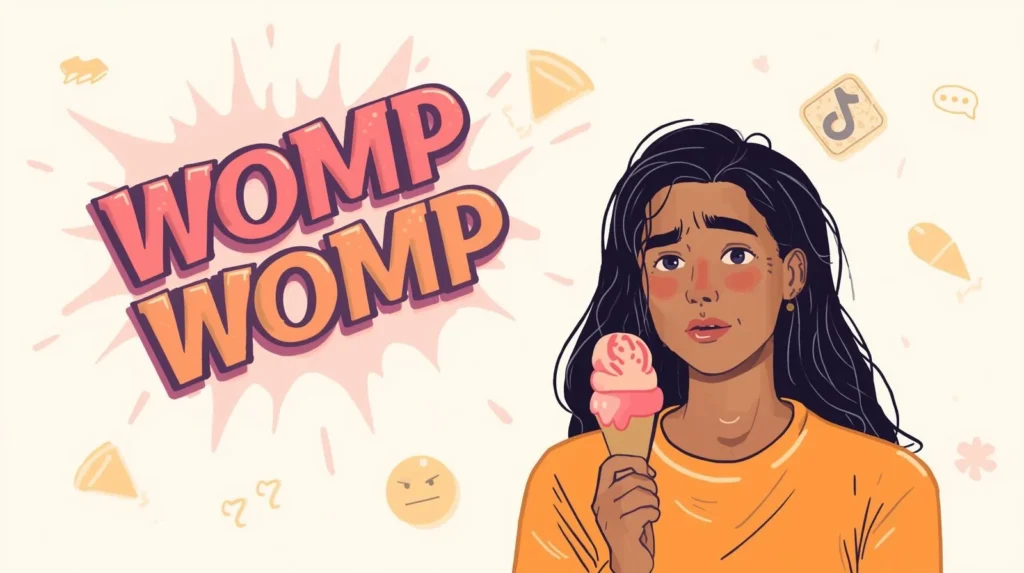

“Womp womp” in text means a playful or sarcastic way to react to something disappointing or unlucky. You’ll often see it on TikTok, Snapchat, Instagram, or in casual texting when someone wants to mock a minor failure.
People search for this phrase because it pops up everywhere online, especially in memes and comment sections. It sounds funny, but its meaning isn’t always obvious at first.
If you’ve ever seen someone reply with “womp womp” and felt confused, you’re not alone. Let’s break it down in a simple way.
Womp Womp Meaning in Text
“Womp womp” is internet slang, not an acronym or abbreviation.
It’s used to express:
- Mild disappointment
- A sarcastic reaction to bad news
- A playful “that sucks” response
In everyday chat, it often replaces phrases like:
- “Too bad”
- “That’s unfortunate”
- “Oh well”
But here’s the key: it’s usually not serious. It’s meant to sound a bit dramatic or humorous, like a cartoon sound effect.
Simple Definition
“Womp womp” = a joking way to react to something sad, awkward, or unlucky.
For example:
“I forgot my wallet at home.”
“Womp womp.”
It’s light, quick, and often a little teasing.
Where People Use “Womp Womp”
This phrase shows up across many platforms, especially where casual conversation and humor are common.
TikTok
On TikTok, “womp womp” is often used in:
- Comment sections
- Reaction videos
- Meme captions
It became popular as a sound effect trend, where people add it after showing something embarrassing or unfortunate.
Example:
A video shows someone tripping → sound effect: “womp womp.”
Snapchat
On Snapchat, it appears in:
- Chat replies
- Story reactions
People use it when responding to a friend’s small problem, like missing a bus or failing a test.
On Instagram, you’ll see it in:
- Comments under reels
- Meme pages
- Story replies
It’s commonly used to react to relatable fails or awkward moments.
In WhatsApp chats, it’s used more casually:
- Between friends
- In group chats
It replaces phrases like “lol that sucks” but in a more playful tone.
SMS (Text Messages)
Even in regular texting, “womp womp” works as a quick response.
It’s short, expressive, and doesn’t require much explanation.
Real Chat Examples
Here are 10 realistic conversations showing how people actually use “womp womp”:
1
A: I studied all night and still failed 😭
B: Womp womp
A: Wow, thanks for the support lol
2
A: My crush left me on read
B: Womp womp
A: I knew you’d say that
3
A: I missed the bus again
B: Womp womp
A: Guess I’m walking
4
A: My phone just died at 5%
B: Womp womp
A: Tragic honestly
5
A: I spilled coffee on my shirt before class
B: Womp womp 😂
A: It’s a disaster
6
A: We lost the game 10-0
B: Womp womp
A: Pain.
7
A: I forgot my homework at home
B: Womp womp
A: Teacher is gonna be mad
8
A: My internet stopped during the match
B: Womp womp
A: Worst timing ever
9
A: I dropped my ice cream 😭
B: Womp womp
A: I’m actually upset
10
A: I woke up late for my exam
B: Womp womp
A: This is not funny
TikTok & Social Media Trends Around “Womp Womp”
“Womp womp” isn’t just a phrase—it’s part of a bigger internet trend culture, especially on short-form video platforms.
TikTok Trend
On TikTok, “womp womp” became popular through:
- Sound effects in videos
- Reaction memes
- Short comedy clips
Creators often add a “womp womp” sound right after something goes wrong.
For example:
A video shows someone confidently walking… then tripping → cue sound: “womp womp.”
This creates a funny contrast between expectation and reality.
Another common trend is:
- Showing a “before” moment (confidence, excitement)
- Followed by a fail or awkward situation
- Ending with “womp womp”
It’s quick, relatable, and easy to understand—even without words.
Meme Culture
Outside TikTok, “womp womp” is widely used in memes.
You’ll see it in:
- Reaction images
- Twitter/X replies
- Instagram meme pages
People use it to react to:
- Someone complaining
- Minor bad luck
- Overdramatic situations
It’s basically a visual + text reaction combo.
Instagram Reels
On Instagram Reels, the trend is similar to TikTok:
- Short funny clips
- Unexpected endings
- “Womp womp” as the punchline
It’s often used in captions too, like:
“Thought I had it all figured out… womp womp.”
Snapchat & Stories
On Snapchat, it appears more in:
- Story captions
- Quick replies
Example:
Friend posts: “Missed my flight 😭”
Reply: “womp womp”
It keeps things light, even when something goes wrong.
YouTube Shorts
On YouTube Shorts, “womp womp” is used in:
- Comedy edits
- Fail compilations
- Reaction-style content
Creators use it as a sound cue to signal failure or disappointment instantly.
Why This Trend Became So Popular
There are a few reasons why “womp womp” exploded online:
- It’s simple – easy to type and understand
- It’s funny – sounds like a cartoon fail
- It’s relatable – everyone experiences small disappointments
- It works visually and in text
Most importantly, it fits perfectly with short attention-span content, where humor needs to land in seconds.
Trend Tip
If you plan to use “womp womp” in your own posts:
- Use it for light, funny fails
- Avoid using it for serious or emotional topics
- Pair it with visuals for better impact
That’s how most viral content uses it today.
How to Reply When Someone Says “Womp Womp”
Your response depends on the tone. Since it’s playful, your reply can be funny or casual too.
Funny Replies
- “Wow, such emotional support 😂”
- “You’re so helpful, thanks”
- “I expected nothing and still got disappointed”
Casual Replies
- “I know right 😭”
- “It really be like that”
- “Yeah, it sucks”
Friendly Replies
- “Lol it’s okay, I’ll survive”
- “I deserved that honestly”
- “Haha fair enough”
Neutral Replies
- “Yeah”
- “True”
- “Not wrong”
The key is to match the vibe. If the situation is serious, don’t joke too much.
Is “Womp Womp” Rude or Offensive?
“Womp womp” is not inherently rude, but it can feel insensitive depending on how it’s used.
When it’s okay
- Among friends
- In lighthearted situations
- For small problems or jokes
When it can feel rude
- If someone is genuinely upset
- In serious conversations
- In professional or formal settings
For example:
If someone says:
“My pet passed away”
Replying “womp womp” would feel very disrespectful.
Is it safe to use?
- ✔ Safe with friends
- ✔ Fine in casual chats
- ❌ Not appropriate at work or school presentations
Use common sense. Tone matters more than the word itself.
Who Uses This Term?
“Womp womp” is most popular among younger internet users.
Age Groups
- Mainly Gen Z
- Some younger Millennials
- Rare among older adults
Platforms
- TikTok (most popular)
- Snapchat
- Messaging apps
Frequency
It appears often in memes and comments, especially when reacting to:
- Fails
- Awkward moments
- Minor bad luck
It’s part of a bigger trend of using sound-effect-style slang online.
Origin of the Term
“Womp womp” didn’t start on the internet.
It actually comes from sound effects used in comedy and cartoons.
Think of that sad trombone sound:
“Womp womp wooooomp…”
That sound was used to signal:
- Failure
- Embarrassment
- Bad luck
Over time, people started typing the sound instead of playing it.
Social media—especially TikTok—made it popular again, turning it into a modern slang phrase.
So while the exact origin is older, its current meaning comes from internet meme culture.
Comparison Table
Here’s how “womp womp” compares to other common texting terms:
| Term | Meaning | Type | Usage | Popularity |
|---|---|---|---|---|
| Womp womp | Mocking disappointment | Slang | Casual chats, memes | High |
| IDK | I don’t know | Acronym | Everyday texting | Very High |
| IDC | I don’t care | Acronym | Casual or dismissive replies | High |
| IMO | In my opinion | Acronym | Sharing thoughts | High |
| BRB | Be right back | Acronym | Temporary absence | Medium |
“Womp womp” stands out because it’s expressive and humorous, not just informational.
Real-World Usage Example
Imagine you’re sitting with friends during lunch.
One friend says:
“I studied for hours and still got a bad grade.”
Another friend laughs and says:
“Womp womp.”
Everyone chuckles—not because they’re being mean, but because it’s a light way to react to something mildly unfortunate.
But if the person looked genuinely upset, a better response would be:
“That sucks, I’m sorry.”
This shows how context changes everything.
Frequently Asked Questions
What does womp womp mean in text messages?
It means a playful or sarcastic reaction to something disappointing, similar to saying “that sucks.”
What does womp womp mean on TikTok?
On TikTok, it’s often used in memes or videos to highlight awkward or unlucky moments, usually in a funny way.
Is womp womp slang?
Yes, it’s informal internet slang based on a sound effect.
Is womp womp rude or offensive?
Not usually, but it can feel rude if used in serious situations or when someone is genuinely upset.
How should you reply to womp womp?
You can reply humorously (“thanks for the support 😂”) or casually (“yeah, I know”), depending on the tone.
Conclusion
“Womp womp” is a simple but expressive slang phrase used to react to small disappointments in a humorous way.
You’ll mostly see it on social media platforms like TikTok, Snapchat, and Instagram, where casual and playful language is common.
It’s fun and harmless in the right context—but it’s best to avoid using it in serious conversations or formal settings.
When used correctly, it adds a bit of humor to everyday chats without saying much at all.