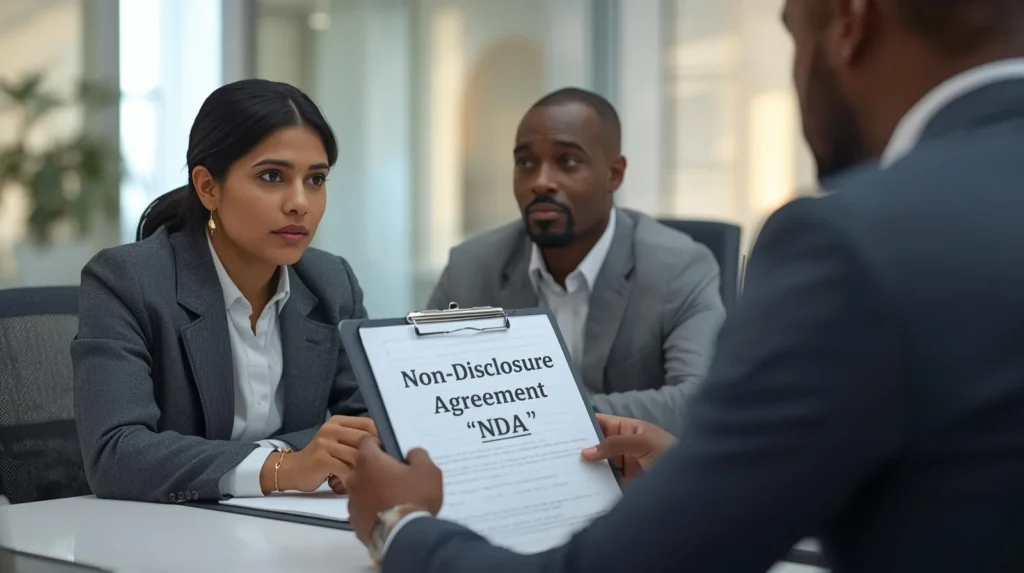

You might have seen the term NDA in a job offer, freelance contract, startup pitch, or even a celebrity interview. It often appears suddenly, usually with a serious tone, and raises immediate questions.
People search for “what is NDA mean” because they want to understand what they’re being asked to sign—or why someone says, “I can’t talk about it, I signed an NDA.”
This guide clears the confusion. No legal jargon overload. Just clear explanations, real-life examples, and practical understanding you can actually use.
What Is NDA Mean – Quick Meaning
NDA stands for Non-Disclosure Agreement.
It is a legal agreement that requires one or more people to keep certain information private and confidential.
In simple terms, an NDA means:
- You are trusted with sensitive information
- You agree not to share it with others
- There can be legal consequences if you do
Quick examples:
- “I can’t share project details—I signed an NDA.”
- “They made me sign an NDA before the interview.”
- “The startup pitch is confidential under NDA.”
Origin & Background of NDA
The concept of confidentiality has existed for centuries in trade, medicine, and law. Merchants protected trade secrets long before modern contracts existed.
The modern Non-Disclosure Agreement became common in the 20th century as:
- Businesses began protecting intellectual property
- Technology companies shared sensitive innovations
- Employment and freelance work expanded globally
With the rise of startups, remote work, influencers, and digital content, NDAs are now more visible than ever. They’re no longer limited to corporate boardrooms—they appear in everyday professional life.
Real-Life Conversations (How NDAs Come Up Naturally)
WhatsApp Chat (Freelance Work)
Person A:
“They sent me the project files, but first I had to sign an NDA.”
Person B:
“Yeah, that’s normal. It just means you can’t share their info.”
Instagram DM (Influencer Collaboration)
Brand Rep:
“We’ll share campaign details after you sign our NDA.”
Creator:
“No problem, send it over.”
Text Message (Workplace)
Person A:
“Why are you being so quiet about the new product?”
Person B:
“I’m under NDA. Can’t say a word yet.”
These conversations show how normal NDAs have become—and why understanding them matters.
Emotional & Psychological Meaning of NDA
Beyond the legal definition, NDAs carry emotional weight.
People associate NDAs with:
- Trust – You’re being given access to something valuable
- Responsibility – What you know matters
- Professionalism – You’re expected to act ethically
For some, NDAs create confidence and pride. For others, they cause anxiety—especially if the terms aren’t clear. That’s why understanding what an NDA really means can reduce stress and help you make informed decisions.
Usage in Different Contexts
Social Media & Public Conversations
People often mention NDAs to explain why they can’t share details:
- Product launches
- Celebrity projects
- Brand deals
Friends & Relationships
Sometimes NDAs appear in personal contexts:
- Startup ideas among friends
- Joint business plans
- Private financial matters
Work & Professional Settings
This is where NDAs are most common:
- Employment contracts
- Freelance agreements
- Client consultations
- Mergers and acquisitions
Tone matters:
NDAs are serious documents. They should never be treated casually, even if the environment feels friendly.
Common Misunderstandings About NDAs
“An NDA means I can never talk about anything.”
Not true. NDAs only apply to specific information, not your entire life or experience.
“Only big companies use NDAs.”
False. Small businesses, creators, consultants, and even individuals use them.
“NDAs are always bad.”
They can actually protect both sides when used fairly and clearly.
When NDAs Should NOT Be Used
- To hide illegal activity
- To silence whistleblowers
- To prevent lawful reporting or rights
Ethical NDAs protect information—not wrongdoing.
NDA Comparison Table
| Term | Meaning | How It’s Different |
| NDA | Keeps information confidential | Focuses on secrecy |
| Contract | General legal agreement | Covers broader obligations |
| Privacy Agreement | Protects personal data | Focuses on individuals |
| Public Disclosure | Information is shared openly | Opposite of NDA |
Key Insight:
An NDA is about confidentiality, not control. Its power lies in clarity and fairness.
Variations / Types of NDAs
- Unilateral NDA – One party shares confidential information
- Mutual NDA – Both sides share sensitive details
- Employee NDA – Used in job contracts
- Freelance NDA – Common in remote work
- Startup NDA – Protects ideas during pitches
- Investor NDA – Used during funding discussions
- Medical NDA – Protects patient information
- Creative NDA – For writers, designers, filmmakers
- Technology NDA – Covers software and data
- Event NDA – Used for launches or private previews
Each type serves a specific purpose, but the core idea remains the same: confidentiality.
How to Respond When Someone Uses “NDA”
Casual Replies
- “Got it, no worries.”
- “Makes sense.”
Funny Replies
- “Ah yes, the mysterious NDA zone.”
- “Top-secret stuff, huh?”
Mature & Confident Replies
- “I understand. Thanks for being clear.”
- “I respect the confidentiality.”
Private or Respectful Replies
- “Let me know what you can share.”
- “I appreciate your professionalism.”
Responding appropriately shows respect and maturity.
Regional & Cultural Usage of NDAs
Western Culture
NDAs are standard in business and widely accepted.
Asian Culture
Used formally, often tied closely to respect and hierarchy.
Middle Eastern Culture
NDAs exist but are often supported by strong verbal trust and reputation.
Global Internet Usage
NDAs are commonly referenced in:
- Tech communities
- Influencer marketing
- Online collaborations
Globally, NDAs are now part of everyday professional language.
FAQs About NDAs
What is NDA mean in simple words?
An NDA means you agree not to share certain private information.
Is signing an NDA risky?
Not if you understand it and the terms are fair.
Can an NDA expire?
Yes, many NDAs have time limits.
Can you break an NDA legally?
Only in specific cases, such as legal obligations or unlawful activity.
Do NDAs apply to verbal information?
Often yes, if stated clearly in the agreement.
Should I sign an NDA without reading it?
Never. Always read and understand before signing.
Conclusion
So, what is NDA mean in real life? It means trust, responsibility, and professionalism wrapped into a legal promise.
NDAs aren’t meant to scare you—they’re meant to protect ideas, relationships, and work. When you understand them, you’re empowered to decide what’s right for you.
Whether you’re starting a new job, collaborating online, or building something meaningful, knowing how NDAs work helps you move forward with clarity and confidence.