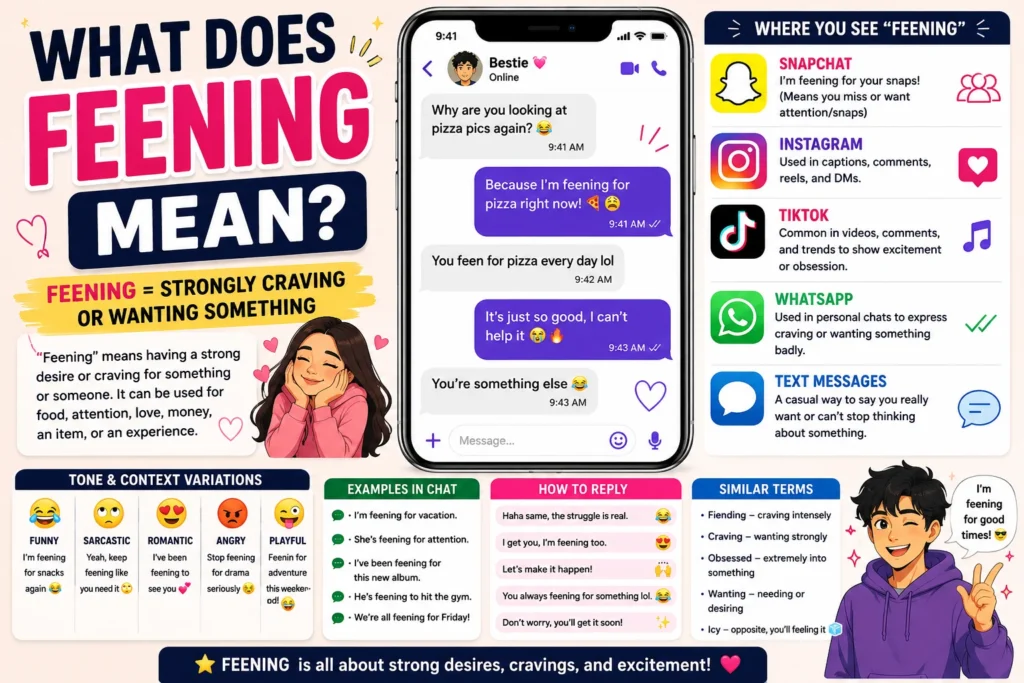

Feening means strongly craving, wanting, or being obsessed with something or someone. In texting and slang, it usually describes an intense desire, excitement, or eagerness, whether for food, attention, a person, an event, or an experience.
If you’ve seen someone write “I’m feening for pizza” or “She’s feening for that new album,” you might wonder whether it’s a typo, a slang term, or something else entirely. This guide explains the feening meaning in text, social media, chat conversations, and modern internet culture so you can understand exactly how people use it online.
What Is the Feening Meaning?
The feening meaning in modern slang refers to having a strong craving or intense desire for something.
People use it when they:
- Really want something
- Can’t stop thinking about something
- Feel excited or obsessed about something
- Are eagerly waiting for something
Examples:
- “I’m feening for some tacos right now.”
- “He’s feening to play the new game.”
- “She’s feening for concert tickets.”
The word often adds extra emotion compared to simply saying “want.”
Feening Meaning in Text
In texting, feening meaning in text usually means:
- Craving something
- Missing something badly
- Being eager for something
- Wanting attention or interaction
Example:
A: Want to grab coffee later?
B: Yes! I’ve been feening for iced coffee all day.
Here, “feening” means craving.
Feening Slang Meaning
The feening slang meaning comes from urban slang and internet culture, where it evolved from the word “fiending.”
In many online conversations, people spell it as:
- Feening
- Fiending
- Feenin’
All generally mean the same thing: intensely wanting something.
What Does Feening Mean in Chat?
When someone asks, “What does feening mean in chat?”, the answer depends on context.
It can mean:
- Craving food
- Missing someone
- Wanting attention
- Being excited for something
Example:
A: You keep refreshing the ticket page.
B: I’m feening for those concert seats.
Feening Meaning on Snapchat
On Snapchat, feening often means:
- Wanting a snap back
- Missing someone
- Looking forward to seeing someone
Example:
“I’ve been feening for your snaps all day.”
Feening Meaning on Instagram, TikTok & WhatsApp
Across social platforms, feening usually means:
- Being obsessed with a trend
- Wanting something badly
- Excitement about an upcoming event
Examples:
- “Everyone’s feening for this drop.”
- “I’m feening for season 2.”
- “She’s feening for vacation.”
Is Feening an Acronym, Short Form, or Slang Word?
Is Feening an Acronym?
No.
Unlike LOL or BRB, feening is not an acronym.
Is It a Short Form?
Not exactly.
It’s a slang variation of “fiending.”
Is It a Phonetic Spelling?
Yes, in many cases.
“Feening” is often written based on how “fiending” sounds in casual speech.
Is It a Typo-Turned Slang?
Partly.
Over time, alternate spellings became accepted online and in social media culture.
How Feening Changes Based on Tone
The meaning stays similar, but the tone can change dramatically.
Funny Tone
People use it jokingly to exaggerate a craving.
Example:
A: You already had lunch.
B: Doesn’t matter. I’m feening for fries again.
Sarcastic Tone
Used to mock someone’s obsession.
Example:
A: He’s checked the score 50 times.
B: Bro’s feening for sports updates.
Romantic Tone
Can suggest missing or wanting someone.
Example:
A: Haven’t seen you in forever.
B: I’ve been feening to spend time with you.
Angry Tone
May imply frustration.
Example:
A: Why are you texting me again?
B: You’re feening for drama at this point.
Playful Tone
Common among friends.
Example:
A: You’re buying another coffee?
B: Don’t judge me. I’m feening today.
Real Chat Examples Using Feening
Example 1
A: Want pizza tonight?
B: Absolutely.
A: Same, I’ve been feening all day.
Example 2
A: Did the album drop?
B: Not yet.
A: I’m feening for it.
Example 3
A: You texted him again?
B: Maybe.
A: You’re feening.
Example 4
A: New episode tonight.
B: Finally!
A: I’ve been feening all week.
Example 5
A: Why are you at the gym twice today?
B: Feening for gains.
Example 6
A: Did you get coffee?
B: Of course.
A: You were feening.
Example 7
A: Are tickets available yet?
B: Not yet.
A: Ugh, I’m feening.
Example 8
A: Miss me?
B: A little.
A: Just a little?
B: Fine, I’ve been feening.
Example 9
A: You really like that game.
B: It’s addictive.
A: You’re feening.
Example 10
A: Want dessert?
B: Yes.
A: You always are feening for sweets.
Example 11
A: Waiting for your message.
B: Sorry.
A: I was feening for a reply.
Example 12
A: Another concert?
B: Yep.
A: You’re feening for live music.
Example 13
A: Why so excited?
B: Vacation starts tomorrow.
A: You’ve been feening for this trip.
Example 14
A: You bought another hoodie?
B: It was on sale.
A: Feening for fashion.
Example 15
A: Hungry again?
B: Always.
A: You’re constantly feening for snacks.
Grammar and Language Role of Feening
Part of Speech
Feening is usually used as:
- A verb
- A slang verb phrase
Examples:
- “I’m feening.”
- “She’s feening for coffee.”
Sentence Position
It often appears:
- In the middle of a sentence
- After a subject
- Before the thing being desired
Examples:
- “I’m feening for tacos.”
- “They’re feening for tickets.”
Can It Replace a Full Sentence?
Yes.
Example:
A: Want pizza?
B: Feening.
The single word communicates a complete idea.
Tone Impact
Feening adds:
- Emotion
- Intensity
- Humor
- Casual energy
Formal vs Informal Use
| Context | Appropriate? |
|---|---|
| Text messages | Yes |
| Snapchat | Yes |
| TikTok | Yes |
| Yes | |
| Workplace email | No |
| Academic writing | No |
How to Reply When Someone Says Feening
Funny Reply
- “Down bad, huh?”
- “The cravings are winning.”
- “Stay strong.”
Serious Reply
- “Let’s make it happen.”
- “I get that.”
- “You’ve wanted it for a while.”
Flirty Reply
- “Feening for me?”
- “Can’t blame you.”
- “I’ve been thinking about you too.”
Neutral Reply
- “Makes sense.”
- “I understand.”
- “Hopefully soon.”
Comparison Table: Feening vs Similar Slang Terms
| Term | Meaning | Usage Context | Tone | Popularity | Confusion Risk |
|---|---|---|---|---|---|
| Feening | Craving something intensely | Chat, social media | Excited | High | Medium |
| Fiending | Original version of feening | Slang conversations | Strong desire | High | Low |
| Simping | Excessive admiration | Relationships | Playful | Very High | Medium |
| Craving | Wanting something strongly | General use | Neutral | High | Low |
| Obsessed | Extremely interested | Social media | Intense | High | Low |
| IDK | I don’t know | Texting | Neutral | Very High | Low |
| Over it | No longer interested | Opposite meaning | Negative | Medium | Low |
Who Uses the Term Feening?
Age Groups
Most common among:
- Teens
- Gen Z
- Younger Millennials
Gen Z vs Millennials
Gen Z uses feening frequently on:
- TikTok
- Snapchat
Millennials understand it but may use “fiending” more often.
Regional Usage
Most common in:
- United States
- Canada
- Urban internet communities
However, social media has spread it globally.
Popular Platforms
- TikTok
- Snapchat
- X (Twitter)
- Discord
Origin and Internet Culture Insight
Possible Origin
Feening is widely believed to come from “fiending,” a slang word meaning craving something intensely.
Historically, “fiending” was associated with strong desires or addictions, but internet culture broadened its use.
TikTok Influence
TikTok accelerated the popularity of feening by using it in:
- Storytime videos
- Memes
- Relationship content
- Food content
Meme Culture Role
Memes often exaggerate desires.
Examples:
- “Me feening for Friday.”
- “Everyone feening for summer.”
Fast Typing Culture
Internet slang often evolves through quick typing and phonetic spelling.
Feening became common because it mirrors spoken pronunciation.
Why People Say Feening Meaning on TikTok
TikTok users love expressive slang.
Feening helps creators quickly communicate:
- Excitement
- Obsession
- Cravings
- Anticipation
The term fits perfectly into short-form video captions and comments.
Is Feening Rude or Inappropriate?
Is It Rude?
Generally no.
It’s usually harmless slang.
Is It a Bad Word?
No.
It isn’t considered profanity.
Should You Use It at School?
Usually yes in casual conversations.
Should You Use It at Work?
Probably not.
Professional settings typically prefer:
- Wanting
- Looking forward to
- Excited about
instead of feening.
Real-World Observation
In everyday online conversations, people rarely use feening literally. Most use it humorously to exaggerate excitement or desire. Someone saying they’re “feening for coffee” is usually emphasizing how badly they want it, not making a serious statement. This playful exaggeration explains why the term remains popular among Gen Z and social media users.
FAQ
What does feening mean in text?
It means craving, wanting, or being eager for something.
Is feening rude?
No. It’s generally casual slang and not considered offensive.
What does feening mean on Snapchat?
It usually means wanting someone’s attention, snaps, or interaction.
Is feening the same as IDK?
No. Feening means craving something, while IDK means “I don’t know.”
Can adults use feening?
Yes. Anyone can use it, although it’s most popular among younger internet users.
How do you respond to feening?
You can reply with humor, agreement, encouragement, or playful teasing depending on the situation.
Does feening mean obsessed?
Sometimes. It can describe being extremely eager or focused on something.
Is feening the same as fiending?
Yes. Feening is generally considered a spelling variation of fiending.
Why do people say feening on TikTok?
Because it quickly expresses excitement, obsession, or strong desire in a fun way.
Is feening a Gen Z word?
It’s heavily used by Gen Z but understood by many Millennials too.
Can feening refer to a person?
Yes. Someone may say they’re feening to see, talk to, or spend time with another person.
Does feening always mean addiction?
No. Most modern uses simply mean craving or wanting something strongly.
Is feening positive or negative?
Usually positive or playful, though context can make it sarcastic.
Conclusion
The feening meaning in modern slang is simple: it means strongly craving, wanting, or eagerly anticipating something. Whether you see it on Snapchat, TikTok, Instagram, WhatsApp, or in text messages, it usually expresses excitement, desire, or obsession in a casual and playful way.
Usage Tips
- Use it in casual chats.
- Use it with friends and social media audiences.
- Use it to emphasize excitement or cravings.
Common Mistakes
- Assuming it’s an acronym.
- Thinking it’s always negative.
- Using it in formal workplace communication.
When to Use It
- Texting friends
- Social media posts
- Casual conversations
When to Avoid It
- Professional emails
- Academic writing
- Formal business communication