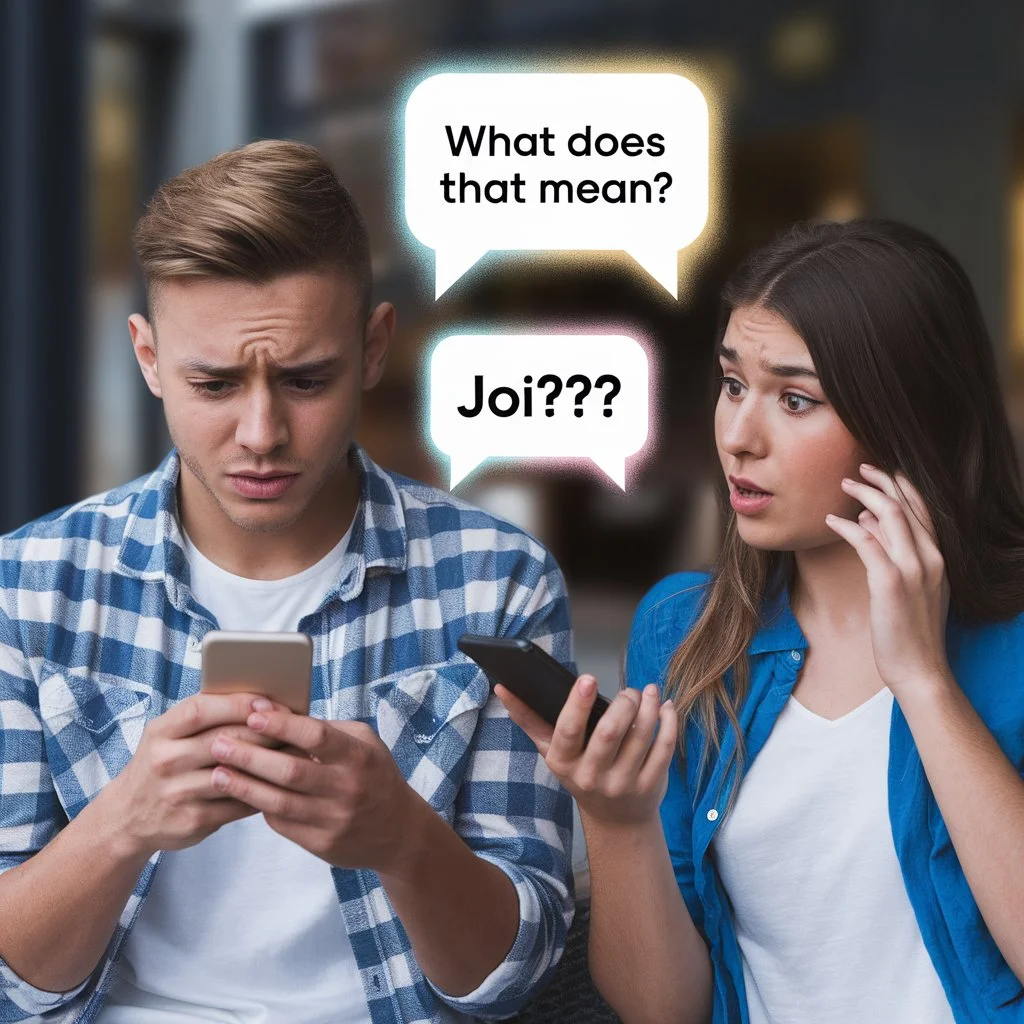

“JOI” in text is an internet abbreviation that can have different meanings depending on context. It is often used in online conversations and social media, but because it may carry sensitive or adult-related interpretations, it is important to understand the situation and tone before using or responding to it.
JOI in texting usually stands for “Jerk Off Instructions,” a term used in adult internet slang. In some rare cases, it can also mean something harmless depending on context—but most commonly, it has an explicit meaning.
It often appears in private chats, niche online communities, or certain corners of platforms like Reddit, Twitter (X), and sometimes TikTok comments.
Because of its sensitive nature, many people search for it simply to understand what they saw and whether it’s appropriate.
JOI Meaning in Text
Simple Definition
JOI = “Jerk Off Instructions”
It refers to explicit adult content where instructions are given in a suggestive or sexual context.
Is JOI an Acronym or Slang?
- ✅ Acronym – It stands for a full phrase
- ✅ Internet slang term
- ❌ Not a typo
- ❌ Not a phonetic spelling
What Does JOI Mean in Chat?
In chat, JOI is usually used in:
- Adult conversations
- Private messages
- Explicit content discussions
👉 Example:
“That video was basically JOI content.”
JOI Meaning on Snapchat, Instagram, TikTok, WhatsApp
- Snapchat: Rare but possible in private chats
- Instagram: Mostly in DMs or hidden comments
- TikTok: Usually censored or implied, not openly used
- WhatsApp: Can appear in private conversations
⚠️ Most mainstream platforms restrict or limit this type of content.
Tone & Context Variations
Unlike casual slang, JOI doesn’t have many innocent meanings. However, tone can still vary slightly depending on how it’s used.
Funny Tone (Rare)
Sometimes people joke about it indirectly.
A: “Bro what even is this video 😭”
B: “Looks like JOI or something lol”
Sarcastic Tone
Used to mock or exaggerate content.
A: “This tutorial feels weird”
B: “Yeah it’s giving JOI vibes 💀”
Romantic Tone
❌ Not typically used in romantic or healthy conversations.
Angry Tone
Used in criticism or discomfort.
A: “Why did you send that?”
B: “Because it’s not JOI relax”
Playful Tone
Rare, and can still feel inappropriate depending on context.
Real Chat Examples
Here are realistic conversations where JOI might appear:
1
A: “What kind of video is this?”
B: “It’s JOI content”
A: “Oh… got it”
2
A: “Why is this trending?”
B: “People are saying it’s JOI”
A: “That explains it”
3
A: “This feels uncomfortable”
B: “Yeah, looks like JOI honestly”
4
A: “I didn’t expect that 😳”
B: “Same… total JOI vibe”
5
A: “Is this safe to watch?”
B: “Not really, it’s JOI”
6
A: “Why is this flagged?”
B: “Probably because it’s JOI”
7
A: “Someone sent me this 😬”
B: “That’s basically JOI content”
8
A: “I’m confused”
B: “It’s a type of JOI video”
9
A: “Is this normal?”
B: “In certain communities, yeah—JOI”
10
A: “I regret clicking that link”
B: “Was it JOI?”
Grammar & Language Role
Part of Speech
JOI functions as a:
- Noun (most common)
👉 “That’s JOI content”
Sentence Position
- Used in the middle or end of sentences
- Rarely used as a standalone message
Does It Replace a Full Sentence?
❌ No. It usually describes something rather than replacing a sentence.
Tone Impact
- Strong
- Explicit
- Not casual-friendly
Formal vs Informal Use
- ❌ Never appropriate in formal writing
- ❌ Not suitable for general conversations
- ✅ Only used in specific adult contexts
How to Reply When Someone Says “JOI”
Because of its nature, responses should be handled carefully.
Funny Replies
- “Yeah… I’m gonna pretend I didn’t see that 😅”
- “Nope, closing this immediately 😂”
Serious Replies
- “That’s not something I’m interested in”
- “Please don’t send content like that”
Flirty Replies
⚠️ Not recommended due to explicit nature.
Neutral Replies
- “Okay, thanks for explaining”
- “Got it”
Boundary-Setting Replies
- “I’m not comfortable with that”
- “Let’s keep things appropriate”
Comparison Table
| Term | Meaning | Usage Context | Tone | Popularity | Confusion Risk |
|---|---|---|---|---|---|
| JOI | Explicit adult instructions | Adult content | Explicit | Medium | High |
| NSFW | Not safe for work | Warning label | Neutral | High | Low |
| DM | Direct message | Chat feature | Neutral | Very High | Low |
| FWB | Friends with benefits | Casual relationship | Suggestive | Medium | Medium |
| SFW | Safe for work | Clean content | Neutral | Medium | Low |
👉 “JOI” is tricky because:
- meaning depends heavily on context
- can be misunderstood easily
- may not be appropriate in many conversations
Who Uses This Term?
Age Group
- Mostly 18+ adults
- Not appropriate for younger audiences
Platforms
- Adult websites
- Private chats
Region
- Global usage
- More common in English-speaking online spaces
Frequency
- Not mainstream
- Used in specific niche communities
Origin of JOI
JOI originated from:
- Adult content communities
- Early internet forums
- Video-sharing platforms
Internet Culture Influence
- Spread through niche communities
- Became searchable due to curiosity
- Sometimes referenced indirectly in memes
Why People Mention JOI on TikTok
- Often used indirectly or censored
- People refer to it without saying it directly
- Used for shock or curiosity value
Is JOI Rude or Offensive?
Is It Rude?
👉 It can be very inappropriate depending on context.
Is It a Bad Word?
- Not a “curse word”
- But explicit in meaning
Should You Use It in School or Office?
- ❌ Absolutely not
- ❌ Avoid in public or professional settings
When It Becomes Problematic
- Sending it without consent
- Using it in inappropriate conversations
- Ignoring boundaries
Experience-Based Insight
In real-world usage, JOI is not something people casually use in everyday texting. Most people encounter it unexpectedly and search for its meaning out of confusion.
When it does appear, it’s usually in private or niche conversations, not general social interaction. Understanding it is helpful—but using it casually is not recommended.
Frequently Asked Questions
What does JOI mean in text?
JOI is an abbreviation used in online conversations, and its meaning can vary depending on context. It is important to understand how it is being used before interpreting it.
Is JOI appropriate to use in texting?
JOI may not be appropriate in many situations, especially formal or professional conversations, due to its potential sensitive meaning.
Why is JOI considered confusing slang?
JOI is confusing because it has multiple interpretations and can carry different meanings depending on the context.
Where is JOI commonly used?
JOI may appear in online chats, forums, and social media platforms, but it is not as commonly used as other slang terms.
Should you respond if someone sends JOI?
It depends on the context. If you are unsure, it’s better to ask for clarification or avoid responding.
Is JOI formal or informal?
JOI is informal and should not be used in professional or formal communication.
Can JOI have different meanings?
Yes, JOI can have different meanings depending on the situation, which is why context is important.
How can you avoid misunderstanding JOI?
To avoid confusion, consider the conversation context and ask for clarification if needed.
Is JOI rude?
It can be considered inappropriate or offensive depending on context.
What does JOI mean on Snapchat?
It may appear in private chats, usually referring to adult content.
Is JOI the same as IDK?
No. IDK means “I don’t know,” while JOI has a completely different meaning.
Can adults use JOI?
Yes, but only in appropriate, consensual contexts.
How do you respond to JOI?
You can respond neutrally, set boundaries, or avoid engaging.
Conclusion
JOI is an explicit internet slang term that stands for “Jerk Off Instructions.” It’s not part of everyday casual texting and is mostly used in adult or niche online spaces.
When to Use It
- Only in appropriate, adult contexts
- With clear consent and understanding
When to Avoid It
- Public platforms
- School or workplace
- Conversations with strangers
Common Mistakes
- Using it casually without knowing meaning
- Sending it to the wrong audience
- Assuming it’s harmless slang
Final Tip
If you come across JOI, it’s best to understand it—but use caution. Not all slang is meant for everyday conversations.