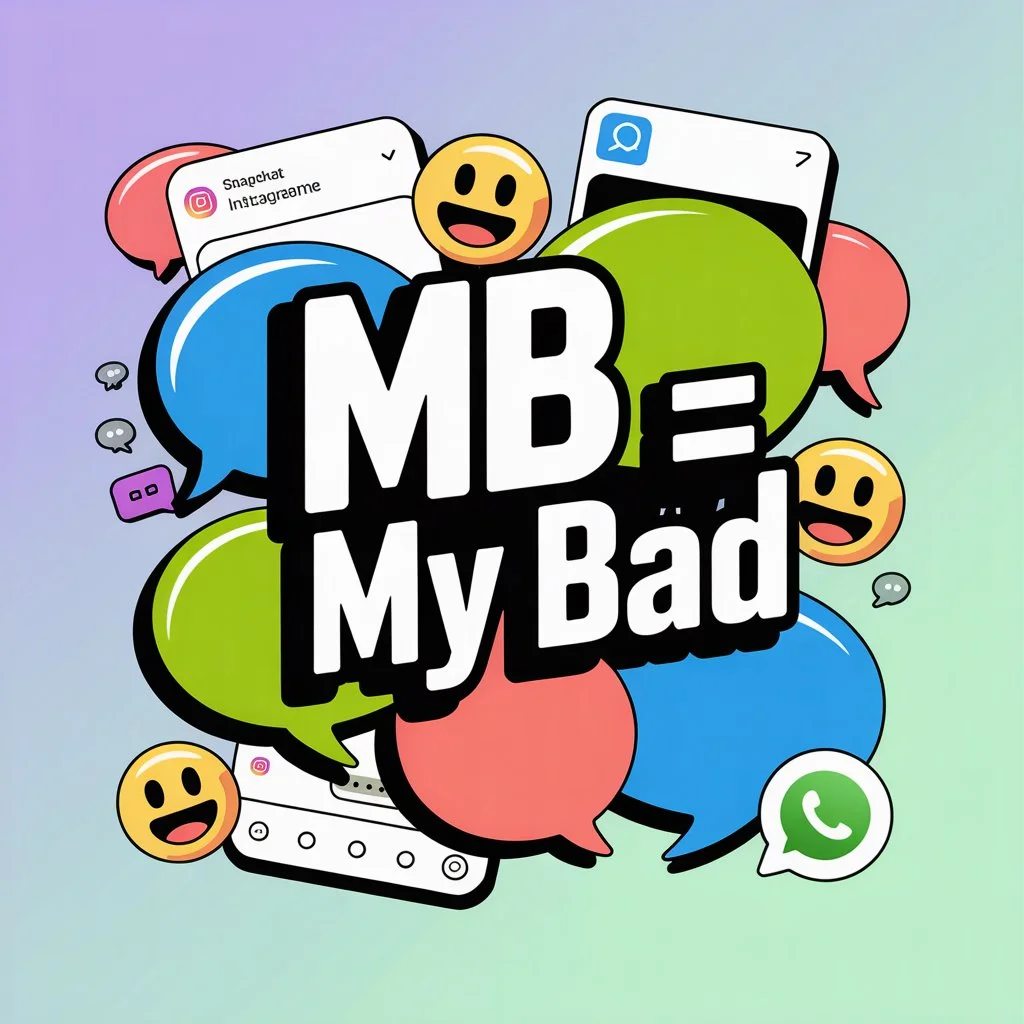

The acronym “MB” is a popular term in digital communication, especially in online chats and social media platforms. But what does “MB” mean in chat? In short, “MB” stands for “My Bad,” and it’s commonly used as an expression of apology or acknowledgment of a mistake. While this abbreviation has many variations and can carry different tones, its primary purpose is to convey a quick and casual way of admitting fault in a conversation.
People often search for the full form of “MB” in chat to understand how to use it properly, especially in different platforms like WhatsApp, Snapchat, Instagram, and TikTok. This article will explore what “MB” means, how it’s used, and how it can vary depending on tone and context.
Whether you’re new to texting slang or just curious about the growing influence of casual internet language, you’ll find everything you need to know right here.
Meaning & Explanation
“MB” Full Form in Chat Meaning in Text
In texting, “MB” is a shorthand for “My Bad,” which is a casual and informal way of saying “I made a mistake” or “I apologize.” It’s widely used in informal conversations, often when you’ve made a small error or need to admit fault in a light-hearted manner. For instance, if you forget to reply to a message or make an error in your spelling, “MB” serves as a quick and polite apology.
“MB” Full Form in Chat Slang Meaning
When people use “MB” in chat slang, it typically retains the same meaning: a brief acknowledgment of a mistake. Slang terms are often faster to type and easier to use, which is why “MB” is perfect for texting, as it allows users to quickly convey their apologies without the need for a longer explanation.
What Does “MB” Full Form in Chat Mean on Snapchat?
On Snapchat, “MB” is used similarly to other social platforms. It’s a way to apologize or express that something was your fault, especially in casual conversations. For example, if you send the wrong picture or message, you might follow it up with “MB” to quickly admit the mistake.
“MB” Full Form in Chat Meaning on Instagram, TikTok, WhatsApp
On Instagram and TikTok, “MB” is used in a similar manner. It can be a quick way to apologize for a small mistake, such as misspelling someone’s name or misunderstanding a comment. On WhatsApp, it is frequently used in group chats, where users need to quickly acknowledge their errors without disrupting the flow of the conversation. It’s a fast and efficient way to keep the conversation going smoothly.
Is “MB” an Acronym, Short Form, or a Typo Turned Slang?
“MB” is best classified as a short form or abbreviation of “My Bad.” It isn’t a true acronym because it doesn’t stand for a series of words or phrases, but rather, it’s a quick and easy shorthand. While it could be mistaken for a typo in some cases, it’s widely accepted as slang in digital communication, especially among younger generations.
Tone & Context Variations
The meaning and usage of “MB” can change depending on the tone in which it is used. Here’s how it varies across different emotional contexts:
Funny Tone
- Person A: “You ate all the pizza?”
- Person B: “MB! I got hungry, okay?”
In a funny tone, “MB” is often used to show that you made a mistake but are laughing it off. It lightens the mood and doesn’t carry any serious weight.
Sarcastic Tone
- Person A: “You’re late to the meeting again.”
- Person B: “MB, I guess time isn’t on my side today.”
In a sarcastic tone, “MB” can be used to mock the situation. It’s not a genuine apology but rather a playful or exaggerated response.
Romantic Tone
- Person A: “I forgot our anniversary date.”
- Person B: “MB, I didn’t mean to forget… I’ll make it up to you.”
In a romantic context, “MB” is used to express genuine regret in a softer and more affectionate way. It helps convey sincerity in the apology while keeping things light.
Angry Tone
- Person A: “Why didn’t you reply to my message?”
- Person B: “MB, I got caught up, alright?!”
When used angrily, “MB” can serve as a way to acknowledge a mistake, but the tone may suggest frustration. It still acknowledges fault but may not carry the same friendly vibe as other uses.
Playful Tone
- Person A: “You spilled my drink!”
- Person B: “MB, oops! Here’s a napkin.”
In a playful tone, “MB” is often used to show lightheartedness and fun, acknowledging the mistake without taking it too seriously.
Real Chat Examples (Natural & Relatable)
Here are some real-life examples of how “MB” is used in digital chats:
Example 1:
- A: “Hey, did you see the new episode last night?”
- B: “No, I totally forgot to watch it!”
- A: “You always forget!”
- B: “MB, I’ll watch it today.”
Example 2:
- A: “You took my pen again!”
- B: “MB, didn’t mean to. I’ll return it later.”
Example 3:
- A: “Why didn’t you text me back?”
- B: “MB, I was busy.”
Example 4:
- A: “I just realized I left my keys at your place.”
- B: “MB, I’ll grab them for you.”
Example 5:
- A: “You didn’t invite me to the party!”
- B: “MB, I didn’t think you’d be free.”
These examples show the diversity of “MB” across various conversations, all with the common goal of quickly acknowledging a mistake.
Grammar & Language Role
Part of Speech
“MB” is a short form, often functioning as an interjection in sentences. It’s typically used at the beginning of a sentence, followed by the statement explaining the mistake.
Sentence Position
“MB” can be placed at the beginning of a sentence, often acting as a standalone acknowledgment, or within the sentence to emphasize the apology.
- “MB, I didn’t mean to upset you.”
- “I’m sorry, MB for the confusion.”
Does “MB” Replace a Full Sentence?
Yes, “MB” is often used to replace longer phrases such as “I’m sorry” or “I made a mistake.” It’s a quick way to convey the same message without using more words.
Tone Impact
The tone can drastically change the meaning of “MB.” While it’s typically casual, the tone (funny, sarcastic, serious, etc.) will influence how it’s perceived.
Formal vs Informal Use
“MB” is considered informal and should be avoided in formal or professional settings, such as emails to colleagues or in business communication.
How to Reply When Someone Says “MB” Full Form in Chat
Funny Reply
- A: “You ate my chips!”
- B: “MB, I was starving. Want me to buy more?”
Serious Reply
- A: “You didn’t show up for the meeting.”
- B: “MB, I’m really sorry. It won’t happen again.”
Flirty Reply
- A: “You didn’t text me back all day.”
- B: “MB, I was busy… but now I’m free for you. ;)”
Neutral Reply
- A: “You forgot to reply to my message.”
- B: “MB, I’ll reply now.”
Comparison Table
| Term | Meaning | Usage Context | Tone | Popularity | Confusion Risk |
|---|---|---|---|---|---|
| MB | My Bad | Apology, casual texting | Casual, friendly | High | Low |
| IDK | I Don’t Know | Uncertainty, lack of knowledge | Neutral | High | Medium |
| LOL | Laugh Out Loud | Humor, funny situations | Playful | Very High | Low |
| BTW | By The Way | Additional information | Informative | High | Low |
| TMI | Too Much Information | Sharing excessive details | Sarcastic | Medium | Medium |
Key Insight: “MB” is more casual and used for apologizing, whereas terms like “IDK” and “LOL” serve different conversational purposes, such as expressing uncertainty or humor.
Who Uses This Term?
“MB” is most commonly used by Gen Z and Millennials, particularly in text messages, Snapchat, Instagram, and TikTok. It’s part of the growing culture of shorthand and abbreviations used to speed up communication in casual, digital environments. Its popularity is widespread in the US, UK, and other English-speaking regions, but its usage can differ across different languages and cultures.
Platforms Where “MB” Is Most Common
- Snapchat: Casual conversations with friends
- Instagram: DMs and comment sections
- WhatsApp: Group chats and casual texting
- TikTok: Comment threads, often in a playful context
Origin & Internet Culture Insight
The origin of “MB” is unclear, but it likely emerged in the early days of text messaging and online chat, as a quick way to apologize. Over time, “MB” has been embraced by internet culture, where speed and brevity reign supreme. Platforms like TikTok and Snapchat have helped popularize it, especially in meme culture where users communicate in short, impactful bursts.
Why People Say “MB” Full Form in Chat on TikTok: TikTok’s influence on internet culture cannot be overstated. In a platform where humor, memes, and brevity are central, “MB” fits right in. It’s a quick, relatable way for creators and viewers to apologize, keep things light, and engage with followers.
Safety & Appropriateness
Is It Rude?
“MB” is not inherently rude; it’s a casual, light-hearted way of apologizing. However, the tone and context matter. If used sarcastically or in the wrong setting, it could be perceived as dismissive.
Should You Use It in School or the Office?
“MB” is too informal for school or work settings. It’s better to reserve it for casual interactions with friends or peers in digital environments.
Experience-Based Insight
From my personal experience, “MB” is often used in group chats and memes to quickly smooth over minor mistakes. It’s especially useful when you don’t want to over-explain yourself but still want to acknowledge your error.
FAQ
- What does “MB” full form in chat mean in text?
“MB” stands for “My Bad,” an informal way to apologize for making a mistake. - Is “MB” rude?
No, it’s not rude, but it can come off as dismissive if used sarcastically. - What does “MB” full form in chat mean on Snapchat?
On Snapchat, “MB” is used similarly to other platforms to quickly apologize or admit fault. - Is “MB” the same as “IDK”?
No, “IDK” stands for “I Don’t Know,” while “MB” is used to admit a mistake. - Can adults use “MB” full form in chat?
Yes, but it’s typically used in informal conversations, not professional settings. - How do you respond to “MB” full form in chat?
You can respond with a funny, serious, or flirty reply depending on the tone of the conversation.
Summary
In this article, we explored the full form of “MB” in chat, which stands for “My Bad.” This simple abbreviation has become a staple in casual digital communication, allowing users to quickly acknowledge their mistakes or express a lighthearted apology. Whether on Snapchat, WhatsApp, Instagram, or TikTok, “MB” is used to convey a quick admission of fault, often in informal, friendly contexts. We also delved into how the tone of the conversation—whether funny, sarcastic, romantic, or angry—can change the meaning and impact of “MB.”
Understanding when and how to use “MB” is key to effective communication, especially in online chats where tone can be easily misinterpreted. By recognizing its different uses and context variations, you can incorporate “MB” in your conversations without misstepping.
Usage Tips
- Use “MB” for small, casual apologies: It’s ideal when you want to quickly admit a minor mistake without making the conversation overly formal.
- Pay attention to tone: While “MB” is generally casual, its tone can make a huge difference. Be mindful of how you use it to avoid sounding dismissive or sarcastic.
- Avoid using “MB” in formal settings: In professional conversations, it’s better to use a more traditional phrase like “I’m sorry” rather than the informal “MB.”
Common Mistakes
- Using “MB” too formally: It’s a casual slang term, so avoid using it in professional or serious conversations where a more formal apology is expected.
- Overusing it: Using “MB” too often can make your apologies sound insincere. It’s best reserved for situations where a quick, light-hearted acknowledgment of a mistake is needed.
- Misunderstanding tone: In text, tone is easily misinterpreted. Make sure your use of “MB” aligns with the context of the conversation to avoid coming off as sarcastic or dismissive.
When to Use and When to Avoid
When to Use:
- In casual conversations: “MB” is perfect for informal settings, such as texting friends, chatting on Snapchat, or commenting on social media posts.
- To quickly acknowledge a minor mistake: Whether you’ve forgotten to reply, misspelled something, or made a minor error, “MB” serves as a quick way to express that you messed up.
- When keeping things light: If you’re trying to keep the conversation playful or humorous, “MB” works well in those situations.
When to Avoid:
- In professional communication: In emails, work chats, or formal settings, it’s best to use a more proper apology.
- When dealing with serious issues: If you’ve made a significant mistake or hurt someone, using “MB” may come across as insincere. In these cases, a more thoughtful apology is required.
- With people you don’t know well: While it’s common among friends, using “MB” with someone you don’t have a close relationship with may seem too informal or even dismissive.
By understanding the right context and tone for using “MB,” you can ensure it adds value to your conversations and doesn’t lead to misunderstandings. So next time you make a small mistake, don’t hesitate to use “MB”—just remember to keep it casual and fun!