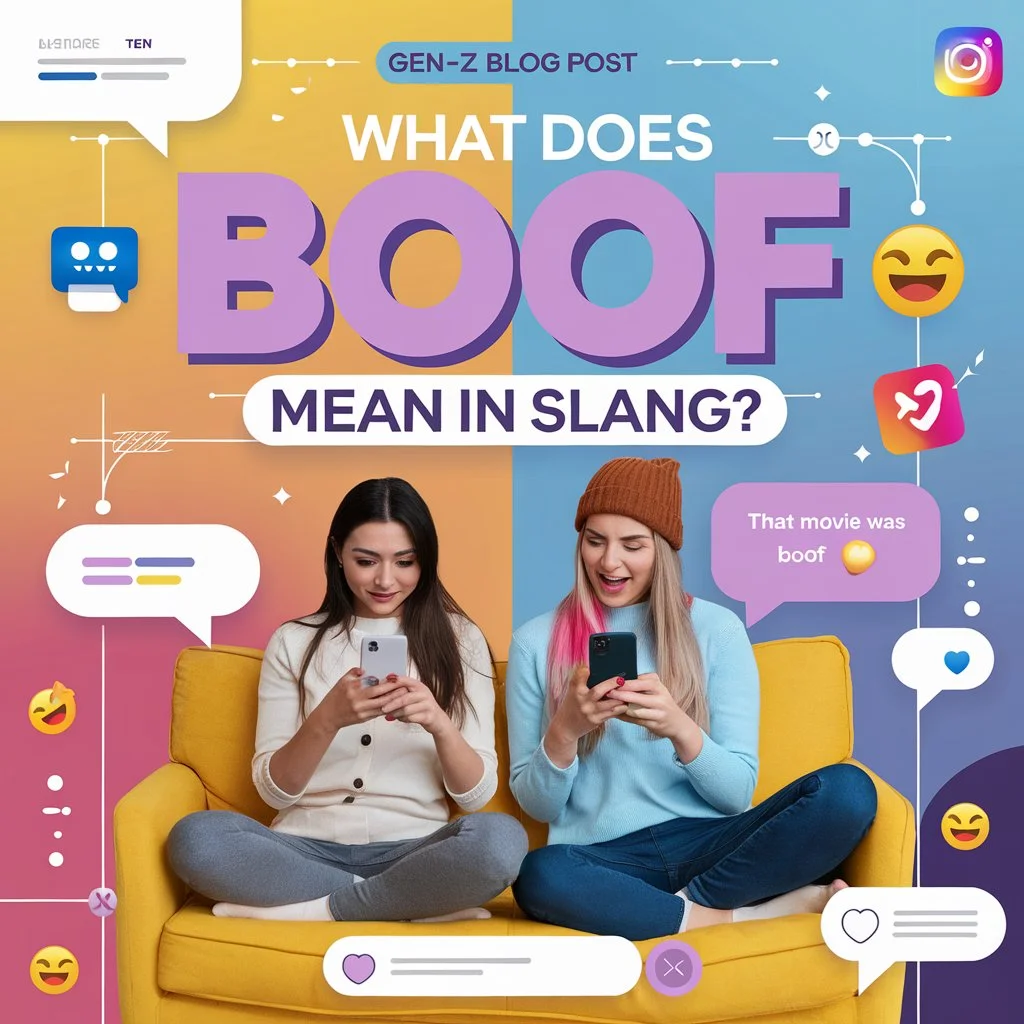

“Boof” in slang usually means making a mistake or doing something poorly, often in a casual or humorous way. It is commonly used in texting and online conversations to describe a small failure or awkward situation. In some contexts, it can also refer to something low quality or disappointing, but the exact meaning depends on how it’s used.
Boof in slang usually means something bad, fake, low quality, or unpleasant. In texting and online chat, people use “boof” to describe something disappointing, weird, or not good.
Internet slang evolves quickly, and boof is one of those words that can mean slightly different things depending on the context, tone, and platform. In this guide, you’ll learn exactly what does boof mean in slang, how people use it in chats, and how to respond naturally.
Meaning & Explanation
What Does Boof Mean in Slang?
The boof slang meaning generally refers to something that is:
- Bad quality
- Fake or suspicious
- Weird or awkward
- Disappointing
For example:
“That movie was boof.”
This means the movie was bad or disappointing.
What Does Boof Mean in Text?
In texting and digital communication, boof is a casual slang word used to express dislike or disappointment.
Example:
“I tried that new burger place. It was boof.”
Meaning: The food was not good.
This usage is especially common in Gen Z vocabulary on social media platforms.
What Does Boof Mean in Chat?
In online chat conversations, boof usually describes something negative or low quality.
Common contexts include:
- Food reviews
- Movies or shows
- Music
- Gaming performance
- Someone’s behavior
Example:
“That update is boof.”
Meaning: The update is bad or disappointing.
What Does Boof Mean on Snapchat?
On Snapchat, people often use boof casually when reacting to something.
Example:
“That party looked boof 😭”
Meaning: The party seemed boring or bad.
Snapchat slang often spreads quickly because of short, casual conversations.
What Does Boof Mean on Instagram, TikTok & WhatsApp?
Across different platforms, the meaning stays mostly the same.
Used in comments or DMs.
Example:
“Those sneakers look boof.”
Meaning: The shoes look cheap or fake.
TikTok
TikTok helped spread the slang through memes and reaction videos.
Example:
“This trend is boof.”
Meaning: The trend is bad or overrated.
Used casually between friends.
Example:
“Bro that restaurant was boof.”
Meaning: The food was not good.
Is Boof an Acronym or Something Else?
“Boof” is not an acronym.
It is:
- ❌ Not an acronym
- ❌ Not a short form
- ❌ Not a typo
Instead, it is simply a slang word that evolved in internet culture to describe something negative.
Tone & Context Variations
Like many internet slang terms, boof can change meaning slightly depending on tone.
Funny Tone
Sometimes people say boof jokingly.
Example conversation:
A: Did you see my cooking video?
B: Yeah bro… that pasta looked boof 😭
A: Nah you’re just jealous.
Here it’s used playfully between friends.
Sarcastic Tone
Boof can also be sarcastic.
Example:
A: This new phone costs $2000.
B: And the battery is boof.
A: Exactly.
The speaker is criticizing something expensive but disappointing.
Romantic Tone
It’s rarely romantic, but it can appear in playful flirting.
Example:
A: My haircut looks bad 😭
B: Nah stop, you look good. Not boof at all.
Here it’s used to reassure someone.
Angry Tone
In arguments, boof becomes stronger criticism.
Example:
A: You liked that movie?
B: Yeah it was good.
A: Nah it was boof.
This shows clear disagreement.
Playful Tone
Among friends, it’s often used lightly.
Example:
A: Try this drink.
B: If it’s boof I’m blaming you.
A: Deal.
Real Chat Examples
Here are realistic texting conversations showing how people use boof.
Example 1
A: Did you watch that new Netflix show?
B: Yeah.
A: Was it good?
B: Nah it was boof.
Example 2
A: Try this pizza place.
B: Is it good?
A: Honestly… kinda boof.
Example 3
A: My Wi-Fi today is so slow.
B: Same here.
A: Internet provider is boof.
Example 4
A: I bought those sneakers online.
B: Are they legit?
A: Nah bro they look boof.
Example 5
A: Did you enjoy the concert?
B: Not really.
A: Why?
B: The sound system was boof.
Example 6
A: That haircut looks nice.
B: You lying 😭
A: Okay maybe a little boof.
Example 7
A: Try this burger.
B: If it’s boof I’m leaving.
A: Relax it’s good.
Example 8
A: That TikTok trend is funny.
B: Nah it’s boof now.
Example 9
A: How was the party?
B: Pretty boof honestly.
Example 10
A: My phone battery dies so fast.
B: That’s boof.
Example 11
A: Did the game update help?
B: Not really.
A: Still boof?
Example 12
A: I tried cooking today.
B: How was it?
A: Boof 😭
Example 13
A: Is the movie worth watching?
B: Nope it’s boof.
Example 14
A: I got new headphones.
B: Good sound?
A: Nah they’re boof.
Example 15
A: New café opened nearby.
B: Worth trying?
A: Honestly boof.
Grammar & Language Role
Understanding how boof works grammatically helps you use it correctly.
Part of Speech
Boof usually acts as:
Adjective
Example:
“That game is boof.”
Sentence Position
It often appears:
- At the end of a sentence
- After verbs like is, was, looks, seems
Example:
“The food was boof.”
Can It Replace a Full Sentence?
Yes.
Example:
A: How was the movie?
B: Boof.
Here it acts as a complete reaction.
Tone Impact
Using boof adds:
- Casual tone
- Humor
- Mild criticism
It is rarely used in serious conversations.
Formal vs Informal Use
| Context | Appropriate? |
|---|---|
| Text messages | ✔ Yes |
| Social media | ✔ Yes |
| Workplace emails | ❌ No |
| School essays | ❌ No |
It is strictly informal internet slang.
How to Reply When Someone Says Boof
If someone says boof, your response depends on the mood of the conversation.
Funny Reply
- “Dang that bad?”
- “Boof level 100?”
- “Not even a little good?”
Serious Reply
- “What was wrong with it?”
- “Why didn’t you like it?”
- “Was the quality bad?”
Flirty Reply
- “If it’s boof I’ll cook for you instead.”
- “Maybe you just need better company 😏”
Neutral Reply
- “Got it.”
- “Good to know.”
- “I’ll skip it then.”
🔥 Comparison Table: Boof vs Fumble vs Mess Up vs Flop
| Slang Term | Meaning | Usage Context | Tone | Popularity | Confusion Risk |
|---|---|---|---|---|---|
| Boof | Bad, low quality, disappointing | Reviews, reactions | Negative | Medium | Medium |
| Mid | Average or unimpressive | Pop culture, reviews | Neutral | Very High | Low |
| Trash | Extremely bad | Gaming, criticism | Strong negative | High | Low |
| Sus | Suspicious or questionable | Gaming, chat | Playful | High | Medium |
| Cap | A lie or exaggeration | Arguments | Playful | Very High | Medium |
| Fire (opposite) | Excellent or amazing | Music, trends | Positive | Very High | Low |
Who Uses This Term?
Age Group
“Boof” is most popular among:
- Teenagers
- Gen Z users
- Young online communities
Gen Z vs Millennials
| Generation | Usage |
|---|---|
| Gen Z | Very common |
| Millennials | Occasional |
| Older adults | Rare |
Regions
The slang appears mainly in:
- United States
- Canada
- UK internet culture
- Global TikTok communities
Platforms Where It Is Most Common
You’ll most often see boof on:
- TikTok
- Snapchat
- Instagram comments
- Discord chats
- Gaming communities
Origin & Internet Culture Insight
The exact origin of boof slang is unclear.
However, slang experts believe it spread through:
- Online gaming chats
- Meme culture
- Short-form videos
Why People Say Boof on TikTok
TikTok helped popularize the term because:
- Short reactions go viral
- Slang spreads through comments
- Meme videos repeat catchy words
Creators often use boof as a humorous reaction to something disappointing.
Meme Culture Role
Memes helped boost the popularity of boof.
Examples include:
- Food review memes
- Gaming fails
- Bad product reviews
The word works well because it’s short, funny, and expressive.
Safety & Appropriateness
Is Boof Rude?
No, it is not considered a serious insult.
However, it can sound slightly negative.
Is Boof a Bad Word?
No.
It is generally safe slang and not profanity.
Should You Use It in School or Office?
Not recommended.
It’s better for:
- Casual chat
- Social media
- Conversations with friends
Avoid using it in:
- Work emails
- Formal presentations
- Academic writing
Experience-Based Insight
From everyday online conversations, people usually use boof when casually reviewing something.
For example:
- Food
- Music
- Movies
- Games
Instead of writing long criticism, they simply say:
“It’s boof.”
This quick reaction fits modern fast-paced digital communication where short slang phrases dominate.
FAQ
What does “boof” mean in slang?
In slang, “boof” usually means to make a mistake, fail, or do something poorly in a casual or humorous way. It is often used in texting and online conversations.
Is “boof” a bad word?
“Boof” is generally not considered a bad word in its casual usage. However, it can have other meanings in different contexts, so it’s important to understand how it’s being used.
How do you use “boof” in a sentence?
Examples:
- “I totally boofed that test.”
- “He boofed the play at the last second.”
Does “boof” always mean making a mistake?
No, “boof” can have different meanings depending on context. While it often refers to a mistake or failure, it may be used differently in certain online or niche conversations.
Is “boof” the same as “fumble”?
Not exactly. “Boof” usually refers to a casual or minor mistake, while “fumble” often means messing up an important opportunity.
Is “boof” commonly used slang?
“Boof” is less common than terms like “mess up” or “fumble,” but it still appears in memes, chats, and casual conversations.
Can “boof” be used in formal writing?
No, “boof” is informal slang and should only be used in casual settings like texting or social media.
Why do people use “boof” instead of “mess up”?
People use “boof” because it sounds more playful and expressive, often adding humor to a mistake.
What does boof mean in text?
Boof in text usually means something bad, disappointing, or low quality.
Is boof rude?
Not really. It’s mild slang used casually to describe something negative.
What does boof mean on Snapchat?
On Snapchat, boof is used as a reaction to something boring, bad, or disappointing.
Is boof the same as idk?
No.
- Boof = something bad
- IDK = I don’t know
They serve completely different purposes.
Can adults use boof?
Yes, but it’s mainly used by younger people in casual conversations.
How do you respond to boof?
You can respond with:
- “Why was it bad?”
- “Really? I thought it was good.”
- “I’ll skip it then.”
Is boof common on TikTok?
Yes. TikTok comments and meme videos helped spread the slang widely.
Is boof positive or negative slang?
It is usually negative, describing something disappointing or low quality.
Final Summary
So, what does boof mean in slang?
It’s a casual internet slang term used to describe something bad, disappointing, fake, or low quality.
You’ll mostly see it in:
- Text messages
- TikTok comments
- Snapchat chats
- Gaming conversations
Usage Tips
Use boof when:
- Reacting to bad food, movies, or products
- Joking with friends
- Posting casual online comments
Common Mistakes
People sometimes misunderstand boof as:
- An acronym (it’s not)
- A typing error
- A positive term
Remember: boof usually means something negative.
When to Use and When to Avoid
Use it:
✔ With friends
✔ On social media
✔ In casual chats
Avoid it:
✖ In professional communication
✖ In formal writing
✖ In academic contexts