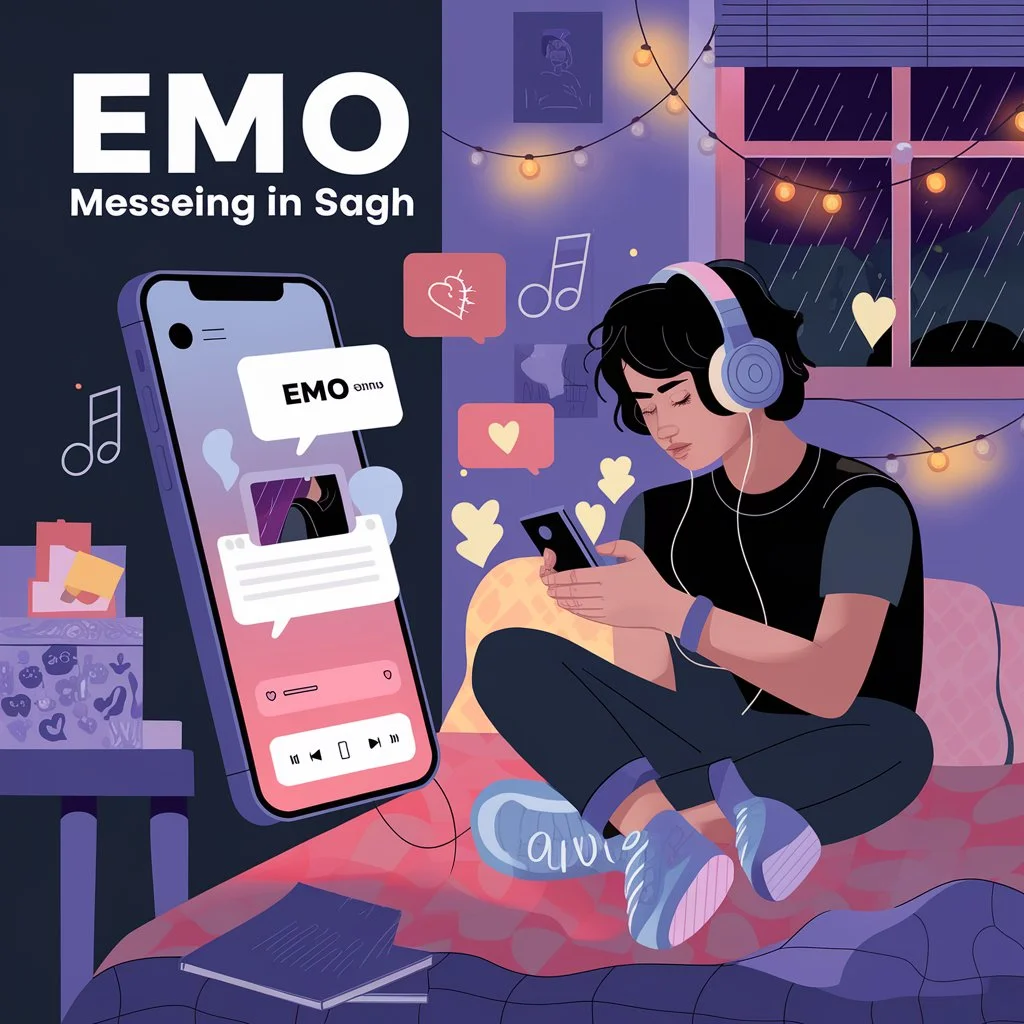

“Emo” in slang usually describes a person who is very emotional, sensitive, or into a specific alternative style linked to emotional music and dark fashion. You’ll often see the word in texting, TikTok comments, Snapchat chats, and online conversations.
People search for this term because it appears frequently in memes, social media captions, and casual chats. Sometimes it refers to a music style, and other times it describes a person’s personality or aesthetic.
Understanding how the slang is used can help you avoid confusion when you see someone called “emo” online.
Emo Meaning in Text
In everyday texting, “emo” is a slang word used to describe someone who appears very emotional, moody, dramatic, or deeply expressive about their feelings.
The word originally came from “emotional.”
Today, the slang has a few different meanings depending on context:
- Someone who expresses strong emotions
- Someone who enjoys dark or emotional music
- A person with an alternative aesthetic (black clothes, dramatic style)
- Someone jokingly acting overly dramatic
Is Emo an Acronym or Abbreviation?
No. Emo is not an acronym.
It is:
- A shortened form of the word “emotional.”
- A slang term that developed from music culture.
Over time, the meaning expanded and is now widely used in internet slang and digital communication.
What Emo Means in Everyday Chat
In texting, people may use “emo” to describe mood or personality.
Examples:
- “Why are you so emo today?”
- “That song is really emo.”
- “He’s in his emo phase.”
Sometimes it is used seriously, but often it’s said playfully between friends.
Where People Use Emo
You’ll see this slang across many social platforms and messaging apps.
Emo Meaning on TikTok
On TikTok, “emo” often appears in:
- Comment sections
- Meme captions
- Aesthetic videos
Example comment:
“Not gonna lie, this playlist is giving emo vibes.”
Sometimes creators also joke about being in an “emo era.”
Emo Meaning on Snapchat
On Snapchat, the word is usually used in private chats.
Example:
Friend: “Why are you posting sad songs today?”
Reply: “I’m just feeling emo.”
Here it simply means someone is feeling emotional.
Emo Meaning on Instagram
On Instagram, the word appears in:
- captions
- comments
- story replies
Example caption:
“Late-night drives and emo music.”
It often refers to a music or mood aesthetic.
Emo Meaning on WhatsApp
In WhatsApp chats, friends may use the term jokingly.
Example:
“Stop being emo and come hang out.”
This is usually said playfully.
Emo Meaning in SMS Text Messages
In traditional text messages, “emo” keeps the same meaning.
People use it when describing:
- moods
- music taste
- personality
Example:
“I’ve been listening to emo songs all day.”
Real Chat Examples
Below are some realistic texting conversations using the slang “emo.”
Example 1
A: “Why are you listening to sad music again?”
B: “I’m just feeling emo tonight.”
A: “Fair enough.”
Example 2
A: “Your playlist is so emo.”
B: “Yeah, that’s my vibe.”
Example 3
A: “Why are you wearing all black?”
B: “Emo aesthetic today.”
Example 4
A: “You okay?”
B: “Yeah, just having an emo moment.”
Example 5
A: “That song is really emotional.”
B: “Yeah, it’s classic emo music.”
Example 6
A: “You used to be so cheerful.”
B: “I went through an emo phase in high school.”
Example 7
A: “Why are your posts so sad lately?”
B: “Just feeling a little emo.”
Example 8
A: “That outfit looks cool.”
B: “Thanks, it’s my emo look.”
Example 9
A: “Why are you staying home tonight?”
B: “Emo night. Just music and snacks.”
Example 10
A: “That movie made me cry.”
B: “Same, it was super emo.”
How to Reply When Someone Says “Emo”
If someone uses the word “emo” in conversation, your response depends on the tone.
Funny Replies
- “Emo arc unlocked.”
- “Main character energy.”
Casual Replies
- “We all have those days.”
- “Same honestly.”
Friendly Replies
- “Hope you feel better soon.”
- “Want to talk about it?”
Neutral Replies
- “Got it.”
- “That makes sense.”
Is Emo Rude or Offensive?
Generally, “emo” is not considered a rude word.
However, the tone matters.
When It’s Harmless
Most of the time it’s used casually to describe:
- emotional moods
- music styles
- fashion aesthetics
When It Can Be Negative
In some cases, people use it as teasing or mild criticism, especially if they mean someone is being overly dramatic.
Example:
“Stop being so emo.”
Even then, it’s usually said jokingly.
Is It Appropriate at School or Work?
Yes, but context matters.
It’s acceptable in casual conversations, but it might sound too informal for professional settings.
For example:
- Good for: friends, classmates
- Avoid in: formal emails or workplace communication
Who Uses This Term?
The slang word “emo” is used by different groups, but it appears most often among younger internet users.
Age Groups
Most common among:
- teenagers
- young adults
- social media users
Gen Z Usage
Gen Z frequently uses the term in:
- memes
- captions
- jokes about mood or personality
They often refer to “emo phases” or “emo playlists.”
Common Platforms
You’ll see the term most on:
- TikTok
- Snapchat
- Discord
- texting apps
Because these platforms encourage casual communication, slang spreads quickly.
Origin of the Term
The word “emo” originally came from “emotional hardcore,” a music genre that developed in the 1980s and 1990s.
The genre featured songs that focused on deep feelings, personal struggles, and emotional expression.
Over time, fans of the music developed a recognizable style:
- dark clothing
- dyed hair
- dramatic fashion
- emotional lyrics
Eventually, the word “emo” became part of internet slang and began describing mood or personality rather than just music.
Today, many people use it casually without thinking about the music origin.
Comparison Table
| Term | Meaning | Type | Usage | Popularity |
|---|---|---|---|---|
| Emo | Emotional or dramatic mood/style | Slang word | Describing personality or vibe | High |
| IDK | I don’t know | Acronym | Quick texting response | Very High |
| IDC | I don’t care | Acronym | Expressing indifference | High |
| IMO | In my opinion | Acronym | Sharing opinions online | High |
| BRB | Be right back | Acronym | Temporary chat pause | Medium |
Real-World Usage Example
Imagine a group of friends chatting online late at night.
One person shares a playlist filled with slow, emotional songs.
Another friend replies:
“Why is your playlist so emo?”
Here, the word “emo” simply describes the emotional tone of the music.
This type of casual use is extremely common in modern internet conversations.
Frequently Asked Questions
What does emo mean in text messages?
In text messages, emo usually means someone is feeling very emotional or listening to emotional music.
What does emo mean on TikTok?
On TikTok, the term often refers to sad or emotional aesthetics, music, or moods.
Is emo slang?
Yes. Today, “emo” is widely used as internet slang in casual conversations and social media.
Is emo rude or offensive?
Usually no. It’s generally harmless, though sometimes it may be used jokingly to tease someone for being overly dramatic.
How should you reply to emo?
You can respond casually, such as:
- “We all have emo days.”
- “Hope you’re okay.”
- “That playlist sounds good.”
Conclusion
The slang word “emo” originally came from emotional music culture but has evolved into a common term used in texting and social media.
Today, people use it to describe:
- emotional moods
- certain music styles
- alternative fashion aesthetics
It’s widely used in casual online conversations, especially among younger internet users.
However, because it’s informal slang, it’s best to avoid using it in professional settings or serious communication.
Understanding how people use “emo” in chats and social media can help you follow modern internet conversations more easily.