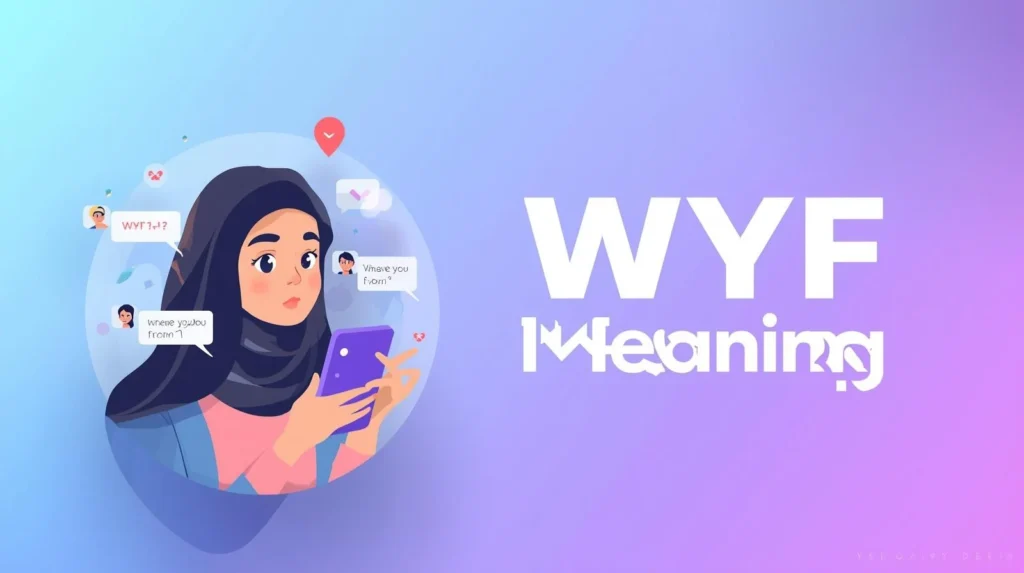

If you’ve ever received a message that simply says “WYF?”, you’re not alone in feeling confused for a second. It’s short, informal, and easy to misread—especially if you’re not used to fast-paced digital conversations.
“WYF” in slang usually stands for “where you from?” and is commonly used in texting and social media to ask about someone’s location or background. In some contexts, it can also mean “what’s your favorite?” so the exact meaning depends on the conversation.
People search for “WYF meaning” because this tiny abbreviation can carry different tones depending on context. Is it friendly? Flirty? Rude? The answer depends on how and where it’s used.
This guide clears that confusion. You’ll learn what WYF actually means, how people use it in real conversations, and how to respond without second-guessing yourself.
WYF Meaning – Quick Definition
WYF is a texting abbreviation that most commonly means:
- “Where You From?”
It’s used to quickly ask someone about their location or background in a casual way.
Key points:
- 📱 It’s a texting abbreviation
- 💬 Used in casual conversations
- 🌍 Often asked when getting to know someone
Example usage:
- “WYF? I don’t think we’ve met before.”
- “Hey, WYF?”
- “WYF originally or just living here?”
Origin & Background
WYF didn’t come from traditional language—it grew out of texting culture, where speed matters more than full sentences.
Where it came from:
- Early SMS texting habits
- Chatrooms and online forums
- Social media messaging (Snapchat, Instagram, WhatsApp)
Cultural influence
As digital communication evolved, people began shortening phrases like:
- “Where are you from?” → “Where u from?” → WYF
It reflects a larger trend:
- Less typing
- Faster replies
- More casual tone
Social media impact
Platforms like TikTok and Instagram accelerated its use. WYF became common in:
- DMs between strangers
- Comment sections
- Online dating conversations
Today, it’s part of everyday Gen Z vocabulary, but it’s still widely understood across age groups.
Real-Life Conversations
Here’s how WYF naturally appears in real chats:
Person A: Hey, I saw you in that group chat
Person B: Oh yeah?
Person A: Yeah, WYF?
Instagram DMs
Person A: You seem cool
Person B: Thanks 🙂
Person A: WYF?
TikTok Comments
User 1: This place looks familiar
User 2: Same
User 3: WYF? Maybe we’re from the same city
Text Message
Person A: We’ve been talking for a while lol
Person B: True
Person A: WYF originally?
These examples show that WYF is usually used as an icebreaker.
Emotional & Psychological Meaning
At its core, WYF is about connection.
What emotion it expresses:
- Curiosity
- Interest
- Openness to conversation
Why people use it:
- To get to know someone quickly
- To find common ground
- To continue a conversation naturally
What it reveals about modern communication
Today’s conversations move fast. People want:
- Quick answers
- Easy engagement
- Low-pressure interaction
WYF fits perfectly into that style.
Real-life insight
Imagine you’re chatting with someone new online. After a few messages, they ask, “WYF?” It’s not random—it’s a subtle way of saying:
“I’m interested in knowing more about you.”
Usage in Different Contexts
Social Media
- Common in DMs and comments
- Used as a conversation starter
- Often appears early in chats
Friends & Relationships
- Used casually between new friends
- Helps build connection
- Can lead to deeper conversations
Work / Professional Settings
- ❌ Not appropriate
- Use full sentences instead:
- “Where are you based?”
Casual vs Serious Tone
- Casual: Friendly and relaxed
- Serious: Rarely used in serious discussions
Tone depends heavily on context and relationship.
When NOT to Use It
Even simple slang like WYF has limits.
Avoid using it:
- ❌ In formal emails or work chats
- ❌ With people who prefer professional tone
- ❌ In sensitive conversations
Cultural sensitivity
In some cultures, asking “where are you from” too quickly can feel intrusive.
Common Misunderstandings
1. It means something negative
Some people assume WYF is rude.
➡️ Reality: It’s neutral, depending on tone.
2. It always means location
Sometimes it can imply:
- Background
- Nationality
- Current city
3. It’s universally appropriate
Not always.
➡️ Context matters more than the word itself.
Comparison Table: WYF vs Similar Slang
| Term | Meaning | Tone | Usage Context |
|---|---|---|---|
| WYF | Where you from | Casual | New conversations |
| WYA | Where you at | Casual | Location check |
| WYD | What you doing | Casual | Ongoing chats |
| ASL | Age, sex, location | Direct | Older internet slang |
| IDC | I don’t care | Opposite tone | Disinterest |
Key Insight
While WYF is friendly and curiosity-driven, similar abbreviations can feel more direct or even dismissive. Understanding tone makes all the difference.
Variations / Types
- WYA – Where you at
→ Asking current location - WYD – What you doing
→ Asking about activity - ASL – Age, sex, location
→ Older, more direct intro - HRU – How are you
→ Casual check-in - SUP – What’s up
→ General greeting - LMK – Let me know
→ Request for response - IDK – I don’t know
→ Expressing uncertainty - BRB – Be right back
→ Temporary pause - TTYL – Talk to you later
→ Ending conversation - IMO – In my opinion
→ Sharing thoughts
How to Respond When Someone Uses It
Casual Replies
- “I’m from Lahore, you?”
- “Originally from Karachi”
Funny Replies
- “From Earth 🌍😂”
- “Somewhere between coffee and chaos”
Mature Replies
- “I’m based in Islamabad. What about you?”
- “I grew up in Multan”
Respectful Replies
- “I’d prefer not to share that yet”
- “Let’s get to know each other first”
Regional & Cultural Usage
Western Culture
- Very common
- Seen as casual and normal
Asian Culture
- Used, but sometimes more politely
- Full sentences still preferred in formal chats
Middle Eastern Culture
- Context matters
- Can feel personal if asked too quickly
Global Internet Usage
- Widely understood
- Popular across platforms
Generational Differences
- Gen Z: Uses it naturally and frequently
- Millennials: Uses it but may prefer full phrases
- Older users: Less familiar
Is It Safe for Kids?
Yes—with context.
WYF itself is harmless, but:
- Kids should understand online safety
- Avoid sharing personal details with strangers
FAQs
What does WYF mean in text?
It means “Where you from?” and is used to ask about someone’s location or background.
Is WYF rude?
No, but tone matters. It can feel abrupt if used without context.
What does WYF mean on Snapchat?
Same meaning—used casually in chats to get to know someone.
Is WYF the same as WYA?
No. WYF asks origin, WYA asks current location.
Can adults use WYF?
Yes, but mostly in casual conversations.
How do you respond to WYF?
Answer your location or reply politely if you prefer not to share.
Can WYF mean something else?
Yes, in some contexts WYF can mean “what’s your favorite?” depending on how it is used in the conversation.
How do you use WYF in a sentence?
Examples:
- “WYF?”
- “WYF about this movie?”
Is WYF formal or informal?
WYF is informal slang and is used in casual conversations only.
What is the difference between WYF and WYA?
WYF asks about where someone is from, while WYA means “where you at,” asking about the current location.
Where is WYF commonly used?
WYF is commonly used in texting, social media, and online chats.
Why do people use WYF instead of writing it fully?
People use WYF to save time and keep messages short in fast conversations.
Is WYF confusing?
Yes, WYF can be confusing because it has multiple meanings, so context is important to understand it correctly.
Conclusion
The meaning of WYF is simple on the surface—“Where you from?”—but its real power lies in how it’s used. It’s a small phrase that opens the door to connection, curiosity, and conversation.
In today’s fast-moving digital world, abbreviations like WYF make communication quicker and more relaxed. But understanding tone, context, and boundaries is what truly makes you a confident communicator.
Use it casually, respond thoughtfully, and always stay aware of who you’re talking to. That balance is what turns simple slang into meaningful interaction.