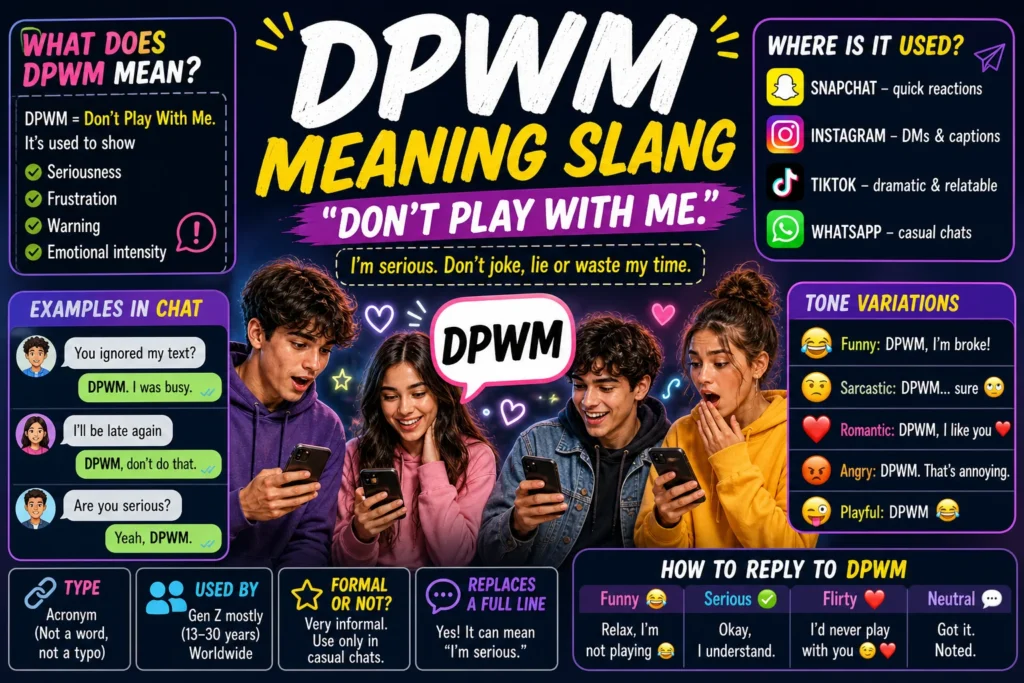

DPWM means “Don’t Play With Me.” In texting and slang, it’s used to show seriousness, warning, or emotional intensity—often signaling that someone isn’t joking and wants to be taken seriously.
Right now, many people search dpwm meaning slang because they see it in chats, TikTok comments, or DMs and aren’t sure if it’s playful, flirty, or aggressive. This guide clears that confusion with real examples, tone breakdowns, and practical usage.
DPWM Meaning & Explanation
DPWM meaning in text
In everyday digital communication, DPWM = Don’t Play With Me.
It usually means:
- “I’m serious right now”
- “Don’t joke about this”
- “Don’t test my patience”
DPWM slang meaning
As an internet slang term, DPWM carries emotional weight. It’s not just words—it signals:
- Frustration
- Confidence
- Warning
- Sometimes playful intensity
What does DPWM mean in chat?
In chat, DPWM depends heavily on tone:
- Calm tone → serious statement
- Caps or emojis → emotional or dramatic
- With jokes → playful exaggeration
DPWM meaning on Snapchat
On Snapchat, DPWM is often used:
- In streak replies
- During emotional convos
- When someone feels ignored or tested
Example:
“You left me on opened? dpwm 😭”
DPWM meaning on Instagram, TikTok, WhatsApp
- TikTok: Used in captions for dramatic or funny effect
- Instagram DMs: Emotional or flirty intensity
- WhatsApp: More direct—can sound serious or slightly confrontational
What type of slang is DPWM?
- ✔ Acronym
- ❌ Not a typo
- ❌ Not phonetic spelling
- ❌ Not a short form word
Tone & Context Variations
DPWM changes meaning based on tone.
Funny Tone
Used jokingly among friends.
Example:
A: “I ate your fries 😭”
B: “DPWM bro I’m starving”
👉 Meaning: Not serious, just playful.
Sarcastic Tone
Used to exaggerate a situation.
Example:
A: “You forgot my birthday?”
B: “dpwm… wow 😑”
👉 Meaning: Mock seriousness.
Romantic Tone
Often used in flirting.
Example:
A: “You really like me?”
B: “DPWM… I mean it ❤️”
👉 Meaning: Emotional honesty.
Angry Tone
Direct and serious.
Example:
A: “Keep talking like that”
B: “DPWM. I’m not joking.”
👉 Meaning: Warning.
Playful Tone
Light teasing.
Example:
A: “You can’t beat me in a game”
B: “DPWM 😂 watch me”
👉 Meaning: Confident and fun.
Real Chat Examples (Natural & Relatable)
A: “You really didn’t invite me?”
B: “DPWM, I thought you were busy”
A: “Still hurts though”
A: “I might move away”
B: “dpwm… are you serious?”
A: “Yeah 😔”
A: “You look good today”
B: “DPWM 😳”
A: “I’m serious”
A: “I’ll beat you in FIFA”
B: “DPWM 😂”
A: “Bet?”
A: “You ignored my text”
B: “DPWM I was sleeping”
A: “Hmm okay”
A: “You still mad?”
B: “dpwm… a little”
A: “Let’s fix it”
A: “I like you”
B: “DPWM?”
A: “I mean it”
A: “You always late”
B: “DPWM traffic was crazy”
A: “Excuses 😭”
A: “You quitting?”
B: “DPWM I’m done”
A: “Wow…”
A: “You miss me?”
B: “DPWM… a lot ❤️”
A: “Aww”
👩 DPWM Meaning From a Girl
When a girl uses DPWM, it often carries emotional clarity.
It can mean:
- “I’m being honest—don’t take this lightly”
- “I’m serious about my feelings”
- “Don’t joke about something important to me”
Example:
A: “You really care about me?”
Girl: “DPWM… I do.”
👉 Tone: Vulnerable, sincere
Sometimes it can also signal:
- Frustration if she feels misunderstood
- Playful attitude in teasing conversations
👨 DPWM Meaning From a Guy
When a guy uses DPWM, it usually reflects:
- Assertiveness
- Confidence
- Emotional seriousness (even if hidden)
Example:
A: “You actually love her?”
Guy: “DPWM. I’m serious.”
👉 Tone: Firm and direct
It can also be:
- Competitive (gaming, jokes)
- Protective in relationships
- Slightly confrontational in arguments
Grammar & Language Role
Part of Speech
DPWM acts like a standalone expression or sentence substitute.
Sentence Position
- Beginning: “DPWM, I’m serious”
- Middle: “I’m not joking dpwm”
- Alone: “DPWM.”
Does it replace a full sentence?
Yes. It can replace:
- “I’m serious”
- “Don’t joke with me”
Tone Impact
- Adds emotional intensity
- Signals seriousness quickly
Formal vs Informal
- ❌ Not formal
- ✔ Casual chat phrase
How to Reply When Someone Says DPWM
Funny Replies
- “Relax 😂 I’m not playing”
- “Why so serious 😭”
Serious Replies
- “Okay, I understand”
- “I’m listening”
Flirty Replies
- “I’m not playing… I mean it 😉”
- “You don’t have to tell me twice ❤️”
Neutral Replies
- “Got it”
- “Alright”
Comparison Table
| Term | Meaning | Usage Context | Tone | Popularity | Confusion Risk |
|---|---|---|---|---|---|
| DPWM | Don’t play with me | Serious or emotional chats | Intense | High | Medium |
| FR | For real | Agreement/confirmation | Casual | High | Low |
| IDC | I don’t care | Dismissive response | Cold | High | Medium |
| ONG | On God (truth emphasis) | Strong honesty | Serious | High | Medium |
| Bet | Agreement/challenge | Friendly chats | Playful | High | Low |
| JK (opposite) | Just kidding | Clarifying joke | Light | Very High | Low |
Who Uses DPWM?
Age Group
- Mostly Gen Z (16–30)
- Some Millennials
Region
- Popular in US, UK
- Used globally in internet culture
Platforms
- TikTok
- Snapchat
- Instagram DMs
Origin & Internet Culture Insight
DPWM comes from everyday speech:
“Don’t play with me” → shortened into DPWM
TikTok Influence
TikTok amplified it through:
- Emotional captions
- Dramatic storytelling
- Relationship content
Meme Culture Role
Used in memes to:
- Exaggerate reactions
- Add humor or drama
Fast Typing Culture
People shorten phrases to:
- Save time
- Match texting speed
Why People Say DPWM on TikTok
Because it:
- Sounds dramatic
- Feels relatable
- Adds emotional impact
Safety & Appropriateness
Is it rude?
- Sometimes, depending on tone
Is it a bad word?
- No, but can sound aggressive
Should you use it in school or office?
- ❌ Not recommended
- ✔ Best for casual chats
Experience-Based Insight
In real conversations, DPWM often appears when emotions rise—even slightly. I’ve seen it used jokingly between friends, but also in serious relationship talks where someone wants to be heard clearly. The difference is always tone, not the word itself.
FAQ
What does DPWM mean in text?
It means “Don’t Play With Me,” showing seriousness or emotional intensity.
Is DPWM rude?
Not always—it depends on tone and context.
What does DPWM mean on Snapchat?
It usually signals seriousness in a casual or emotional conversation.
Is DPWM the same as IDK?
No. DPWM shows seriousness, while IDK means “I don’t know.”
Can adults use DPWM?
Yes, but it’s mostly used by younger audiences.
How do you respond to DPWM?
Respond based on tone—serious, playful, or neutral.
What does DPWM mean in slang?
DPWM stands for “Don’t Play With Me.” It’s used in texting and online chats to show seriousness, frustration, or emotional intensity.
What does DPWM mean in text messages?
In text messages, DPWM means the sender wants to be taken seriously and isn’t joking. It often signals “I’m being real right now.”
Is DPWM rude or offensive?
DPWM is not a bad word, but it can sound rude depending on tone. In a playful context, it’s harmless—but in arguments, it may feel confrontational.
What does DPWM mean on TikTok?
On TikTok, DPWM is commonly used in captions or comments to add drama, humor, or emotional emphasis in relatable videos.
What does DPWM mean from a girl?
From a girl, DPWM often expresses emotional honesty or seriousness. It can mean “I’m being genuine—don’t take this lightly.”
What does DPWM mean from a guy?
From a guy, DPWM usually sounds more direct or assertive. It often signals confidence, seriousness, or a firm statement.
How do you respond to DPWM?
You can respond based on tone:
- Serious: “Okay, I understand.”
- Funny: “Relax, I’m not playing 😂”
- Flirty: “I’d never play with you 😉”
Is DPWM the same as “FR” or “ONG”?
Not exactly. DPWM shows seriousness or warning, while:
- FR = “For real” (agreement)
- ONG = “On God” (strong truth emphasis)
Why do people use DPWM in chats?
People use DPWM because it’s quick, expressive, and adds emotional clarity in fast digital communication.
Can DPWM be used in a positive way?
Yes. In playful or romantic contexts, DPWM can sound sweet or teasing rather than aggressive.
Conclusion
DPWM is a powerful yet simple slang term that means “Don’t Play With Me.” It’s widely used in texting, TikTok, and chats to express seriousness, emotion, or playful intensity.
Usage Tips
- Use it when you want to sound serious
- Match tone with context
- Avoid overusing in formal settings
Common Mistakes
- Misreading tone (joke vs serious)
- Using it in professional conversations
When to Use
- Casual chats
- Emotional conversations
- Friendly teasing
When to Avoid
- Workplace communication
- Formal messages
- Sensitive situations without clarity