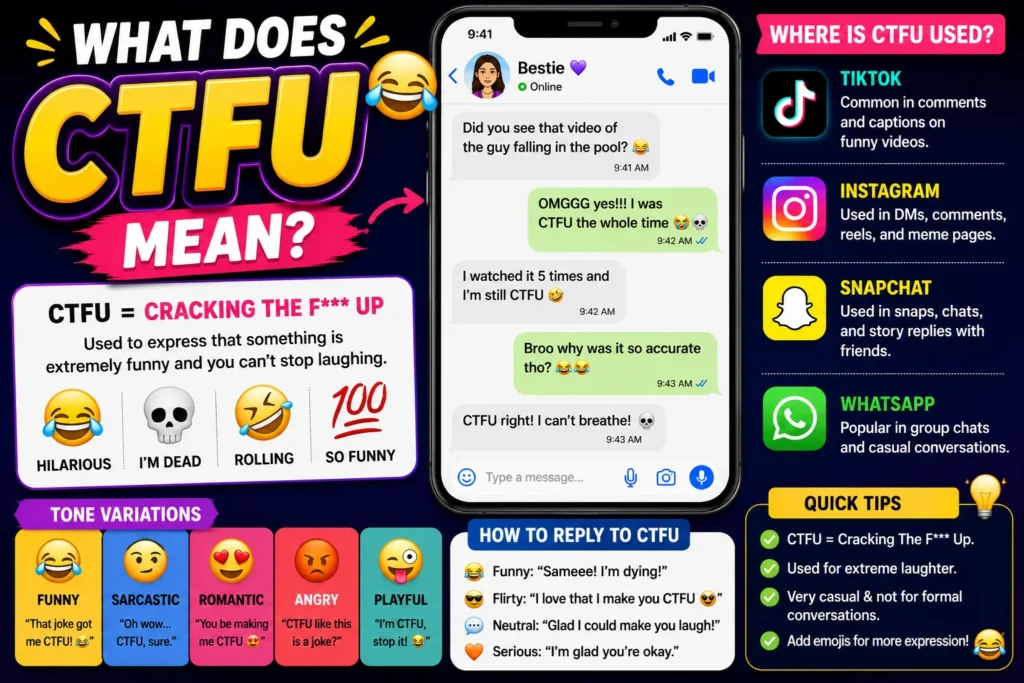

CTFU means “Cracking The F* Up.”** It’s an internet slang term people use when something is extremely funny. You’ll often see it in texts, memes, TikTok comments, Snapchat chats, and casual online conversations.
People search for “ctfu meaning” because the abbreviation looks confusing at first glance. Some assume it is similar to LOL or LMAO, while others wonder if it is rude, offensive, or platform-specific.
This guide explains exactly what CTFU means in slang, how Gen Z uses it online, and when you should — or should not — use it.
CTFU Meaning in Slang
CTFU Meaning in Text
In texting, CTFU usually means someone is laughing very hard at something funny.
Example:
- “That video got me CTFU.”
- “Bro your joke has me CTFU rn.”
It expresses stronger laughter than simple reactions like “lol.”
CTFU Slang Meaning
The slang meaning of CTFU is:
Cracking The F* Up**
It is used to show intense amusement, similar to:
- LOL
- LMAO
- ROFL
- Dead 💀
The phrase became popular in internet culture because it sounds more exaggerated and emotional than standard laughing abbreviations.
What Does CTFU Mean in Chat?
When used in chat, CTFU signals that someone finds a message, meme, or situation hilarious.
Example:
A: “He tried to microwave cereal.”
B: “CTFU no way 😭”
It works as a quick emotional reaction in digital communication.
CTFU Meaning on Snapchat
On Snapchat, CTFU is commonly used:
- In private chats
- On story replies
- In meme screenshots
- During funny streak conversations
Snapchat users often combine it with emojis like:
- 😂
- 💀
- 😭
Example:
“Your story got me CTFU.”
CTFU Meaning on Instagram, TikTok & WhatsApp
People use CTFU in:
- Reels comments
- Funny DM conversations
- Meme pages
TikTok
TikTok helped popularize the phrase among Gen Z.
Example comment:
“This sound got me CTFU every time.”
On WhatsApp, it appears mostly in informal group chats among friends.
Is CTFU an Acronym or Slang?
What Type of Slang Is CTFU?
CTFU is:
- ✅ An acronym
- ✅ A texting abbreviation
- ✅ An internet slang term
- ❌ Not a typo
- ❌ Not phonetic spelling
It shortens a longer emotional reaction into a fast digital expression.
Tone & Context Variations of CTFU
Funny Tone
This is the most common usage.
Example:
A: “I slipped in front of everyone.”
B: “CTFU stoppp 😭”
The tone is playful and amused.
Sarcastic Tone
Sometimes people use it sarcastically to fake laughter.
Example:
A: “I got a parking ticket again.”
B: “CTFU wow you’re really talented.”
Here, the person is mocking the situation.
Romantic Tone
CTFU can appear in flirting when someone wants to seem playful.
Example:
A: “You really practiced that pickup line?”
B: “CTFU it worked though.”
It creates a relaxed vibe.
Angry Tone
Occasionally, CTFU is used during arguments to dismiss someone.
Example:
A: “You think I’m apologizing?”
B: “CTFU you serious?”
This version sounds more aggressive.
Playful Tone
Friends often use it casually while joking around.
Example:
A: “You still using that cracked phone?”
B: “CTFU leave me alone.”
Real Chat Examples of CTFU
Example 1
A: “He wore slippers to prom.”
B: “CTFU that cannot be real.”
A: “I swear 😭”
Example 2
A: “My cat stole my sandwich.”
B: “CTFU pets really don’t care.”
Example 3
A: “Why did you text your teacher ‘love you’?”
B: “CTFU STOP REMINDING ME.”
Example 4
A: “This TikTok is chaotic.”
B: “CTFU I watched it five times.”
Example 5
A: “I tripped walking into class.”
B: “CTFU was anyone watching?”
A: “Everyone 😭”
Example 6
A: “My little brother thinks WiFi lives in the walls.”
B: “CTFU honestly same.”
Example 7
A: “You really ate pineapple pizza?”
B: “CTFU and I’d do it again.”
Example 8
A: “I accidentally liked a photo from 2019.”
B: “CTFU your social life is over.”
Example 9
A: “Grandma just used ‘slay’ correctly.”
B: “CTFU she’s evolving.”
Example 10
A: “He tried flirting by sending math memes.”
B: “CTFU lowkey smart though.”
Example 11
A: “I forgot my own birthday password.”
B: “CTFU how even?”
Example 12
A: “This meme page is dangerous.”
B: “CTFU I’ve been scrolling for hours.”
Example 13
A: “I waved back at someone who wasn’t waving at me.”
B: “CTFU painful.”
Example 14
A: “That prank call was wild.”
B: “CTFU I’m crying.”
Example 15
A: “I burned instant noodles.”
B: “CTFU that takes talent.”
Grammar & Language Role of CTFU
Part of Speech
CTFU usually functions as:
- An interjection
- A reaction phrase
- A conversational abbreviation
Sentence Position
People place it:
- At the start
- Middle
- End of messages
Examples:
- “CTFU that’s hilarious.”
- “You got me CTFU.”
- “That video was wild CTFU.”
Does It Replace a Full Sentence?
Yes.
Sometimes “CTFU” alone is enough to communicate laughter.
Example:
A: “I locked myself outside.”
B: “CTFU 😂”
Tone Impact
CTFU creates:
- Informal energy
- Strong emotional reaction
- Casual internet vibe
It makes chats feel more expressive.
Formal vs Informal Use
| Usage Type | Appropriate? |
|---|---|
| Texting friends | ✅ |
| TikTok comments | ✅ |
| Gaming chats | ✅ |
| School essays | ❌ |
| Office emails | ❌ |
| Professional meetings | ❌ |
How to Reply When Someone Says CTFU
Funny Reply
- “I know I’m hilarious.”
- “Thank you, thank you.”
- “I deserve a comedy award.”
Serious Reply
- “Glad you found it funny.”
- “That actually happened.”
- “I wasn’t even trying to joke.”
Flirty Reply
- “I love making you laugh.”
- “You laugh too easily.”
- “You’re cute when you say CTFU.”
Neutral Reply
- “😂”
- “Right?”
- “I couldn’t stop laughing either.”
Comparison Table: CTFU vs Similar Slang
| Slang Term | Meaning | Usage Context | Tone | Popularity | Confusion Risk |
|---|---|---|---|---|---|
| CTFU | Cracking The F*** Up | Extreme laughter | Funny | High | Medium |
| LOL | Laughing Out Loud | Casual laughter | Light | Very High | Low |
| LMAO | Laughing My Ass Off | Strong laughter | Funny | Very High | Low |
| ROFL | Rolling On the Floor Laughing | Dramatic laughter | Silly | Medium | Medium |
| LMFAO | Laughing My Freaking Ass Off | Intense laughter | Wild | Medium | Medium |
| IDK | I Don’t Know | Confusion or uncertainty | Neutral | Very High | Low |
| SMH | Shaking My Head | Disapproval | Negative | High | Medium |
Who Uses the Term CTFU?
Age Group
CTFU is most common among:
- Teens
- Young adults
- Gen Z users
- Online gaming communities
Millennials also use it, especially those active on meme-heavy platforms.
Gen Z vs Millennials
Gen Z
Uses CTFU heavily with emojis and memes.
Millennials
More likely to mix it with older slang like LOL or ROFL.
Regional Usage
CTFU is most common in:
- United States
- Urban online communities
- English-speaking internet culture
It also appears globally because of TikTok and meme sharing.
Platforms Where It’s Popular
- TikTok
- Snapchat
- X/Twitter
- Discord
Origin & Internet Culture Insight
Possible Origin of CTFU
CTFU likely evolved from Black internet culture and online chat slang communities where expressive abbreviations became popular.
It spread through:
- Forums
- Meme pages
- Hip-hop culture
- Viral reaction content
TikTok Influence
TikTok accelerated the popularity of CTFU because short-form videos encourage exaggerated reactions.
People type:
- “CTFU 😭”
- “This got me CTFU.”
- “I’m literally CTFU.”
under funny videos constantly.
Meme Culture Role
Meme culture thrives on quick emotional responses.
CTFU works perfectly because it:
- Is short
- Feels dramatic
- Shows authentic laughter
Fast Typing Culture
Modern digital communication favors speed.
Instead of typing:
“That’s unbelievably funny.”
people simply type:
“CTFU.”
Why People Say CTFU on TikTok
TikTok users say CTFU because it:
- Feels expressive
- Matches meme humor
- Fits Gen Z vocabulary
- Sounds more intense than LOL
It also creates community language online.
Is CTFU Rude or Offensive?
Is CTFU a Bad Word?
CTFU includes profanity indirectly because the “F” stands for a swear word.
So technically:
- ✅ Mildly explicit
- ❌ Not usually hateful
- ❌ Not considered severe profanity
Should You Use It in School or Work?
Avoid using CTFU in:
- Professional emails
- School assignments
- Formal presentations
- Workplace chats
Use it only in casual conversations.
Is It Safe for Social Media?
Generally yes, but remember:
- Some audiences dislike profanity
- Brands usually avoid it
- Older users may not understand it
Experience-Based Insight
In real-world online conversations, people use CTFU mostly when regular laughing slang feels too weak. It often appears in reaction-heavy chats where users want to sound emotionally involved and genuinely entertained. On TikTok and Snapchat especially, CTFU has become part of expressive Gen Z humor culture.
Common Mistakes People Make With CTFU
Using It in Formal Situations
CTFU is too casual for work or academic writing.
Assuming Everyone Knows It
Some users, especially older adults, may not recognize the abbreviation.
Overusing It
Using CTFU constantly can make reactions feel exaggerated or repetitive.
When to Use CTFU
Use CTFU when:
- Talking with friends
- Replying to funny memes
- Commenting on TikToks
- Reacting casually online
When to Avoid CTFU
Avoid it when:
- Speaking professionally
- Messaging teachers or bosses
- Writing formal content
- Talking to people unfamiliar with slang
FAQs
What Does CTFU Mean in Text?
CTFU means “Cracking The F*** Up,” which shows intense laughter in texting and online chat.
What Does CTFU Mean on Snapchat?
On Snapchat, CTFU usually reacts to funny snaps, stories, or messages.
Is CTFU Rude?
It can sound mildly offensive because it contains hidden profanity, but most people use it casually.
Is CTFU the Same as LOL?
Not exactly. CTFU expresses much stronger laughter than LOL.
Can Adults Use CTFU?
Yes, but it is most popular among younger internet users and Gen Z communities.
How Do You Respond to CTFU?
You can reply with:
- More jokes
- Laughing emojis
- “I know right”
- “Glad you found it funny”
Why Is CTFU Popular on TikTok?
TikTok encourages exaggerated reactions, making expressive slang like CTFU popular in comments and captions.
Does CTFU Always Mean Something Funny?
Usually yes, but sometimes it is used sarcastically during arguments or teasing.
Final Thoughts
CTFU is a modern internet slang term meaning “Cracking The F* Up.”** It’s commonly used in texting, TikTok comments, Snapchat chats, memes, and casual digital communication to express extreme laughter.
While it shares similarities with LOL and LMAO, CTFU feels more dramatic and emotionally expressive. It works best in informal conversations with friends or online communities familiar with Gen Z vocabulary.
Just remember:
- Use it casually
- Avoid professional settings
- Don’t overuse it
- Understand the tone before replying
When used correctly, CTFU adds humor, personality, and energy to online conversations.