
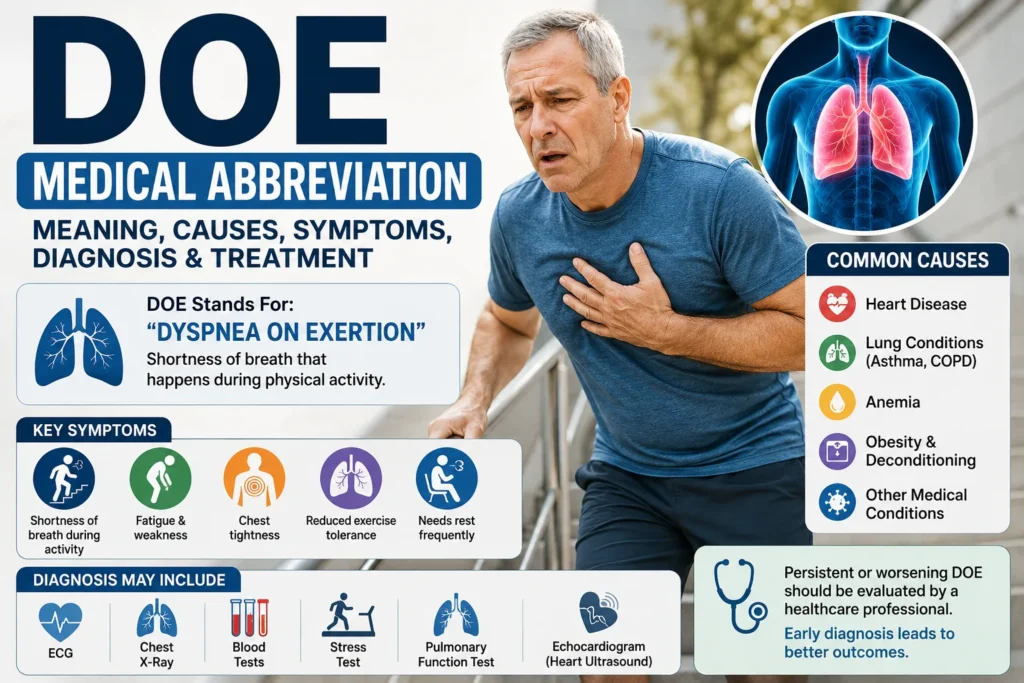

DOE is the medical abbreviation for Dyspnea on Exertion, meaning shortness of breath that occurs during physical activity. It is a symptom—not a disease—and can be caused by heart, lung, blood, or other underlying medical conditions.
If you’ve seen DOE in your medical records, doctor’s notes, hospital discharge papers, or test results, you may wonder what it means and whether it’s something to worry about. While experiencing breathlessness after intense exercise can be normal, DOE refers to unusual or excessive shortness of breath during activities that normally shouldn’t make breathing difficult. Understanding this abbreviation can help you recognize when medical evaluation is necessary.
What Does DOE Mean in Medical Terms?
The abbreviation DOE stands for:
Dyspnea on Exertion
Breaking the term down makes it easier to understand.
- Dyspnea means difficulty breathing or shortness of breath.
- On Exertion means during physical activity or exercise.
Together, the phrase describes shortness of breath that occurs when a person is physically active.
Healthcare professionals commonly use DOE to quickly document symptoms in medical records.
For example:
“Patient reports DOE while climbing one flight of stairs.”
This means the patient experiences noticeable shortness of breath when climbing stairs.
Why Is DOE Important?
DOE is not considered a disease itself.
Instead, it is a symptom that may indicate an underlying medical condition requiring evaluation.
In some cases, DOE develops gradually over months or years.
In others, it may appear suddenly and require urgent medical attention.
Doctors take DOE seriously because it can be associated with:
- Heart disease
- Lung disorders
- Poor physical conditioning
- Anemia
- Obesity
- Certain infections
- Chronic medical illnesses
Determining the cause is the most important step.
What Is Dyspnea?
Dyspnea is the medical term for shortness of breath or the uncomfortable feeling of not getting enough air.
People describe dyspnea in different ways, including:
- Feeling winded
- Difficulty catching their breath
- Chest tightness
- Air hunger
- Needing to stop during activity to breathe
- Feeling unable to take a deep breath
Everyone experiences breathlessness after intense exercise.
However, DOE refers to breathing difficulty that occurs during activities that were previously manageable or should not normally cause significant breathlessness.
What Does “On Exertion” Mean?
“Exertion” simply means physical effort.
Examples include:
- Walking uphill
- Climbing stairs
- Carrying groceries
- Exercising
- Running
- Yard work
- Household chores
A person with DOE may notice symptoms during activities that once felt easy.
Common Symptoms of DOE
People experiencing dyspnea on exertion often report one or more of the following symptoms:
- Shortness of breath while walking
- Becoming winded after climbing stairs
- Difficulty exercising
- Fatigue during physical activity
- Chest tightness
- Rapid breathing
- Wheezing (in some conditions)
- Needing frequent rest breaks
- Reduced exercise tolerance
Some people notice symptoms only during vigorous activity.
Others experience DOE while performing routine daily tasks.
What Causes DOE?
Many different medical conditions can lead to dyspnea on exertion.
Healthcare providers usually group the causes into several categories.
Heart-Related Causes
Heart problems are among the most common causes of DOE.
Examples include:
- Heart failure
- Coronary artery disease
- Heart valve disorders
- Cardiomyopathy
- Irregular heart rhythms
When the heart cannot pump blood efficiently, the body’s oxygen demands during activity increase, resulting in shortness of breath.
Lung-Related Causes
Diseases affecting the lungs can reduce oxygen exchange.
Common examples include:
- Asthma
- Chronic obstructive pulmonary disease (COPD)
- Pulmonary fibrosis
- Pneumonia
- Pulmonary hypertension
These conditions may cause breathing difficulty that becomes worse with exercise.
Blood Disorders
Low red blood cell counts reduce the amount of oxygen carried throughout the body.
Common examples include:
- Iron-deficiency anemia
- Vitamin B12 deficiency
- Chronic blood loss
People with anemia often experience fatigue and DOE simultaneously.
Lifestyle Factors
Not every case of DOE results from disease.
Other contributing factors include:
- Obesity
- Physical deconditioning
- Smoking
- Aging
- Lack of regular exercise
Improving overall fitness can reduce symptoms when no serious medical condition exists.
Other Medical Conditions
DOE may also occur with:
- Kidney disease
- Thyroid disorders
- Anxiety disorders
- Long COVID
- Neuromuscular diseases
Because the list is extensive, proper medical evaluation is essential.
Risk Factors
Certain individuals are more likely to develop DOE.
Risk factors include:
- Older age
- Smoking history
- High blood pressure
- Diabetes
- Obesity
- Family history of heart disease
- Chronic lung disease
- Sedentary lifestyle
Having one or more risk factors does not necessarily mean DOE is serious, but it does increase the need for medical assessment.
How Doctors Evaluate DOE
Doctors begin by asking detailed questions about your symptoms.
You may be asked:
- When did the shortness of breath begin?
- Does it occur during exercise only?
- Has it become worse over time?
- Do you have chest pain?
- Do you smoke?
- Do you have asthma or heart disease?
- Have you noticed leg swelling?
- Have you recently had an infection?
Your answers help narrow down the possible causes.
Physical Examination
A healthcare provider will usually examine:
- Heart sounds
- Lung sounds
- Oxygen levels
- Blood pressure
- Heart rate
- Leg swelling
- Weight
- Overall breathing pattern
This examination often provides important clues before additional testing is ordered.
Common Diagnostic Tests
Depending on your symptoms, your doctor may recommend:
- Chest X-ray
- Electrocardiogram (ECG/EKG)
- Echocardiogram
- Pulmonary function tests
- Blood tests
- Exercise stress test
- CT scan of the chest
- Oxygen saturation testing
- Complete blood count (CBC)
These tests help identify whether the cause is related to the heart, lungs, blood, or another body system.
DOE vs. SOB: What’s the Difference?
One of the most common questions patients ask is whether DOE and SOB mean the same thing.
The answer is not exactly.
While both relate to breathing difficulty, they describe different situations.
| Abbreviation | Full Form | Meaning | When It Happens |
|---|---|---|---|
| DOE | Dyspnea on Exertion | Shortness of breath during physical activity | Walking, climbing stairs, exercising |
| SOB | Shortness of Breath | General breathing difficulty | May occur during activity, at rest, or both |
In other words:
- DOE is a specific type of shortness of breath triggered by exertion.
- SOB is a broader term that can describe breathing difficulty in any situation.
For example:
- A patient who becomes breathless only while walking uphill may be documented as having DOE.
- A patient who feels breathless even while sitting quietly may be described as having SOB at rest, which often requires more urgent evaluation.
DOE vs. Orthopnea
Another medical term often confused with DOE is orthopnea.
Although both involve breathing problems, they occur under different circumstances.
| Condition | What It Means | Typical Trigger |
|---|---|---|
| DOE | Shortness of breath during physical activity | Exercise or exertion |
| Orthopnea | Difficulty breathing while lying flat | Lying down in bed |
People with orthopnea often need extra pillows to sleep comfortably because lying flat worsens their breathing.
Orthopnea is commonly associated with heart failure, whereas DOE has many possible causes.
DOE vs. Exercise Fatigue
Feeling tired after exercise is normal.
However, DOE is different from ordinary fatigue.
Normal Exercise Fatigue
- Occurs after strenuous activity.
- Improves with rest.
- Does not usually involve significant breathing difficulty.
- Common in healthy individuals.
Dyspnea on Exertion
- May occur during light activity.
- Breathing feels unusually difficult.
- Often worsens over time.
- Can interfere with everyday tasks.
If climbing a single flight of stairs suddenly becomes difficult when it previously wasn’t, DOE should be evaluated by a healthcare professional.
Common Medical Conditions Associated with DOE
Because DOE is a symptom rather than a diagnosis, doctors investigate the underlying cause.
Below are some of the most common conditions associated with dyspnea on exertion.
Heart Failure
Heart failure is one of the leading causes of DOE.
When the heart cannot pump blood efficiently, oxygen delivery to the body’s tissues decreases.
Common symptoms include:
- Shortness of breath during activity
- Swollen ankles
- Fatigue
- Difficulty lying flat
- Rapid heartbeat
Coronary Artery Disease
Blocked or narrowed coronary arteries reduce blood flow to the heart.
Symptoms may include:
- DOE
- Chest pain
- Fatigue
- Reduced exercise tolerance
Some patients experience DOE before developing chest pain.
Asthma
Asthma narrows the airways, making breathing difficult.
DOE often occurs during:
- Running
- Sports
- Cold weather
- Allergen exposure
Many patients improve with inhaler treatment.
Chronic Obstructive Pulmonary Disease (COPD)
COPD gradually reduces airflow through the lungs.
Patients commonly report:
- Chronic cough
- Wheezing
- DOE
- Difficulty walking long distances
Pulmonary Hypertension
High blood pressure within the lung arteries places extra strain on the heart.
DOE is often one of the earliest symptoms.
Anemia
When red blood cell levels are low, the body cannot transport oxygen efficiently.
Patients frequently notice:
- Fatigue
- Weakness
- Dizziness
- DOE
Treating the underlying anemia often improves symptoms.
Obesity
Excess body weight increases the workload on both the heart and lungs.
Many people with obesity experience DOE during routine activities such as climbing stairs or walking long distances.
How Is DOE Diagnosed?
Diagnosing DOE involves identifying the reason behind the symptom.
Doctors usually follow several steps.
Medical History
Questions may include:
- When did symptoms begin?
- Are symptoms getting worse?
- What activities trigger breathlessness?
- Do symptoms occur at rest?
- Have you experienced chest pain?
- Do you have a history of smoking?
- Are there any known heart or lung conditions?
The answers provide valuable clues.
Physical Examination
A healthcare provider may check:
- Blood pressure
- Pulse
- Oxygen saturation
- Heart sounds
- Lung sounds
- Body weight
- Leg swelling
- Respiratory rate
Laboratory Tests
Blood tests may include:
- Complete Blood Count (CBC)
- Iron studies
- Kidney function tests
- Thyroid function tests
- Cardiac biomarkers (when indicated)
These tests help detect anemia, infection, thyroid disease, or other contributing conditions.
Imaging Studies
Doctors may order imaging such as:
- Chest X-ray
- CT scan of the chest
- Echocardiogram
These tests evaluate the lungs, heart, and surrounding structures.
Pulmonary Function Tests
These breathing tests measure:
- Lung capacity
- Airflow
- Airway obstruction
They are particularly useful when asthma or COPD is suspected.
Cardiac Testing
Depending on the situation, a cardiologist may recommend:
- Electrocardiogram (ECG)
- Stress testing
- Echocardiography
- Cardiac CT or MRI
- Coronary angiography (selected cases)
Treatment for DOE
Because DOE is a symptom rather than a disease, treatment focuses on the underlying cause.
Heart-Related Treatment
If DOE results from heart disease, treatment may include:
- Blood pressure medications
- Diuretics
- Lifestyle modifications
- Cholesterol-lowering medications
- Cardiac rehabilitation
- Procedures or surgery when necessary
Lung-Related Treatment
Patients with respiratory conditions may receive:
- Bronchodilators
- Inhaled corticosteroids
- Pulmonary rehabilitation
- Oxygen therapy (if indicated)
- Smoking cessation support
Treating Anemia
When anemia causes DOE, treatment may involve:
- Iron supplements
- Vitamin B12 replacement
- Folic acid supplementation
- Treating the source of blood loss
Lifestyle Improvements
For individuals whose DOE is related to fitness or excess weight, doctors often recommend:
- Gradual exercise programs
- Weight management
- Healthy nutrition
- Smoking cessation
- Adequate sleep
- Stress reduction
These measures can significantly improve exercise tolerance over time.
Can DOE Be Prevented?
Not every case is preventable, but many risk factors can be reduced.
Healthy habits include:
- Exercising regularly
- Maintaining a healthy weight
- Managing blood pressure
- Controlling diabetes
- Avoiding tobacco products
- Following treatment plans for chronic illnesses
- Attending routine medical checkups
Early management of heart and lung conditions can also reduce the likelihood of developing DOE.
When Is DOE a Medical Emergency?
Mild DOE during exercise may not always be dangerous.
However, seek immediate medical attention if shortness of breath is accompanied by:
- Chest pain
- Fainting
- Blue lips or fingertips
- Severe difficulty breathing
- Confusion
- Rapid worsening symptoms
- Coughing up blood
These symptoms may indicate a serious or life-threatening condition requiring emergency care.
Prognosis
The outlook for someone with DOE depends entirely on its underlying cause.
For example:
- DOE caused by poor physical conditioning often improves with exercise.
- DOE related to anemia may improve after treating the deficiency.
- Chronic heart or lung diseases usually require long-term management but can often be controlled with appropriate medical care.
Early diagnosis generally leads to better outcomes than delaying evaluation.
How Doctors Use DOE in Medical Records
Healthcare professionals frequently use abbreviations to make clinical documentation faster and more consistent. DOE is one of the most commonly used abbreviations in cardiology, pulmonology, emergency medicine, and primary care.
Here are some examples of how it appears in real medical notes.
Example 1
Chief Complaint: Progressive DOE for three months.
Meaning: The patient has experienced gradually worsening shortness of breath during physical activity for the past three months.
Example 2
Patient reports DOE after climbing one flight of stairs.
Meaning: The patient becomes short of breath after climbing a single flight of stairs.
Example 3
Denies chest pain but reports DOE and fatigue.
Meaning: The patient does not have chest pain but experiences breathlessness during activity along with tiredness.
Example 4
DOE improving after initiation of treatment.
Meaning: The patient’s breathing during physical activity has improved since starting treatment.
Understanding these examples can make reading your own medical records much less confusing.
Real Patient Scenarios
The following scenarios illustrate how DOE may present in everyday life.
Scenario 1: Heart Failure
A 72-year-old man notices he becomes winded while walking to his mailbox. Six months earlier, he could comfortably walk several blocks without stopping.
His doctor diagnoses early heart failure after performing an echocardiogram.
Scenario 2: Iron-Deficiency Anemia
A 30-year-old woman begins experiencing shortness of breath while climbing stairs. Blood tests reveal significant iron-deficiency anemia.
After treatment with iron supplementation and dietary changes, her DOE gradually resolves.
Scenario 3: Asthma
A teenage athlete notices breathing difficulty only during soccer practice.
Pulmonary function tests confirm exercise-induced asthma, and an inhaler helps control the symptoms.
Scenario 4: Poor Physical Conditioning
A person who has been inactive for several years becomes breathless after walking short distances.
Medical evaluation finds no serious disease. A supervised exercise program gradually improves endurance and reduces DOE.
Common Misconceptions About DOE
There are several myths surrounding the medical abbreviation DOE.
Myth 1: DOE Is a Disease
Fact: DOE is a symptom, not a diagnosis.
Doctors must determine the underlying cause before treatment can begin.
Myth 2: DOE Only Happens to Older Adults
Fact: While older adults are more likely to experience DOE, it can occur at any age due to asthma, anemia, heart conditions, obesity, or other medical issues.
Myth 3: DOE Always Means Heart Disease
Fact: Heart disease is only one possible cause.
DOE may also result from:
- Lung disease
- Blood disorders
- Poor physical fitness
- Anxiety
- Obesity
- Chronic infections
Myth 4: Shortness of Breath During Exercise Is Always Normal
Fact: Mild breathlessness after strenuous exercise is expected.
However, becoming unusually short of breath during routine activities should be evaluated by a healthcare provider.
Experience-Based Insight
In everyday medical practice, DOE is one of the most frequently documented symptoms when patients report changes in their exercise tolerance. Healthcare providers pay close attention not only to whether a patient experiences shortness of breath, but also when it occurs, how severe it is, and whether it has changed over time.
For many patients, DOE develops gradually, making it easy to dismiss as simply “getting older” or “being out of shape.” However, persistent or worsening DOE can be an early sign of heart disease, lung disease, or other treatable medical conditions. Seeking medical evaluation early often leads to quicker diagnosis and better treatment outcomes.
Frequently Asked Questions
What does DOE stand for in medical terms?
DOE stands for Dyspnea on Exertion, which means shortness of breath during physical activity.
Is DOE a diagnosis?
No.
DOE is a symptom that indicates an underlying condition affecting breathing or oxygen delivery.
Is DOE serious?
It can be.
Some causes are relatively minor, while others involve serious heart or lung diseases that require prompt medical attention.
What causes dyspnea on exertion?
Common causes include:
- Heart failure
- Coronary artery disease
- Asthma
- COPD
- Pulmonary hypertension
- Anemia
- Obesity
- Poor physical conditioning
Can anxiety cause DOE?
Yes.
Anxiety can contribute to shortness of breath, although doctors usually rule out heart and lung conditions before attributing symptoms solely to anxiety.
What tests are used to diagnose DOE?
Doctors may order:
- Blood tests
- Chest X-ray
- ECG
- Echocardiogram
- Pulmonary function tests
- Stress test
- CT scan
depending on the patient’s symptoms and medical history.
Can DOE improve?
Yes.
Many cases improve once the underlying condition is treated or managed appropriately.
Should I see a doctor for DOE?
Yes.
Persistent or worsening DOE should always be evaluated by a qualified healthcare professional, especially if it limits your daily activities.
What is the full form of DOE in healthcare?
The full form is Dyspnea on Exertion.
What does DOE mean on a medical chart?
It indicates that a patient experiences shortness of breath during physical activity.
Is DOE the same as shortness of breath?
Not exactly.
DOE refers specifically to shortness of breath during exertion, whereas shortness of breath may occur at rest or during activity.
Which doctor treats DOE?
Depending on the cause, DOE may be evaluated by:
- Primary care physicians
- Cardiologists
- Pulmonologists
- Emergency physicians
Can DOE be the first sign of heart disease?
Yes.
For some people, DOE is one of the earliest symptoms of heart failure or coronary artery disease.
Is DOE common in older adults?
Yes.
The risk increases with age, although DOE should never be dismissed without medical evaluation.
Does every patient with DOE need emergency treatment?
No.
Many cases can be evaluated during a routine medical appointment. However, severe or sudden shortness of breath accompanied by chest pain, fainting, or blue lips requires immediate emergency care.
Can regular exercise reduce DOE?
If the cause is poor physical conditioning, supervised exercise and improved fitness can significantly reduce symptoms. Exercise programs should always be discussed with a healthcare provider if heart or lung disease is suspected.
Conclusion
The DOE medical abbreviation stands for Dyspnea on Exertion, meaning shortness of breath during physical activity. It is a symptom rather than a disease and can result from a wide range of conditions affecting the heart, lungs, blood, or overall physical fitness.
While occasional breathlessness after vigorous exercise is normal, persistent DOE during routine activities should not be ignored. Early evaluation helps healthcare providers identify the underlying cause and begin appropriate treatment before complications develop.
Understanding what DOE means empowers patients to communicate more effectively with their healthcare providers and better interpret medical records, hospital notes, and diagnostic reports.
Key Takeaways
- DOE stands for Dyspnea on Exertion.
- It describes shortness of breath during physical activity.
- DOE is a symptom, not a diagnosis.
- Heart disease, lung disease, anemia, obesity, and poor conditioning are common causes.
- Persistent or worsening DOE deserves medical evaluation.
- Early diagnosis often improves treatment outcomes.
Common Mistakes to Avoid
- Assuming DOE is a disease rather than a symptom.
- Ignoring worsening shortness of breath during routine activities.
- Confusing DOE with general shortness of breath or orthopnea.
- Self-diagnosing without professional medical evaluation.
- Delaying treatment when symptoms become more severe.
When to Seek Medical Advice
Schedule an appointment with your healthcare provider if you notice:
- Breathlessness during activities that were previously easy.
- Symptoms that gradually worsen.
- Reduced ability to exercise.
- Fatigue combined with DOE.
Seek emergency care immediately if DOE is accompanied by:
- Chest pain
- Severe breathing difficulty
- Fainting
- Blue lips or fingertips
- Confusion
- Coughing up blood