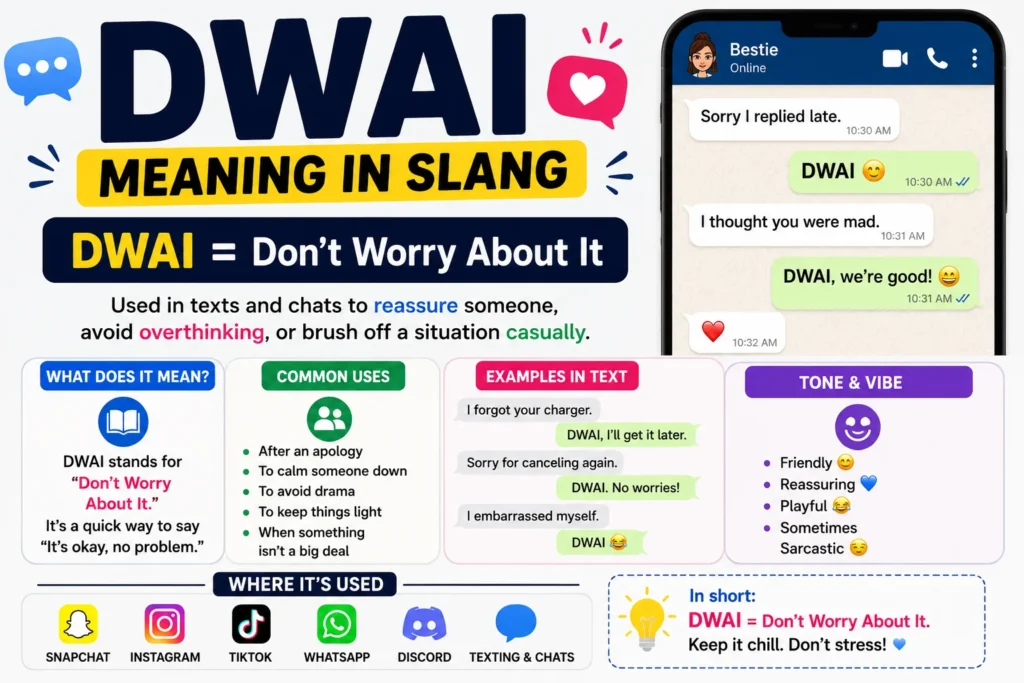

DWAI usually means “Don’t Worry About It” in texting and internet slang. People use it on Snapchat, TikTok, Instagram, WhatsApp, and chats to sound casual, reassuring, playful, or emotionally relaxed during conversations.
Many users search for the DWAI meaning in slang because the abbreviation appears suddenly in chats, comments, memes, and social media captions without explanation. The confusion happens because DWAI can sound friendly, sarcastic, flirty, or dismissive depending on the tone and context.
Understanding how this texting abbreviation works helps you reply naturally and avoid misunderstandings online.
What Does DWAI Mean in Text?
The DWAI meaning in text is most commonly:
- Don’t Worry About It
It is a casual internet slang term used to reassure someone after:
- an apology
- an awkward moment
- a misunderstanding
- a small mistake
Example in Texting
A: “Sorry for replying late.”
B: “DWAI 😊”
In this situation, the sender means:
- “It’s okay.”
- “No problem.”
- “Don’t stress about it.”
That is why DWAI has become popular in fast digital communication.
DWAI Slang Meaning on Social Media
The DWAI slang meaning stays mostly the same across platforms, but the emotional tone changes depending on where it is used.
DWAI Meaning on Snapchat
On Snapchat, DWAI is commonly used in:
- streak chats
- disappearing messages
- casual friend conversations
Example:
A: “I missed your snap yesterday.”
B: “DWAI lol.”
Here, it keeps the conversation light and friendly.
DWAI Meaning on Instagram
On Instagram, people use DWAI in:
- DMs
- meme comments
- story replies
- group chats
It often carries a playful or emotionally chill tone.
DWAI Meaning on TikTok
TikTok users often use DWAI in captions and relatable comments.
Example:
- “When you embarrass yourself in public but DWAI 😭”
The phrase fits TikTok humor because it softens awkward situations.
DWAI Meaning on WhatsApp
On WhatsApp, DWAI usually appears in friend groups and casual conversations.
It often means:
- “No worries.”
- “It’s fine.”
- “Forget about it.”
What Does DWAI Mean in Chat?
In chats, DWAI works like a shortened emotional response.
Instead of typing:
- “Don’t worry about it.”
People simply write:
- “DWAI”
This makes texting:
- faster
- more casual
- more natural
Example Chat Conversation
A: “I accidentally deleted the screenshots.”
B: “DWAI, I saved them already.”
A: “You’re a lifesaver 😂”
Is DWAI an Acronym or Short Form?
Yes, DWAI is mainly an acronym.
Each letter represents a word:
- D = Don’t
- W = Worry
- A = About
- I = It
It is also considered a texting short form because it compresses an entire sentence into four letters.
Is DWAI a Phonetic Spelling or Typo Slang?
No.
DWAI is not:
- a phonetic spelling
- an accidental typo
- a misspelled slang word
It was intentionally created for quick digital communication.
Tone & Context Variations of DWAI
The meaning of DWAI changes depending on tone, punctuation, emojis, and relationship dynamics.
Funny Tone
Sometimes DWAI sounds humorous.
Example
A: “I accidentally sent the meme to my teacher.”
B: “DWAI maybe they needed the laugh 😂”
The phrase helps reduce embarrassment.
Sarcastic Tone
DWAI can sound passive-aggressive if written dryly.
Example
A: “Sorry I canceled again.”
B: “DWAI.”
The period makes it feel colder and possibly annoyed.
Romantic Tone
In flirty chats, DWAI can sound caring and comforting.
Example
A: “I feel bad for bothering you.”
B: “DWAI, I like talking to you.”
This creates emotional reassurance.
Angry Tone
Sometimes DWAI is used to shut down a conversation.
Example
A: “Can we talk about what happened?”
B: “DWAI.”
This version feels emotionally distant.
Playful Tone
Among close friends, DWAI often sounds teasing and relaxed.
Example
A: “I stole your fries.”
B: “DWAI 😂”
The tone suggests fake annoyance rather than real anger.
Real Chat Examples Using DWAI
Example 1
A: “Sorry I forgot your birthday.”
B: “DWAI, it happens.”
A: “Still feel bad though.”
Example 2
A: “I’m late again.”
B: “DWAI nobody’s even here yet.”
A: “Perfect 😂”
Example 3
A: “I spoiled the movie ending.”
B: “DWAI I already saw it.”
A: “Thank goodness.”
Example 4
A: “Sorry for texting too much.”
B: “DWAI I’m bored anyway.”
A: “Good because I have more drama.”
Example 5
A: “I accidentally liked their old photo.”
B: “DWAI just act natural 😭”
A: “Too late.”
Example 6
A: “I messed up the project.”
B: “DWAI we fixed it already.”
A: “You saved me.”
Example 7
A: “I sent the message to the wrong person.”
B: “DWAI maybe they needed to hear it 😂”
A: “Absolutely not.”
Example 8
A: “I forgot your charger.”
B: “DWAI I’ll get it tomorrow.”
A: “Thanks.”
Example 9
A: “Sorry for disappearing.”
B: “DWAI life gets busy.”
A: “True.”
Example 10
A: “I sound weird in voice notes.”
B: “DWAI you sound fine.”
A: “You’re lying 😭”
Grammar & Language Role of DWAI
Understanding how DWAI functions grammatically helps people use it naturally.
Part of Speech
DWAI functions like a phrase abbreviation.
It replaces a complete reassuring sentence.
Sentence Position
People use DWAI:
- at the beginning of replies
- as a standalone message
- in the middle of conversations
Examples
- “DWAI, it’s okay.”
- “Honestly DWAI.”
- “It’s fine DWAI.”
Does DWAI Replace a Full Sentence?
Yes.
Instead of saying:
- “Don’t worry about it.”
Users simply type:
- “DWAI”
That is why it became popular in digital communication.
Tone Impact in Messages
Tone changes depending on punctuation and emojis.
Warm Tone
- “DWAI 😊”
Playful Tone
- “DWAI 😂”
Cold Tone
- “DWAI.”
Formal vs Informal Usage
DWAI is highly informal.
It works best in:
- texting
- Snapchat
- TikTok
- Instagram DMs
- gaming chats
Avoid using it in:
- work emails
- professional communication
- academic writing
How to Reply When Someone Says DWAI
People often feel unsure how to respond to DWAI in chats.
Funny Replies
- “Too late, I’m already stressed 😂”
- “I’ll worry anyway.”
- “That’s impossible.”
Serious Replies
- “Thanks, I appreciate it.”
- “That makes me feel better.”
- “Glad you understand.”
Flirty Replies
- “Only because you said it 😏”
- “You always calm me down.”
- “Now I’m less nervous.”
Neutral Replies
- “Okay.”
- “Got it.”
- “Thanks.”
Comparison Table: DWAI vs Similar Slang Terms
| Slang Term | Meaning | Usage Context | Tone | Popularity | Confusion Risk |
|---|---|---|---|---|---|
| DWAI | Don’t Worry About It | Reassuring chats | Casual | Medium | Medium |
| IDK | I Don’t Know | Answering questions | Neutral | Very High | Low |
| NVM | Never Mind | Ending conversations | Dismissive | High | Medium |
| TBH | To Be Honest | Honest opinions | Friendly | High | Low |
| BRB | Be Right Back | Temporary absence | Casual | Very High | Low |
| IDC | I Don’t Care | Opposite emotional tone | Cold | High | Medium |
Who Uses DWAI Slang?
Age Group
DWAI is mostly used by:
- teenagers
- Gen Z
- younger Millennials
- online gaming communities
Gen Z vs Millennials
Gen Z Usage
Gen Z uses DWAI naturally in:
- TikTok comments
- Snapchat chats
- meme culture
- Discord servers
Millennial Usage
Millennials may understand DWAI but often type the full phrase instead.
Regional Popularity
DWAI is most common in:
- the United States
- Canada
- English-speaking online communities
However, internet slang spreads globally through social media.
Platforms Where DWAI Is Most Common
You will often see DWAI on:
- Snapchat
- TikTok
- Discord
- gaming chats
Origin & Internet Culture Insight
Possible Origin of DWAI
DWAI likely came from the internet habit of shortening long phrases into abbreviations for faster typing.
Similar examples include:
- LOL
- BRB
- TBH
- IDK
TikTok Influence on DWAI
TikTok helped popularize short emotional slang because captions and comments move quickly.
Users prefer short expressions that feel relatable.
Meme Culture Role
DWAI became meme-friendly because it softens embarrassing situations.
Example Meme Style
- “When you trip in public but DWAI 😭”
This style fits modern internet humor perfectly.
Fast Typing Culture
Modern texting culture rewards speed and emotional simplicity.
That is why abbreviations like DWAI continue growing online.
Why People Say DWAI on TikTok
People use DWAI on TikTok because it:
- sounds casual
- reduces awkwardness
- feels emotionally relatable
- matches Gen Z humor
- saves typing time
Is DWAI Rude or Offensive?
Is DWAI Rude?
Usually no.
Most people use DWAI in a friendly way.
However, tone matters.
A dry “DWAI.” may sound annoyed or dismissive.
Is DWAI a Bad Word?
No.
DWAI is not offensive or inappropriate.
It is considered safe slang.
Should You Use DWAI in School or Office?
School Usage
DWAI is generally okay in casual student conversations.
Office Usage
Avoid using DWAI professionally because it sounds too informal.
Instead use:
- “No worries.”
- “That’s okay.”
- “Don’t worry about it.”
Experience-Based Insight About DWAI
In real online conversations, DWAI is commonly used to quickly remove tension after apologies or awkward moments. People often use it because modern digital communication values emotional simplicity and fast replies. On platforms like Snapchat and TikTok, short reassuring phrases feel more natural than long emotional explanations.
Frequently Asked Questions
What Does DWAI Mean in Text?
DWAI usually means “Don’t Worry About It” in texting and internet slang.
What Does DWAI Mean on Snapchat?
On Snapchat, DWAI is used casually to reassure someone after a mistake or awkward moment.
Is DWAI the Same as IDK?
No.
- DWAI = Don’t Worry About It
- IDK = I Don’t Know
They have completely different meanings.
Can Adults Use DWAI?
Yes.
Anyone can use DWAI, although it is more common among younger internet users.
How Do You Respond to DWAI?
Common replies include:
- “Thanks.”
- “Okay.”
- “Appreciate it.”
- “You sure? 😂”
Is DWAI Popular on TikTok?
Yes.
DWAI appears in TikTok captions, comments, and relatable memes.
Does DWAI Always Sound Friendly?
No.
Tone changes depending on punctuation, emojis, and context.
Is DWAI Formal Slang?
No.
DWAI is strictly informal internet slang.
Final Thoughts
DWAI is a popular texting abbreviation that means “Don’t Worry About It.” It is widely used across Snapchat, TikTok, Instagram, WhatsApp, and online chats because it feels quick, casual, and emotionally relaxed.
Depending on tone, DWAI can sound:
- friendly
- funny
- sarcastic
- caring
- dismissive
To use DWAI naturally:
- keep conversations casual
- pay attention to punctuation
- avoid formal settings
- understand the emotional context
The biggest mistake people make is assuming DWAI always sounds positive. In some situations, it can feel emotionally cold if typed too bluntly.