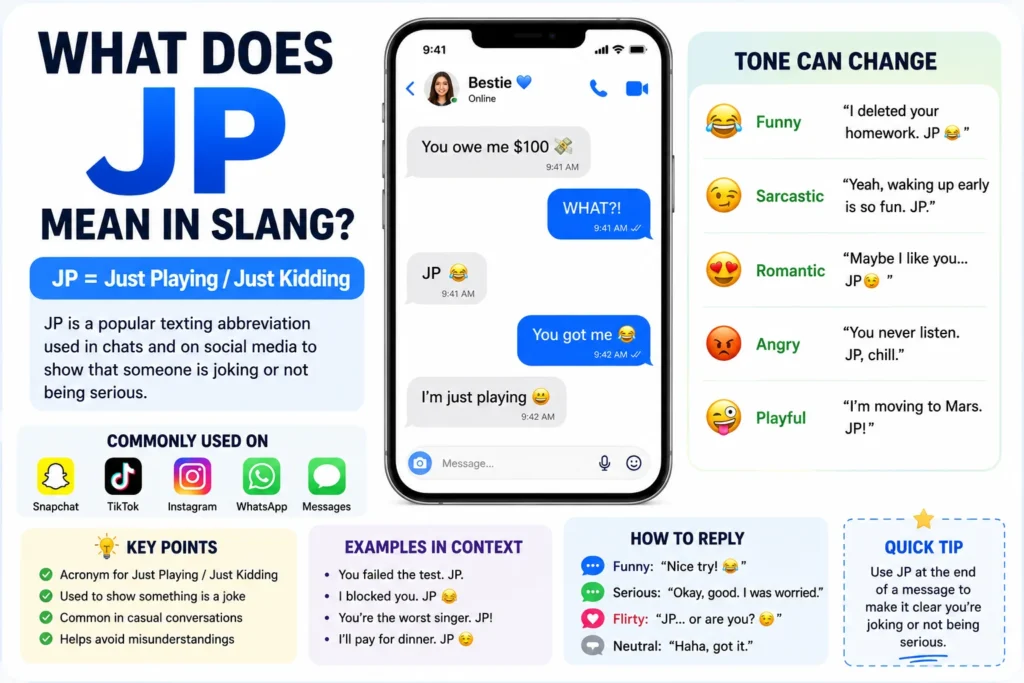

JP in slang usually means “just playing” or “just kidding.” People use it in texts, TikTok comments, Snapchat chats, and online conversations to show they are joking and not being serious.
If you searched “what does JP mean in slang,” you’re probably confused because JP can have multiple meanings depending on the conversation. In most social media and texting situations, though, JP is a casual internet slang term used to lighten the mood after a joke, tease, or sarcastic comment.
What Does JP Mean in Slang in Text?
The most common what does jp mean in slang meaning in text is:
- JP = Just Playing
- Sometimes: Just Kidding
People use it after saying something dramatic, sarcastic, playful, or fake-serious.
Example
“Bro you owe me $500. JP 😂”
That means the person is joking and doesn’t actually expect the money.
This texting abbreviation is popular because it saves time and keeps chats casual.
What Does JP Mean in Chat and Social Media?
What Does JP Mean in Chat?
In chat conversations, JP is usually added at the end of a sentence to soften the tone.
Example:
“You’re the worst teammate ever… JP.”
Without JP, the message may sound rude. With JP, it becomes playful.
What Does JP Mean on Snapchat?
On Snapchat, JP is often used:
- After teasing friends
- In streak conversations
- In playful arguments
- In funny selfie captions
Snapchat users rely heavily on short slang phrases, so JP fits perfectly into fast digital communication.
What Does JP Mean on Instagram?
On Instagram, JP appears in:
- Comment sections
- Reels captions
- DMs
- Meme replies
Example:
“You really thought I’d wake up early? JP 😭”
What Does JP Mean on TikTok?
TikTok users often use JP in:
- Viral comments
- Funny reaction videos
- Sarcastic captions
- Trend replies
Example:
“I totally understand math. JP.”
What Does JP Mean on WhatsApp?
On WhatsApp, JP is commonly used among friends and family during casual chats.
It helps avoid misunderstandings when someone jokes too aggressively.
Is JP an Acronym, Short Form, or Typo?
JP as an Acronym
Yes, JP is mainly an acronym for:
- Just Playing
- Just Pranking
- Just Pretending
JP as a Short Form
It is also considered a short form because users shorten full phrases into two quick letters.
Is JP a Typo Turned Slang?
No, JP is not usually a typo. It developed naturally from internet texting culture where people shorten phrases to type faster.
JP Slang Meaning by Tone and Context
The meaning of JP changes slightly depending on tone, emojis, and conversation style.
Funny Tone
JP is most common in funny conversations.
Example
A: “I sold your shoes online.”
B: “WAIT WHAT?”
A: “JP 😂”
Here, JP immediately tells the person it was a joke.
Sarcastic Tone
Sometimes JP follows sarcasm.
Example
A: “Yeah, because waking up at 5 AM is sooo fun. JP.”
The speaker clearly means the opposite.
Romantic Tone
JP can also appear in flirting.
Example
A: “Maybe I’m in love with you… JP 👀”
B: “Hmm you sure about that?”
In this case, JP may hide real feelings behind humor.
Angry Tone
Sometimes people use JP to reduce tension after sounding rude.
Example
A: “You never reply to texts.”
B: “Dang okay 😭”
A: “JP chill.”
Playful Tone
JP is heavily used in playful friend groups.
Example
A: “I’m replacing you with a new best friend.”
B: “Wow fake friend.”
A: “JP 😂”
Real Chat Examples of JP Slang Meaning
Example 1
A: “I unfollowed you.”
B: “Why??”
A: “JP 😭”
Example 2
A: “You’re buying dinner tonight.”
B: “Again?”
A: “JP… unless?”
Example 3
A: “I failed the test.”
B: “Seriously?”
A: “Nah JP.”
Example 4
A: “Delete your TikTok account.”
B: “Excuse me?”
A: “JP 😂”
Example 5
A: “I’m moving to Antarctica.”
B: “No way.”
A: “JP.”
Example 6
A: “Your playlist is terrible.”
B: “That hurt.”
A: “JP it’s actually fire.”
Example 7
A: “I forgot your birthday.”
B: “You’re awful.”
A: “JP chill 😭”
Example 8
A: “You owe me Starbucks.”
B: “Since when?”
A: “JP.”
Example 9
A: “I accidentally leaked your secret.”
B: “WHAT?”
A: “JP 😂”
Example 10
A: “I blocked everyone today.”
B: “Even me?”
A: “JP not you.”
Example 11
A: “You sing worse than my alarm clock.”
B: “Rude.”
A: “JP 😭”
Example 12
A: “I’m never texting you again.”
B: “Okay then.”
A: “JP obviously.”
Example 13
A: “I ate your fries.”
B: “I knew it!”
A: “JP 😂”
Example 14
A: “You’re banned from the group chat.”
B: “Wow.”
A: “JP relax.”
Example 15
A: “I’m famous now.”
B: “For what?”
A: “JP but imagine.”
Grammar and Language Role of JP
Part of Speech
JP acts like a conversational abbreviation or discourse marker.
It helps clarify tone instead of functioning like a traditional noun or verb.
Sentence Position
JP usually appears:
- At the end of sentences
- After jokes
- After sarcasm
- After teasing comments
Example:
“You’re so annoying, JP.”
Does JP Replace a Full Sentence?
Sometimes yes.
Example:
A: “You serious?”
B: “JP.”
Here, JP alone means:
“I’m just playing.”
Tone Impact
JP changes the emotional meaning of a message.
Without JP:
“You’re terrible.”
With JP:
“You’re terrible JP 😂”
The second version sounds friendly.
Formal vs Informal Use
JP is highly informal.
Best Places to Use It
- Texting
- Snapchat
- TikTok
- Friend chats
Avoid Using It In
- School essays
- Work emails
- Professional settings
- Business conversations
How to Reply When Someone Says JP
Funny Replies
- “Too late, I already panicked.”
- “I almost blocked you.”
- “You got me for a second 😂”
Serious Replies
- “Okay good, I was confused.”
- “That sounded real honestly.”
- “Glad you were joking.”
Flirty Replies
- “Maybe you weren’t joking 👀”
- “I think you meant it.”
- “JP… unless?”
Neutral Replies
- “Lol okay.”
- “Got it.”
- “Makes sense.”
Comparison Table for JP Slang Meaning
| Slang Term | Meaning | Usage Context | Tone | Popularity | Confusion Risk |
|---|---|---|---|---|---|
| JP | Just Playing | Jokes, teasing, sarcasm | Playful | High | Medium |
| JK | Just Kidding | Casual jokes | Friendly | Very High | Low |
| LOL | Laughing Out Loud | Funny chats | Humorous | Very High | Low |
| IDC | I Don’t Care | Casual reactions | Dismissive | High | Medium |
| NGL | Not Gonna Lie | Honest opinions | Casual | High | Low |
| FR | For Real | Serious agreement | Direct | High | Medium |
| SRS | Serious | Opposite of joking | Serious | Medium | Medium |
Who Uses JP Slang?
Age Group
JP is mostly used by:
- Teenagers
- Gen Z users
- Young millennials
Older adults may recognize it but use it less frequently.
Gen Z vs Millennials
Gen Z
Gen Z uses JP more casually and creatively, especially on TikTok and Snapchat.
Millennials
Millennials are more likely to use:
- JK
- LOL
- LMAO
Instead of JP.
Regions Where JP Is Common
JP slang is common in:
- United States
- Canada
- UK
- Australia
- Online global communities
Platforms Where JP Is Most Popular
- TikTok
- Snapchat
- Discord
- iMessage
Origin and Internet Culture Behind JP
The slang term JP likely grew from early texting culture where users shortened common phrases to save typing time.
As smartphones and social media evolved, abbreviations became a major part of Gen Z vocabulary.
Why People Say JP on TikTok
TikTok encourages:
- Fast comments
- Funny reactions
- Short captions
- Meme culture
JP works perfectly because it quickly signals humor.
Example TikTok comment:
“I’d survive a zombie apocalypse. JP 😭”
Meme Culture Influence
Memes often rely on fake-serious humor.
JP helps clarify:
- sarcasm
- irony
- exaggeration
without needing long explanations.
Fast Typing Culture
Internet users prefer quick communication.
Typing:
“just playing”
takes longer than:
“jp”
That’s why abbreviations continue growing in digital communication.
Is JP Slang Rude or Offensive?
Is JP Rude?
Usually no.
JP is mostly harmless and playful.
However, context matters.
Example:
“You’re ugly. JP.”
Even with JP, the message may still hurt someone’s feelings.
Is JP a Bad Word?
No.
JP is not profanity or offensive slang.
It is generally safe for:
- social media
- texting
- casual conversations
Should You Use JP at School or Work?
School
Usually okay in casual student conversations.
Work
Better avoided in professional communication because some people may not understand it.
Real-World Experience With JP Slang
In real online conversations, JP is commonly used after dramatic or fake-serious statements. Most people use it to avoid misunderstandings and keep chats friendly.
It’s especially popular among younger users who communicate through memes, reaction videos, and quick texting abbreviations.
FAQ
What Does JP Mean in Text?
JP usually means “just playing” in text messages.
What Does JP Mean on Snapchat?
On Snapchat, JP means someone is joking or teasing.
Is JP the Same as JK?
They are similar.
- JP = Just Playing
- JK = Just Kidding
Both indicate humor.
Is JP Rude?
Usually no, but tone matters.
Can Adults Use JP?
Yes. Anyone can use JP, although it is more common among younger internet users.
How Do You Respond to JP?
You can reply with:
- “You got me 😂”
- “I almost believed you.”
- “Lol okay.”
What Does JP Mean on TikTok?
On TikTok, JP usually signals sarcasm, irony, or playful humor.
Does JP Always Mean Just Playing?
Most of the time yes, but rare alternative meanings may appear depending on context.
Why do people type JP in chats?
People type JP to quickly show they are joking.
Is JP popular with Gen Z?
Yes, especially on TikTok and Snapchat.
Can JP be flirty?
Yes. Some users say JP after playful romantic comments.
What’s the difference between JP and LOL?
LOL reacts to something funny.
JP explains that the speaker was joking.
Is JP formal slang?
No. JP is informal internet slang.
Why is JP used after insults?
People use JP to soften teasing comments and avoid sounding too serious.
Final Thoughts
JP is a popular texting abbreviation that usually means “just playing.” It’s commonly used in chats, TikTok comments, Snapchat messages, and social media conversations to show humor or sarcasm.
The term is casual, easy to use, and popular among Gen Z users who prefer short internet slang terms during digital communication.
Quick Usage Tips
Use JP When
- You’re joking
- You’re teasing friends
- You want to soften sarcasm
- You’re chatting casually
Avoid JP When
- Writing professional emails
- Speaking formally
- Messaging someone unfamiliar with slang
Common Mistakes
- Using JP after genuinely rude comments
- Assuming everyone understands slang
- Using it in formal situations